A visit to the Marcel Duchamp exhibition at the Museum of Modern Art is a lesson about all the things that art can be. As the exhibition progresses, Duchamp positions himself as a respected éminence grise, a singular figure who amuses the art world elite with enigmatic cerebral works that appeal more to the mind than the eye. Here we can see why art historians often credit Duchamp with completely transforming art, and proposing new possibilities that would dominate art from the 1960s onward.
Given Gallery 98’s large collection of art ephemera from the 1960s through the early 2000s, we thought it might be fun to select items that show the different ways in which artists have been influenced by Duchamp. Clearly, his greatest impact has been in how artists embraced his conceptual approach to art, creating works that forefront ideas over visual aesthetics. Of special importance were his “Readymades,” objects whose real-world function was altered when Duchamp placed them in art spaces that defined them as art. In addition, the way he used himself as a work of art — most memorably when he dressed up to be photographed as his female alter-ego Rrose Sélavy! Following his death, Duchamp and his art became so iconic that artists frequently paid tribute by simply making copies of his work.
Andy Warhol
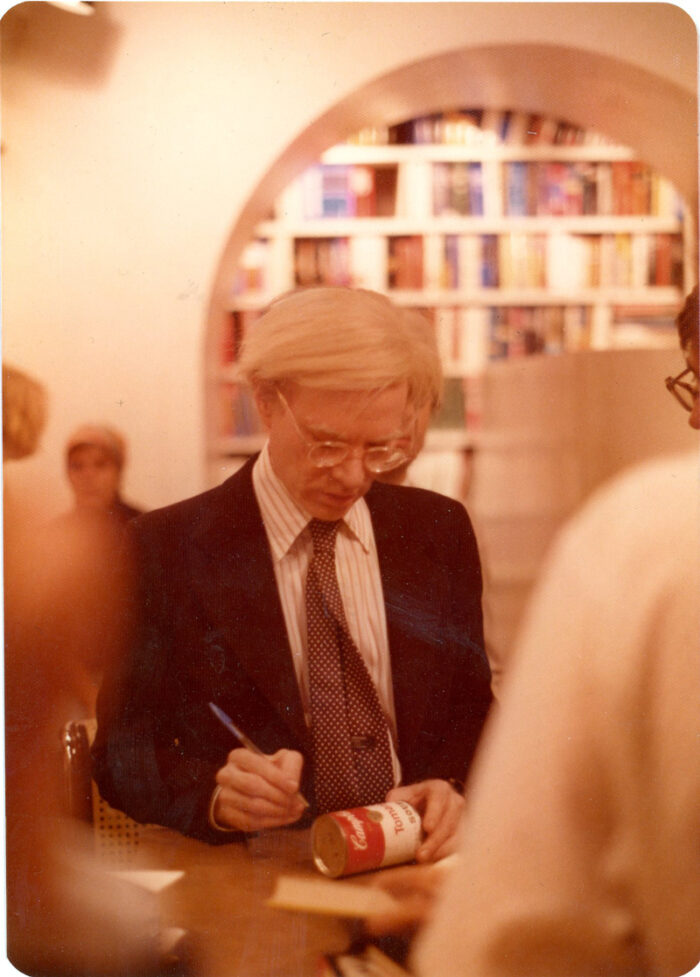
Andy Warhol at a New York Book Signing, Color Snapshot, 1975. Size: 5 x 3.5 inches
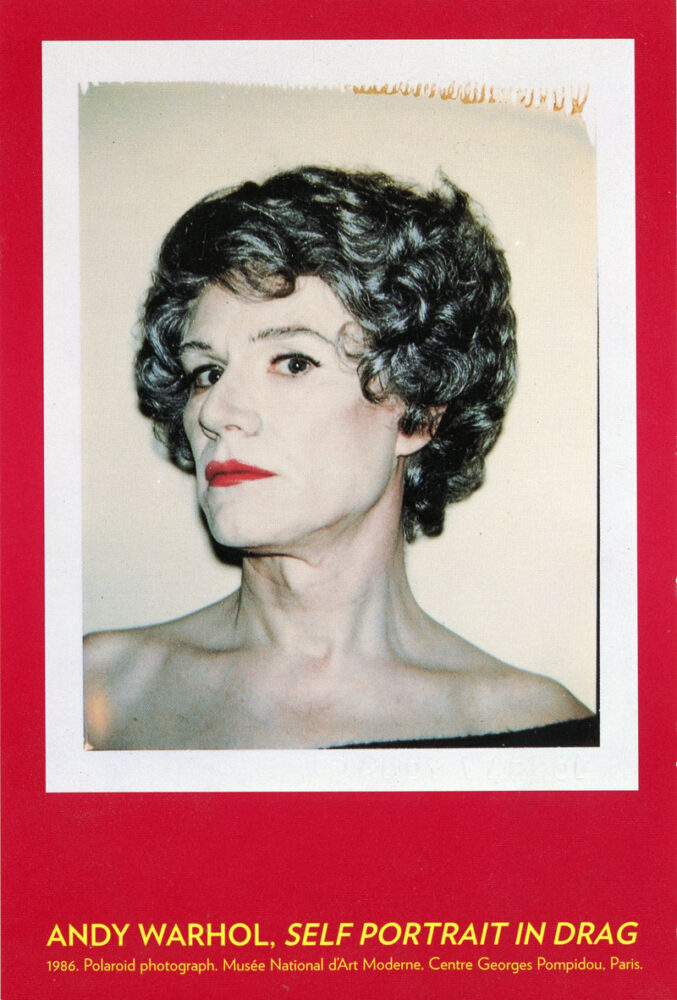
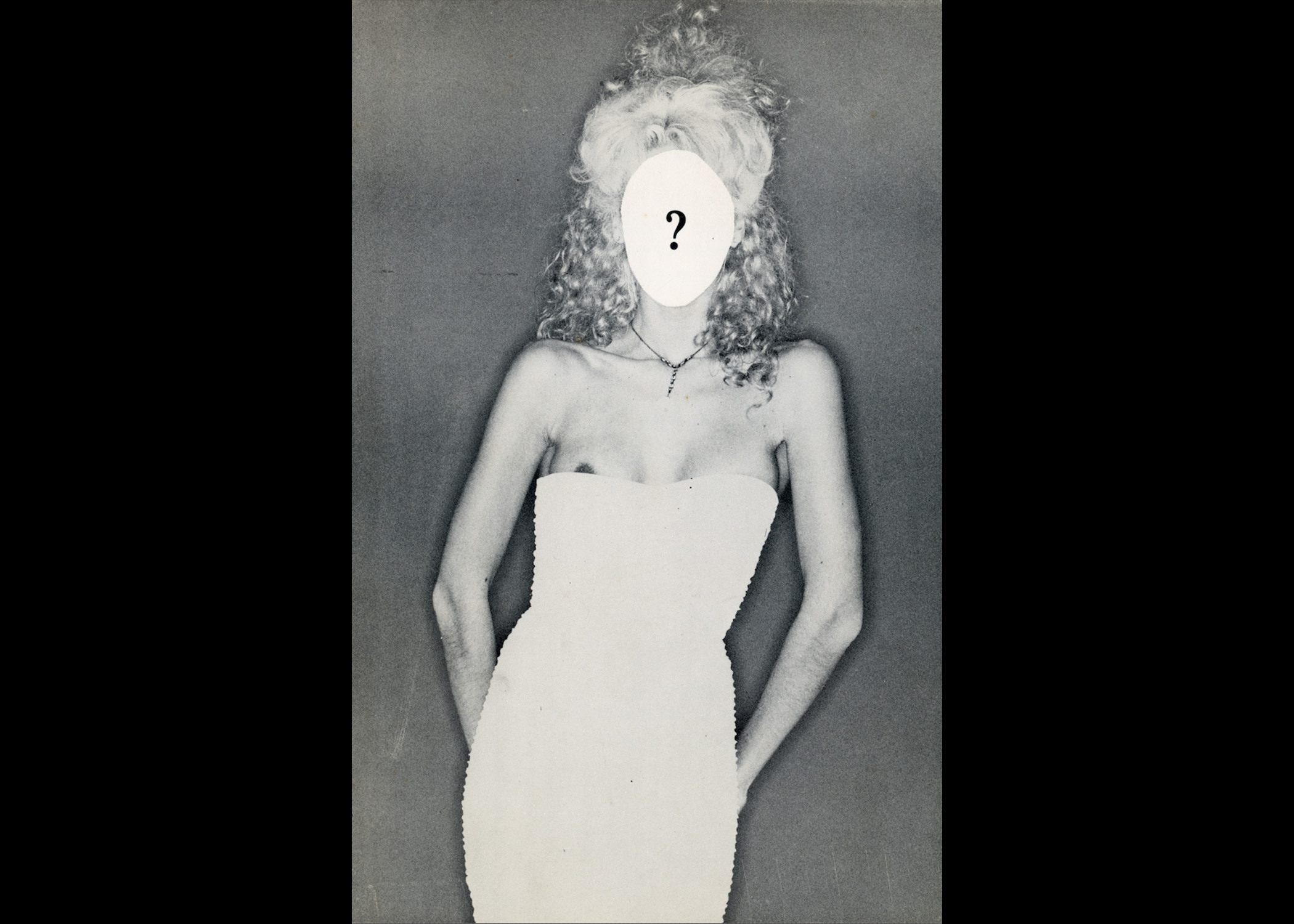
Andy Warhol, “Self Portrait in Drag” (1986), Card for the Exhibition Rrose is a Rrose is a Rrose: Gender Performance in Photography, Guggenhein Uptown, 1997. Size: 6 x 4 inches — Available
Andy Warhol may well have been Duchamp’s closest heir. Would his paintings of Campbell’s soup cans exist without Duchamp’s readymades? Warhol’s Self Portrait in Drag was the cover image for a Guggenheim exhibition, whose title Rrose is a Rrose is a Rrose: Gender Performance in Photography was taken from Duchamp’s female alter ego, Rrose Sélavy.
See more Andy Warhol ephemera
Joseph Beuys
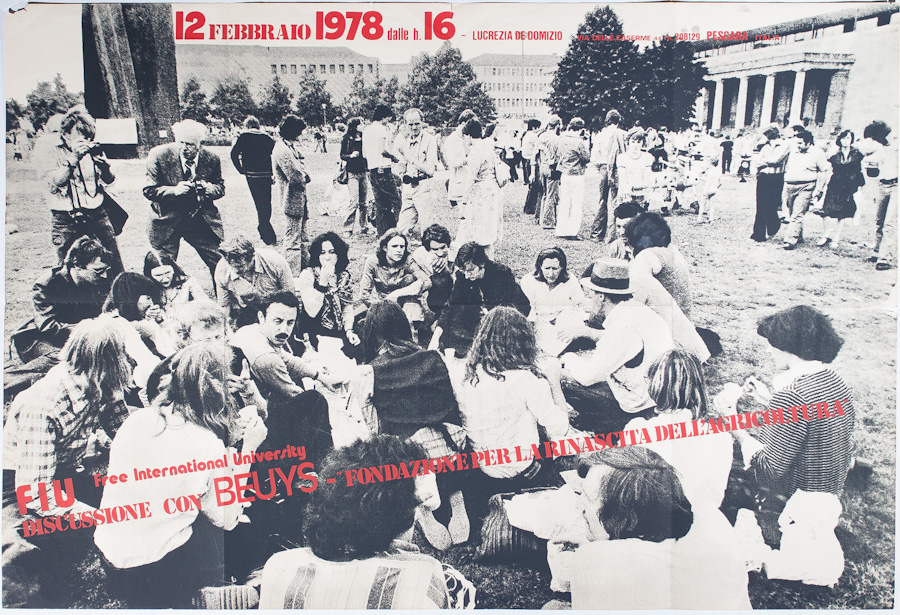
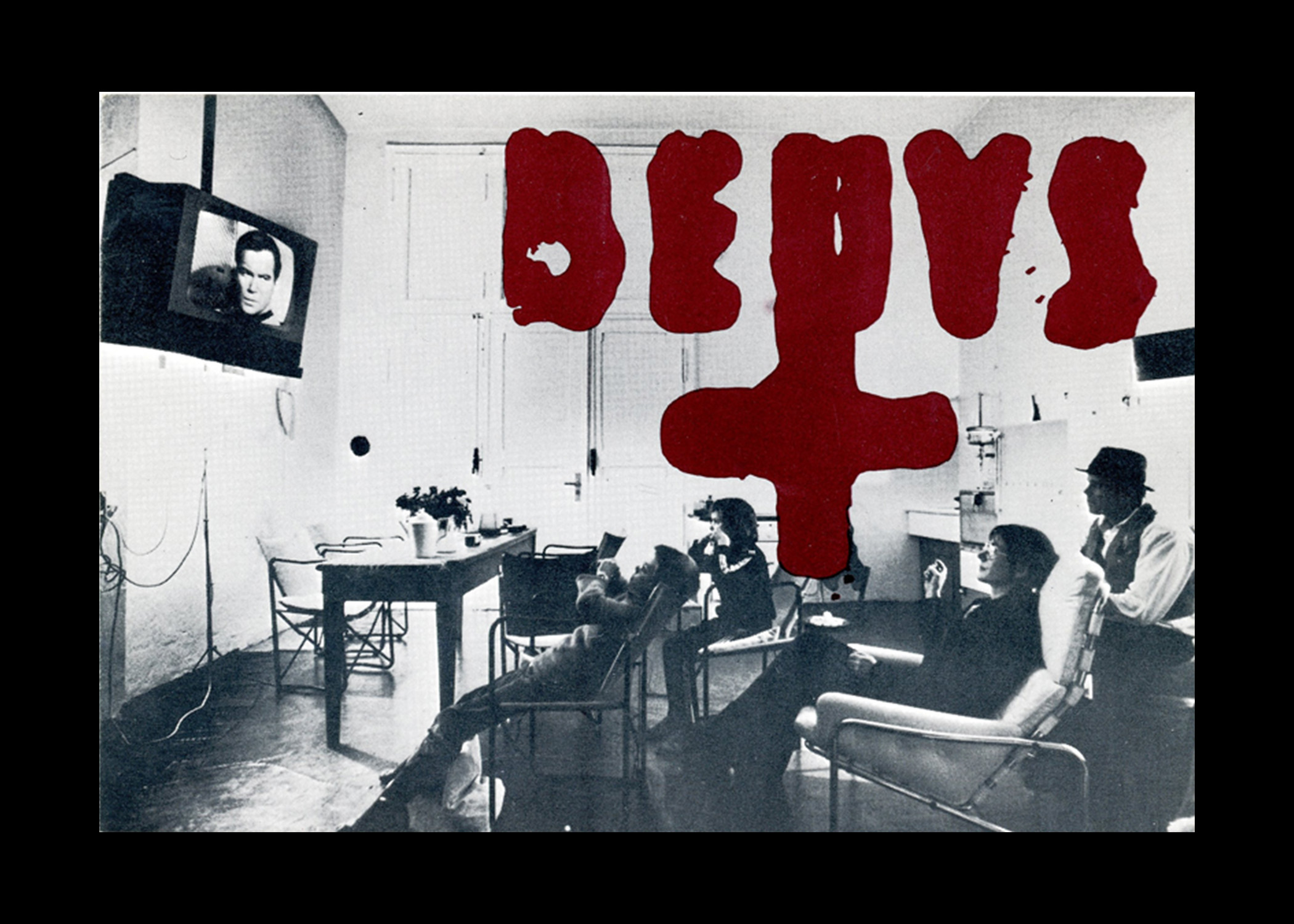
Joseph Beuys, Free International University, Folded Poster, 1978. Size: 36 x 25 inches
Like Duchamp, the German artist Joseph Beuys was also a teacher, performance artist and art theorist. He was the principal founder of The Free International University, and once claimed that “teaching is my greatest work of art.”
See more Joseph Beuys ephemera
Mike Bidlo
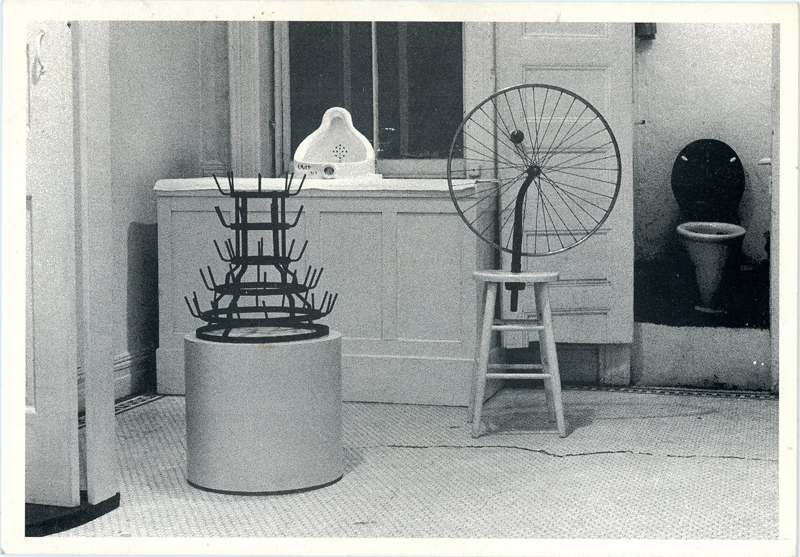
Mike Bidlo’s “Not Duchamp” works on display in Bidlo’s 5th Street studio, Folded Card, 1996. Size: 6.25 x 4.25 inches
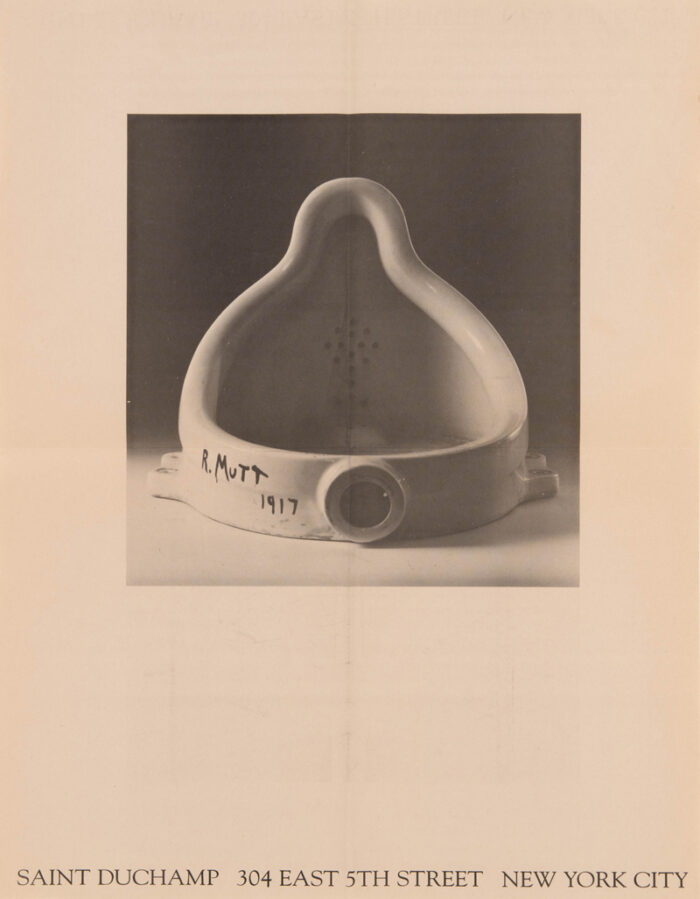
Mike Bidlo, Saint Duchamp, Poster Created for a Display of Bidlo’s “Not Duchamp” Works at his 5th Street Studio, 1996. Size: 22 x 17 inches
For Mike Bidlo, works by older artists were readymades which he could transform into his own art by fastidiously making copies. Bidlo’s hero was Duchamp, to whom he paid homage in 1996 by creating the display “Not Duchamp” that featured copies of the artist’s’s most famous works.
See more Mike Bidlo ephemera
Stefan Eins
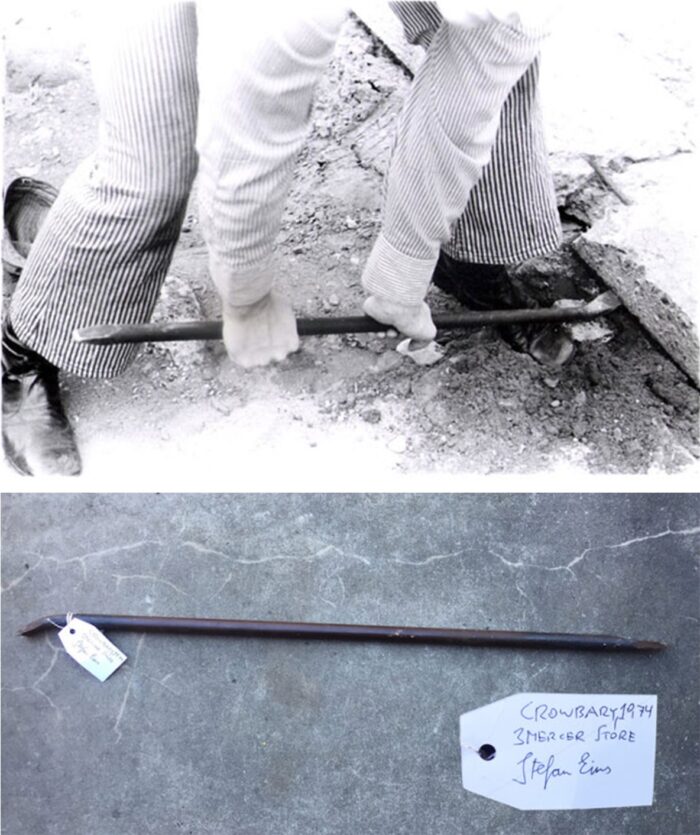
Stefan Eins, Actual Iron Crowbar, 1974. Size: 36 x 1 inches
Curiosity, a sense of wonder, and the belief that anything can be art, are the ideas that inspired Stefan Eins to exhibit a crowbar as a work of art. It was one of a number of readymades that Eins discovered in the hardware stores of Canal Street.
See more Stefan Eins ephemera
Sherrie Levine
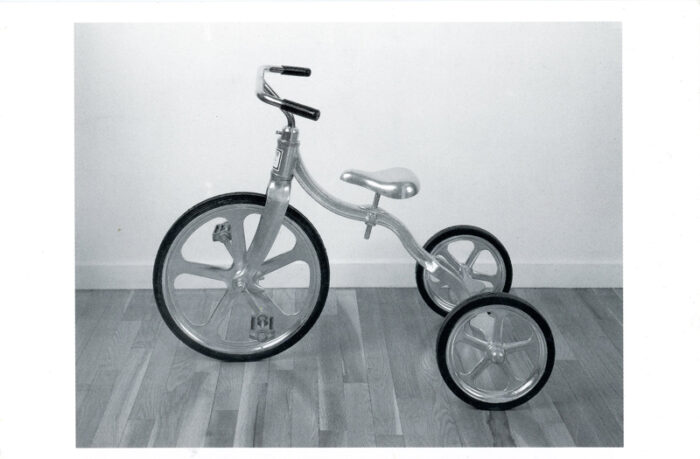
Sherrie Levine, Cathedrals & Hobbyhorses, Card, Jablonka Galerie (Germany), 1996. Size: 7.25 x 4.75 inches
Conceptual artist Sherrie Levine appropriated objects from real life to raise questions about what constituted a “rarefied art object.” In 1991 she examined the idea of originality when she created a polished bronze urinal that was modeled after Duchamp’s Fountain, although clearly different in the choice of materials and color.
See more Sherrie Levine ephemera
Lynda Benglis
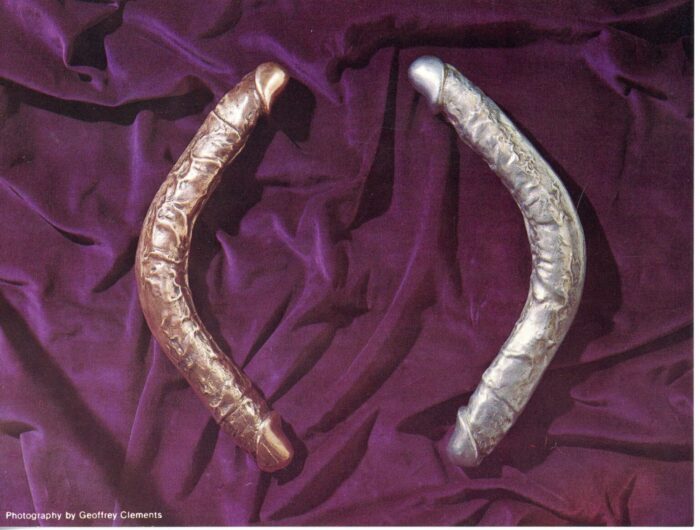
Lynda Benglis, Smile, Texas Gallery, Card, 1975. Size: 6.5 x 5 inches.
Like Duchamp, artist Lynda Benglis knew how to be provocative. A 1974 Artforum advertisement that portrayed her nude holding a double-sided dildo was intended as a feminist statement. Smile, a series of the dildo cast in different metals, was an outgrowth of the ad. Smile can perhaps be compared to Duchamp’s Female Fig Leaf, a a direct cast of the female vulva, reportedly taken from the same mold used for the nude figure in Étant donnés.
See more Lynda Benglis ephemera
Walter De Maria
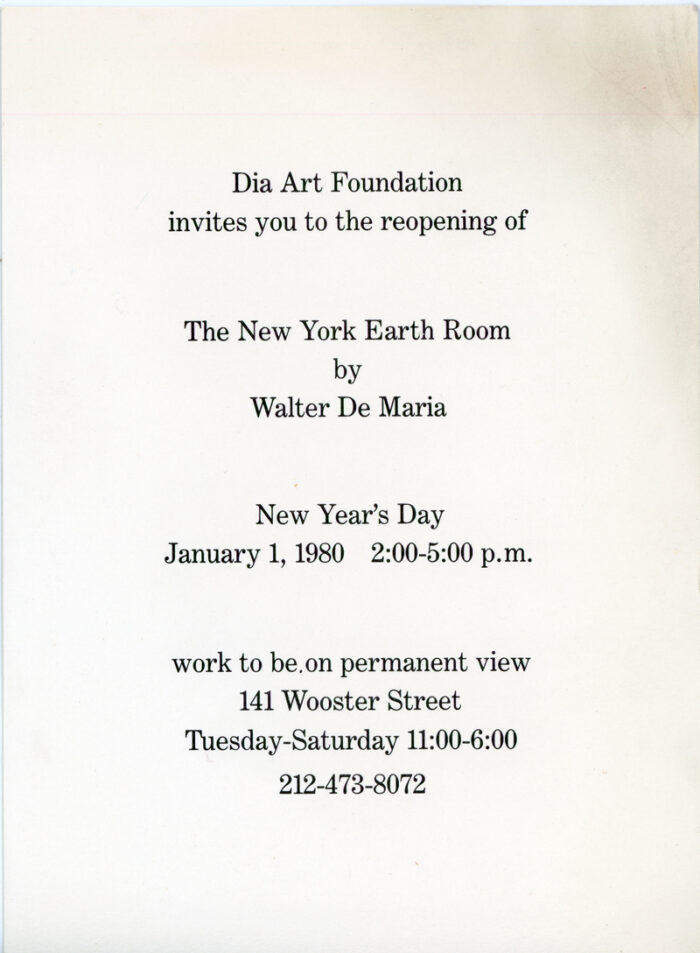
Walter De Maria, Reopening of The New York Earth Room, Dia Art Foundation, Card, 1980. Size: 7 x 5 inches
Can a room full of dirt be called a readymade? This installation by Walter De Maria shows how far-reaching Duchamp’s ideas could be.
See more Walter De Maria ephemera
Tehching (Sam) Hsieh
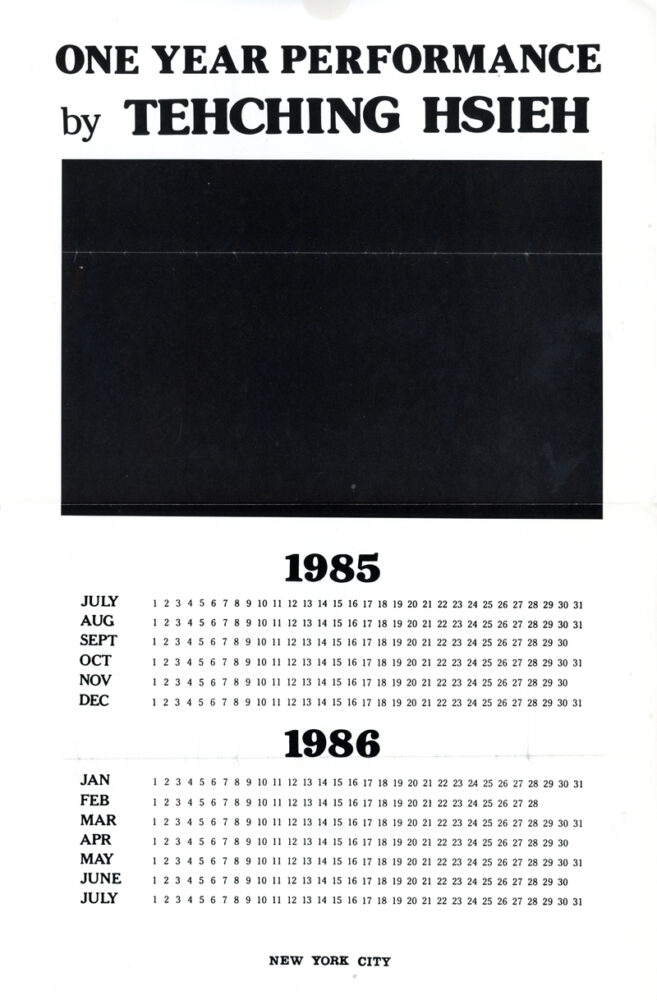
Tehching (Sam) Hsieh, “One Year Performance (No Art Piece),” Poster, 1985-86. Size: 17 x 11 inches. I Not Do Art, Not Talk Art, Not See Art. I Just Go In Life.
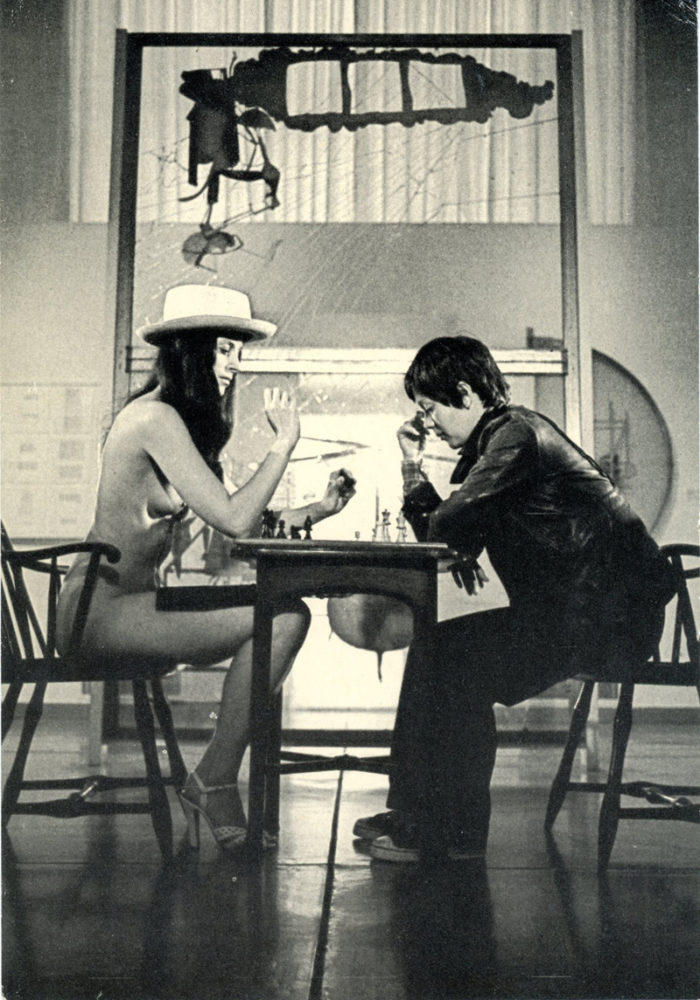
For many decades Duchamp claimed to have retired from making art in favor of playing chess. Although this was later revealed not to be true, Duchamp’s reputation as a “non-artist” became a major part of his mystique. The performance artist Tehching (Sam) Hsieh also engaged in something similar with his one-year performance No Art Piece. This performance was followed by Thirteen Year Plan, during which Hsieh created art that he did not show to anyone.
See more Tehching (Sam) Hsieh ephemera