We usually devote our weekly newsletter to items available for purchase. But sometimes we do the opposite, and list items that are no longer available because they have recently been sold.
Two of the items below were purchased soon after they were listed, but the others remained available on the Gallery 98 site for months, and even years. This is not surprising since there are hundreds of true treasures hidden away in our inventory of over 9,000 posted items. Use the search bar on our site, and if you find something that’s of interest, don’t hesitate. Traffic to Gallery 98 has more than doubled over the last year, and it is easier for collectors to make purchases since we are including prices for more and more listings. Quality items always sell.
Visit our Search Page New items are posted here first
Some More Beginnings, Catalogue for an Exhibition About Art and Technology, Curated by Billy Klüver, Julie Martin, Robert Rauschenberg, 1968
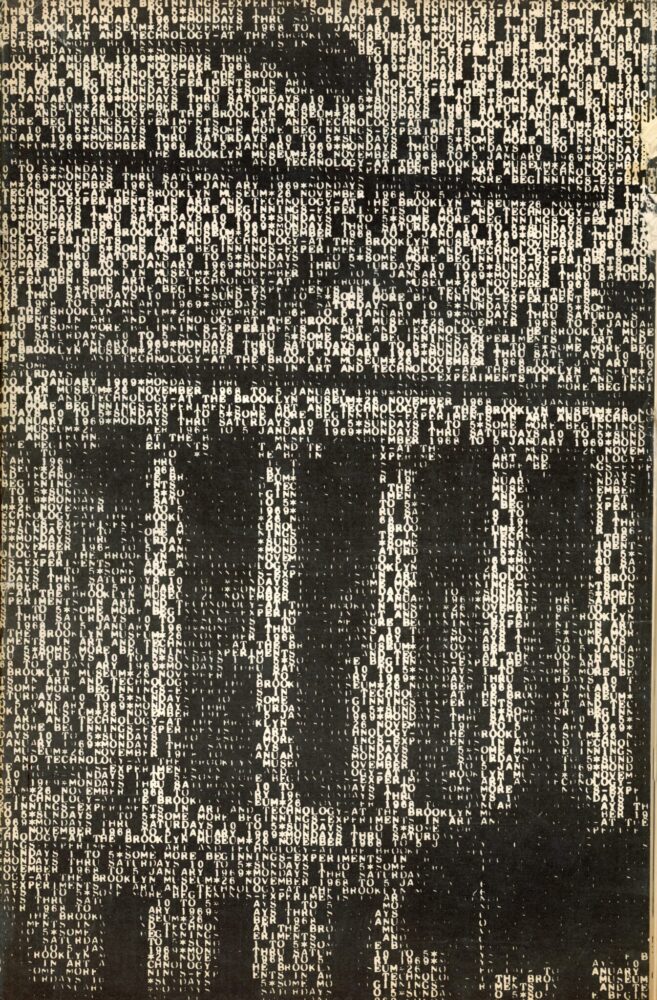
E.A.T. (Experiments in Art and Technology), Some More Beginnings, Exhibition Curated by Billy Klüver, Julie Martin, Robert Rauschenberg, 122-Page Catalogue, in Collaboration with the Brooklyn Musuem and the Museum of Modern Art, 1968. Size: 16.5 x 11 inches — Sold
Starting in the late 1960s, E.A.T. led the way in bring together art and technology. This large exhibition of collaborative works by artists and engineers was curated by Billy Kluver, Julie Martin and Robert Rauschenberg. The catalogue cover features a computer manipulated image of the Brooklyn Museum’s façade created by Manfred Schroeder, a prominent physicist and scientist at Bell Laboratories.
See more E.A.T. ephemera
Cy Twombly, Drawings 1954 – 1976, Paris Museum of Modern Art, 48-Page Catalogue, 1977
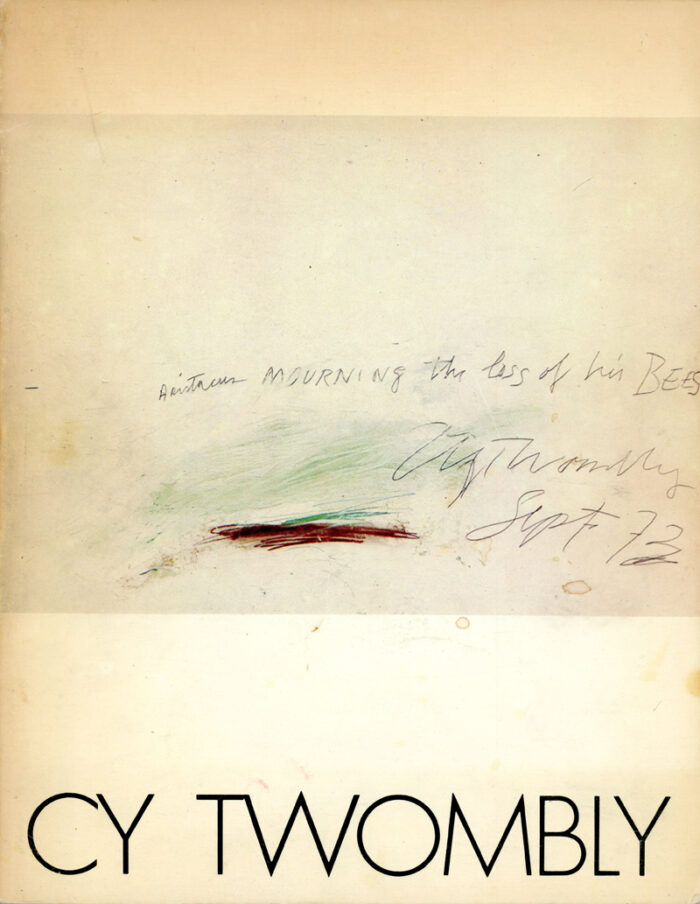
Cy Twombly, Drawings 1954 – 1976, 48-Page Catalogue, Paris Museum of Modern Art, 1977 — Sold
This important 1977 exhibition was one of the first to feature Twombly’s drawings. The catalogue essay in French by Marcelin Pleynet, is also of significance. It’s title, which translates into “drawings of letters, numbers and words – or painting by ear,” emphasizes an aspect of Twombly’s art that later became particularly important for Jean-Michel Basquiat.
See more Cy Twombly ephemera
Paul Thek, The Wonderful World That Almost Was, Kunsthalle Zurich, Folded Poster, 1996
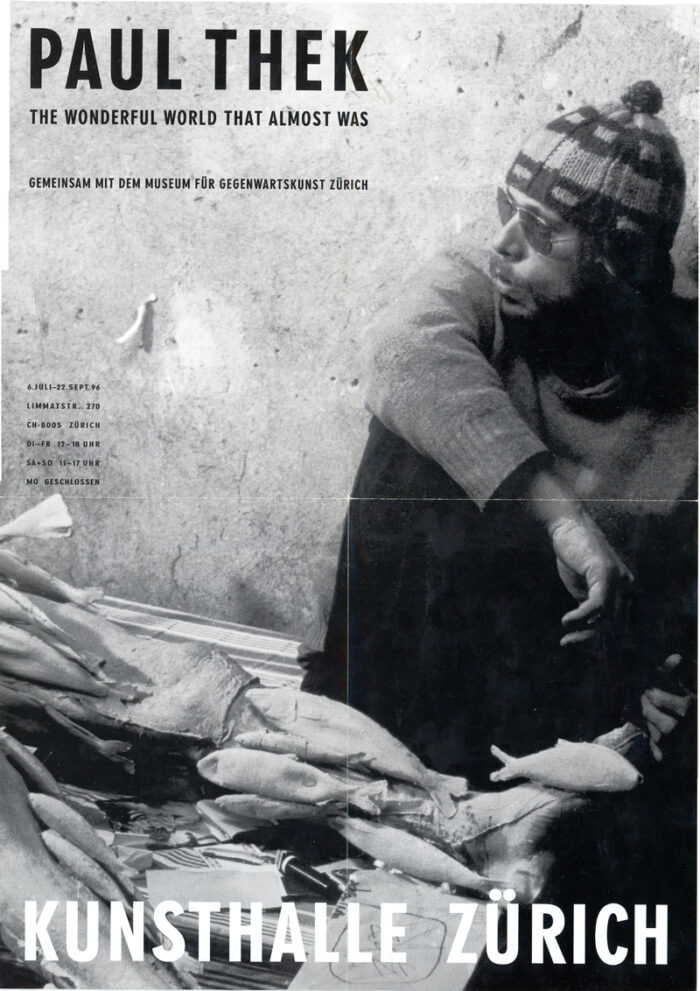
Paul Thek, The Wonderful World That Almost Was, Folded Poster and Card, Kunsthalle Zurich, 1996 — Sold
In 2026, the pioneering post-minimalist Paul Thek (1933-1988) received renewed attention with a major exhibition at Pace Gallery, and the publication of Andrew Durbin’s book The Wonderful World That Almost Was: A Life of Peter Hujar and Paul Thek. Durbin’s book and the 1996 exhibition poster both have the same title, a phrase that Thek originally coined as the title for one of his many notebooks.
See more Paul Thek ephemera
Bush Tetras, Poster Promoting Their New EP Rituals and a New York Concert, 1981
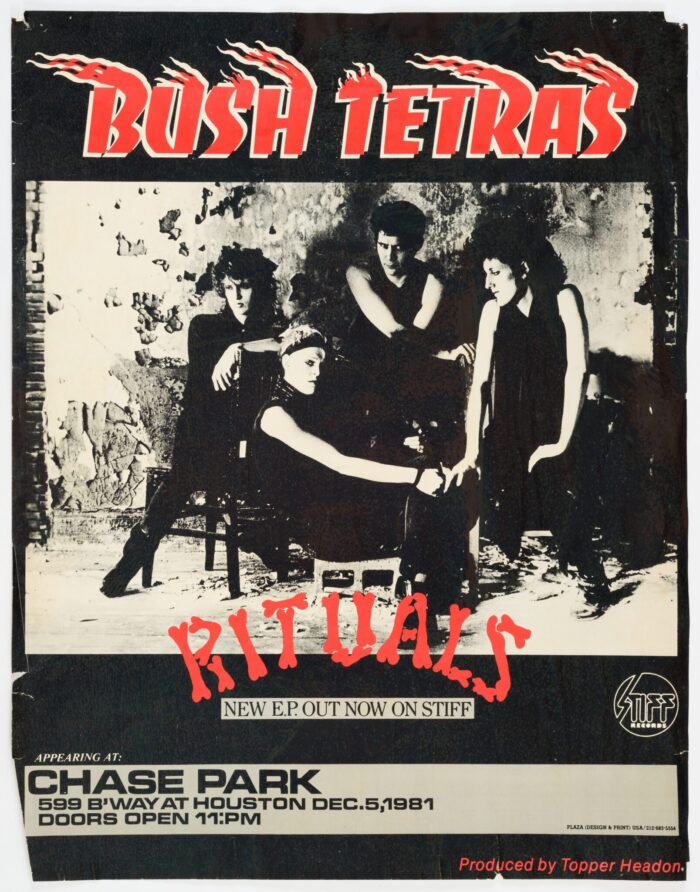
Bush Tetras, Rituals: New EP Out Now on Stiff, Appearing at Chase Park, Poster, 1981 — Sold
The no wave rock group Bush Tetras enjoyed major success with their 1980 debut single “Too Many Creeps.” They disbanded in 1983 but reunited in 1995, and continue performing today. This iconic early poster accompanied the release of Rituals, an EP produced by Topper Headon of the Clash for the English label Stiff. The design is credited to Neville Brody, an influential British graphic designer.
See more Bush Tetras ephemera
The Black Party: Rites XI, Photo by Robert Mapplethorpe, The Saint At Large, Poster, 1990
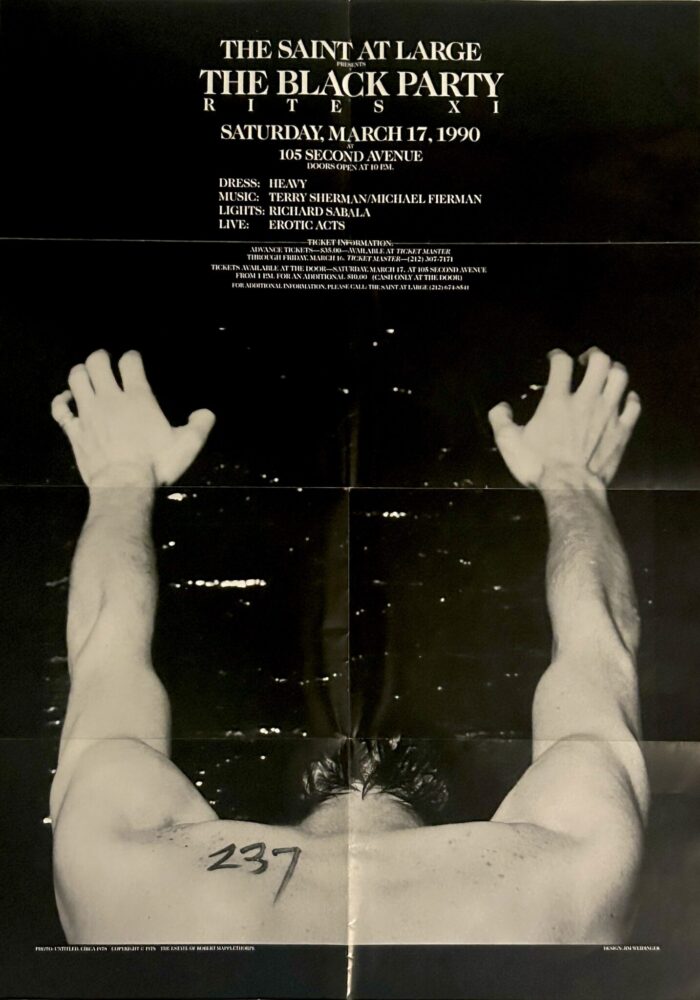
The Saint At Large, The Black Party: Rites XI, Photo by Robert Mapplethorpe, Poster, 1990 — Sold
The Saint was a legendary gay disco that occupied the former Fillmore East building on Second Avenue from 1980 through 1988. When its physical space closed, founder Bruce Mailman established the Saint at Large, a nomadic club that organized parties in different New York locations. The leather-friendly Black Party was a regular event that Robert Mapplethorpe had photographed during the Saint’s early years. Mapplethorpe’s death in 1989 makes it particularly poignant that one of his photos is featured on this 1990 poster.
See more Robert Mapplethorpe ephemera
Patti Astor, Promotional Foldout Brochure Publicizing Acting Credits in Independent Films, c. 1980
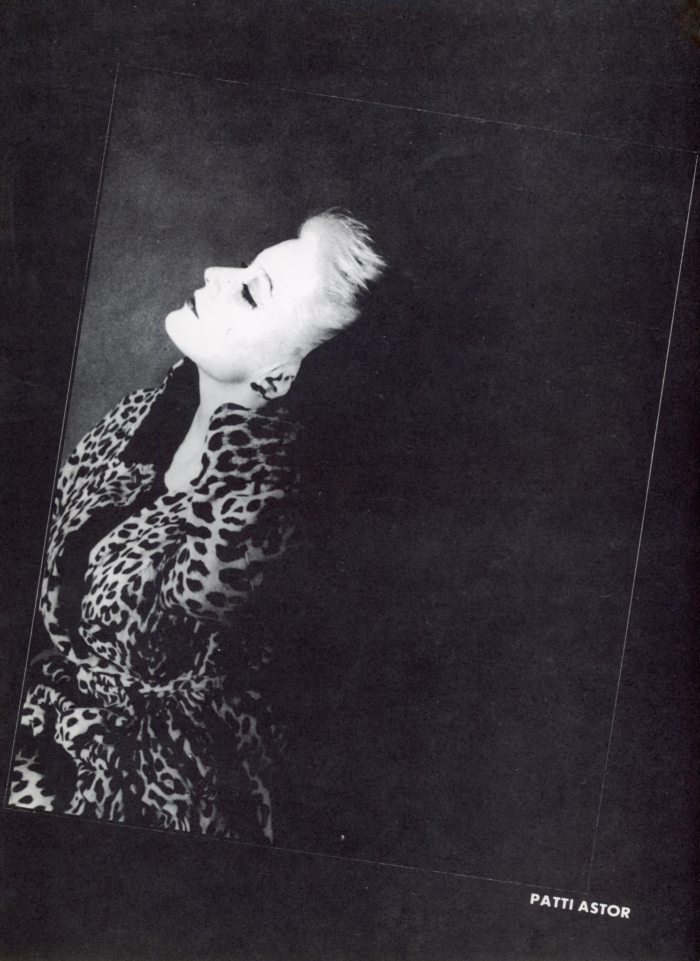
Patti Astor, Double-Sided Publicity Foldout, c. 1980. Unfolded size: 32 x 11 inches — Sold
This foldout brochure featuring stills from six films starring Patti Astor is the definitive record of her career as a leading-lady in the low-budget independent films popular in Downtown NY in the late 1970s. Astor would later help start the Fun Gallery, which is credited with launching the East Village gallery scene, and was one of the first galleries to showcase graffiti artists.
See more Patti Astor ephemera
Sots Art: Russian Mock-Heroic Style, Semaphore Gallery, Card, 1984
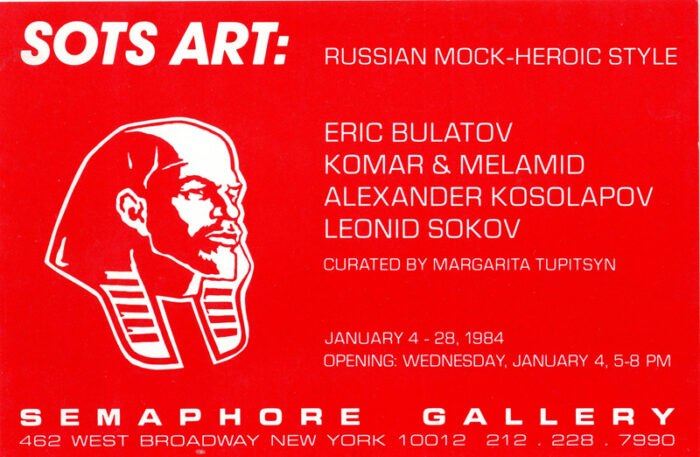
Eric Bulatov, Komar & Melamid, Sots Art: Russian Mock-Heroic Style, Card, Semaphore Gallery, 1984 — Sold
Sots was an underground art movement that began in the Soviet Union in the 1960’s and 70s. Drawing inspiration from American Pop Art, it mocked Soviet propaganda by combining portraits of communist icons like Lenin with imagery drawn from Western consumer culture. In 1977, Vitaly Komar and Alexander Melamid, two leading Sots artists, moved from Moscow to New York, and the movement began attracting attention in the West. Other Soviet artists soon followed.
See more Russian Art ephemera
William Burroughs and George Condo, Collaborative Works 1988-96, Pat Hearn Gallery, Card, 1997
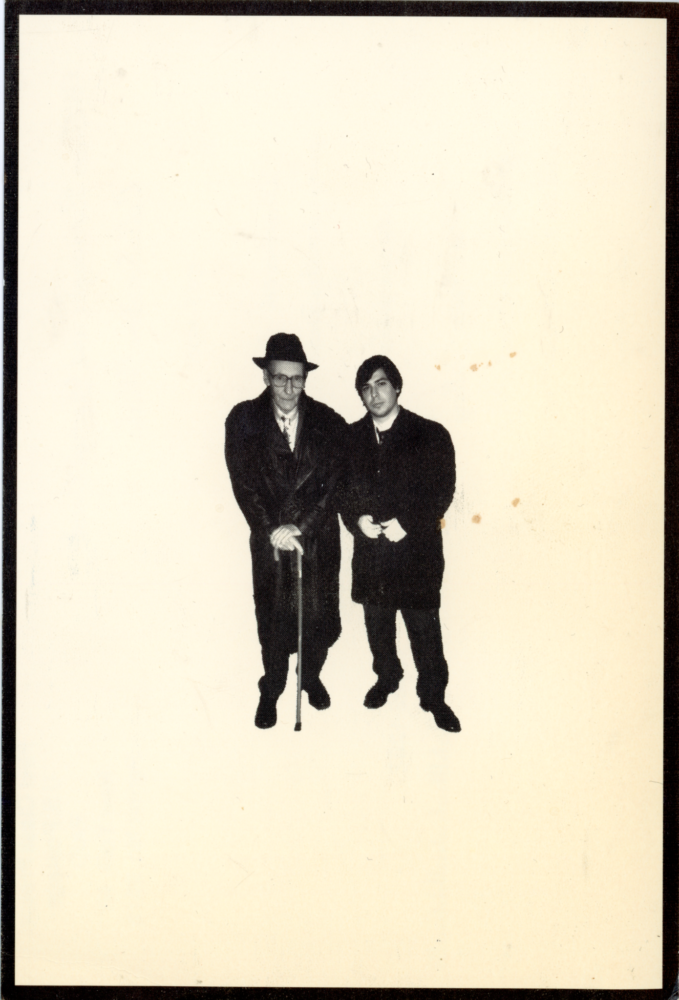
William Burroughs and George Condo, Collaborative Works 1988-96, Pat Hearn Gallery, Card, 1997 — Sold
During the 1970s and 80s, William Burroughs transitioned from literary icon to becoming a central figure in the New York art world. During these years he began creating and exhibiting his shotgun paintings, as well as, works in collaboration with established visual artists like Robert Rauschenberg and Keith Haring. His collaboration with artist George Condo lasted eight years, and resulted in “roughly sixty paintings,” as well as, the acclaimed illustrated novella, Ghost of Chance. This exhibition at the Pat Hearn Gallery took place soon after Burrough’s death.
See more William Burroughs ephemera and George Condo ephemera