From our newsletter archives — Originally published September 2, 2021; new images and text added.
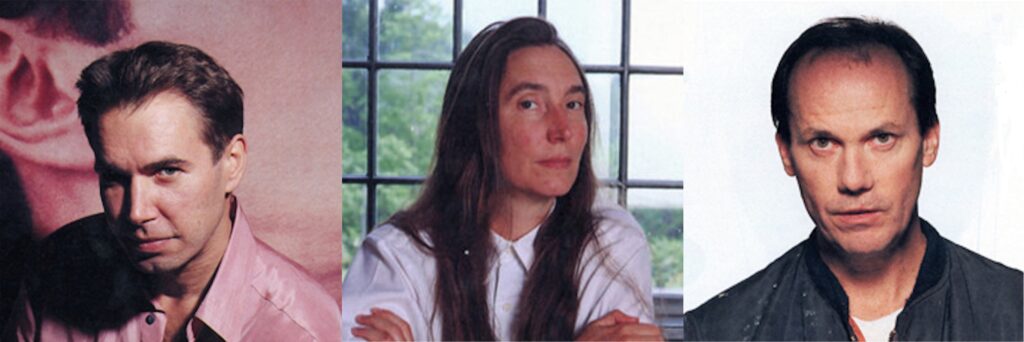
Portraits of Jeff Koons, Jenny Holzer, and Richard Prince from their respective issues of Süddeutsche Zeitung Magazin. 1992-1996.
Selected issues from the 1990s of the German Süddeutsche Zeitung (SZ) magazine are today collector items because of the publication’s radical decision to give famous artists editorial control designing lengthy picture spreads and the magazine’s cover. Based in Munich, SZ was Bavaria’s leading newspaper and the magazine was part of its Sunday edition. Each artist’s section included an interview and generally totaled 40 pages.
For artists, SZ Magazin provided both a unique challenge and an opportunity. Offered the possibility of reaching nearly one million Germans, they were faced with an important decision of what to say and how to translate their personal approach to art-making onto the printed page. Gallery 98 features here issues of SZ Magazin created by three media-savvy American artists: Jenny Holzer, Jeff Koons and Richard Prince.
Jeff Koons, Baby and Bucket; Embrace Your Past, SZ Magazin, November 13, 1992
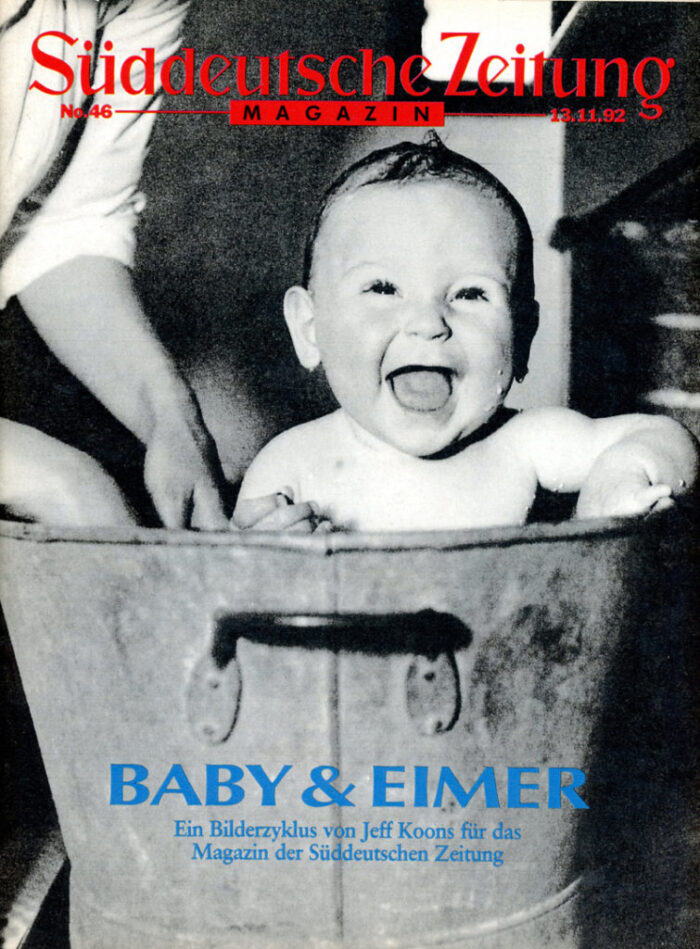
Süddeutsche Zeitung magazine, Jeff Koons, Baby and Bucket, 35-Pages by the Artist, Magazine, November 13, 1992. Size: 9 x 12 Inches — Available for Purchase
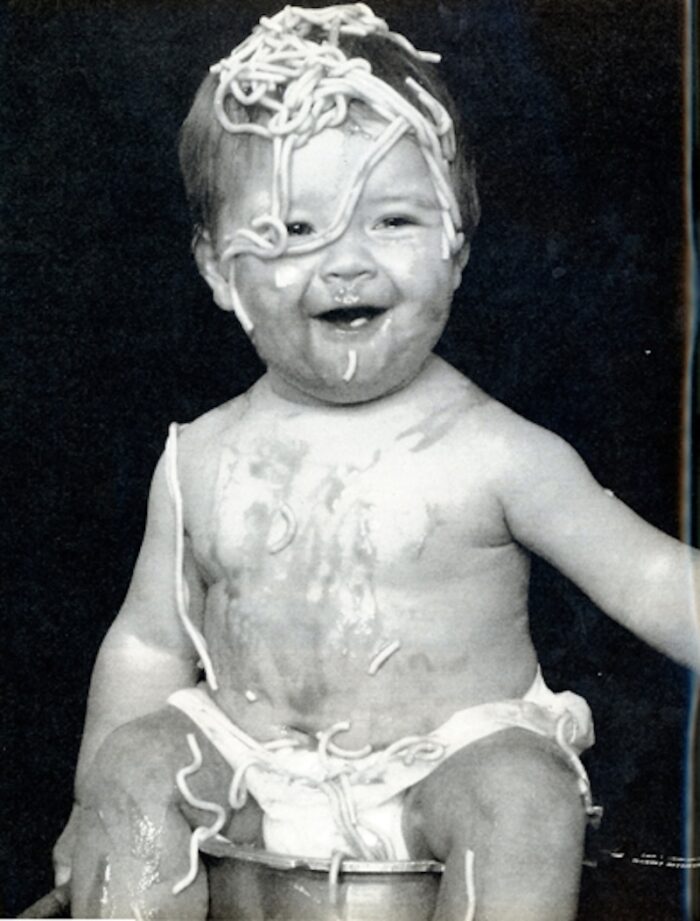
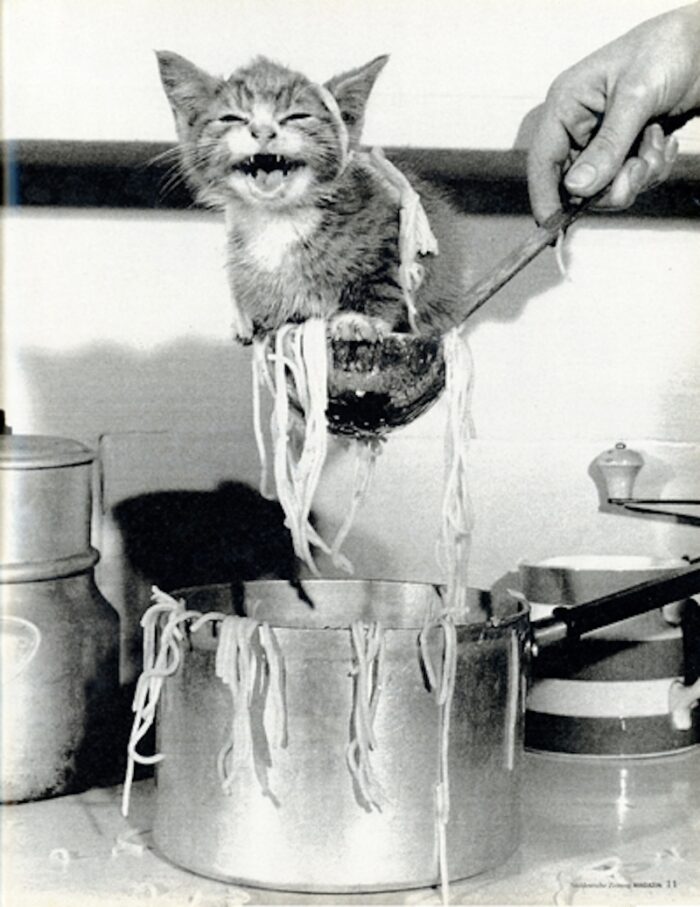
Pages from Jeff Koon’s picture story. Baby and Bucket. Page size: 9 x 12 inches.
In 1992 Jeff Koons was temporarily living in Munich with his wife Ilona Staller (aka La Cicciolina) and their newly born child. These personal circumstances were clearly the inspiration for his picture story, a collection of images of babies, kittens and monkeys, perhaps assembled from SZ’s picture files. The spread reflects Koons’ eye for the sentimental clichés of bourgeois life. In the accompanying interview (in German) he explains his creative methodology: “The idea of direct, banal implementation appealed to me… Art is communication.. I want to be quick and fresh.”
See more Jeff Koons ephemera.
Jenny Holzer, Sex Murder; Death Is Not a Hygienic Matter, SZ Magazin, November 19, 1993
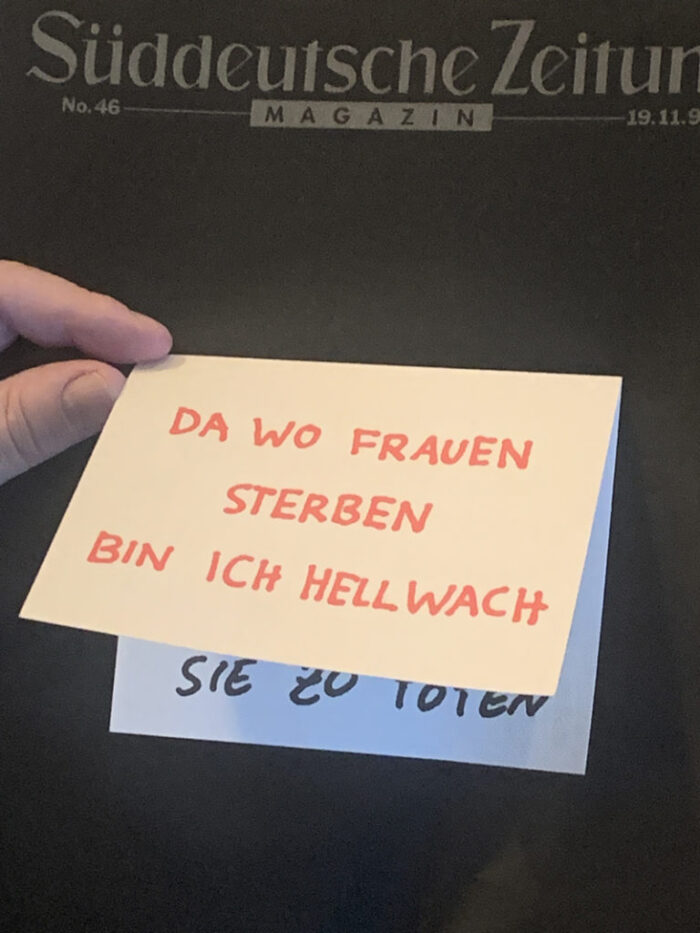
Süddeutsche Zeitung magazine, Jenny Holzer, Sex Murder: 40 Pages By The Artist (with works in both German and English), Magazine, with Folded Card attached on Cover, November 19, 1993. Size: 9 x 12 Inches — Available for Purchase
Translation from the front of the card attached on the cover: “Where women die I am wide awake.” This opens up to the inside of the card which reads in translation: “She fell on the floor of my room. She wanted to be clean when dying but she was not… The color of her open insides provokes me to kill her.”
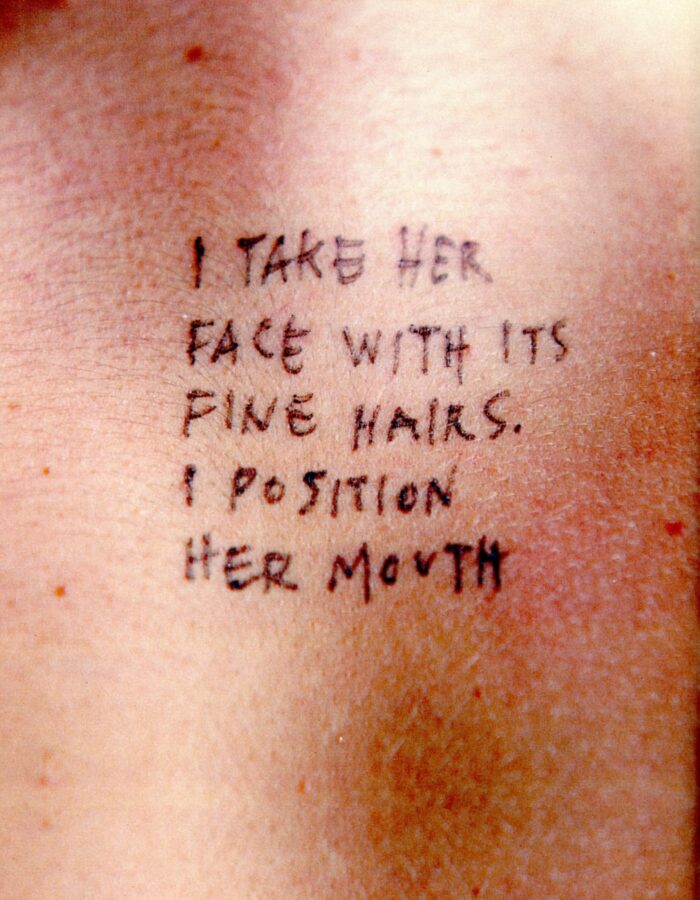
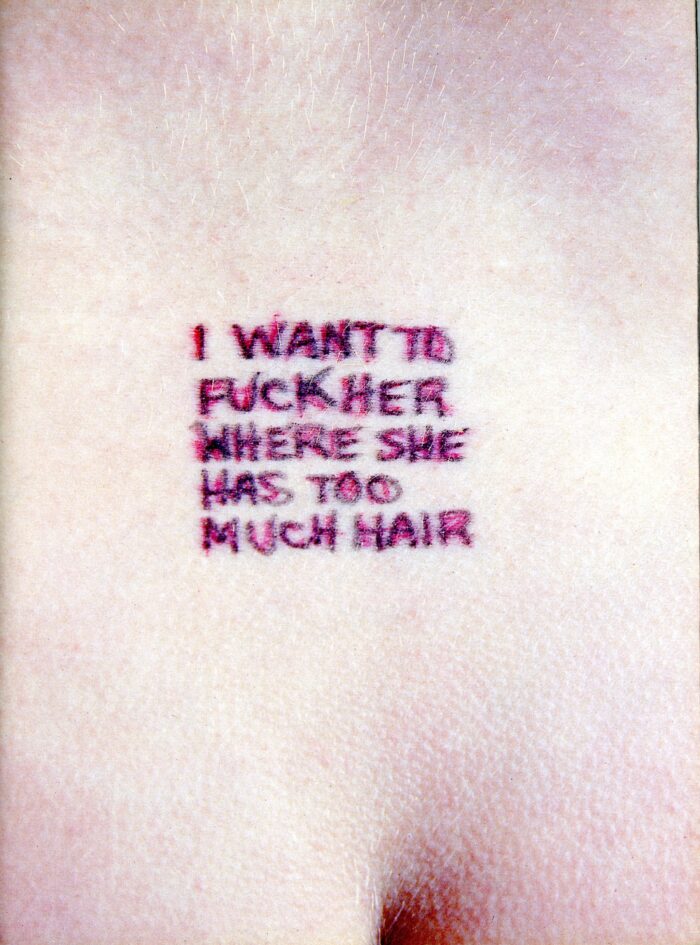
Pages from Jenny Holzer’s picture spread. Sex Murder
For her issue of SZ, Jenny Holzer created works about the atrocities taking place in the Bosnian War, which was not far from Bavaria. Titling her work Lustmord (Sex Murder), Holzer addresses the systemic rape of women, with fragmented text reflecting the perspectives of the perpetrator, the rape victim and witnesses. She begins with the disturbing thoughts of the rapist murderer handwritten in German on a lift-up card attached to the magazine cover. Inside Holzer features close up photographs of phrases in English and German written in ink on naked flesh.
See more Jenny Holzer ephemera
Richard Prince, Passion Play; I couldn’t find a parking space. So I bought a parked car, SZ Magazin, November 15, 1996
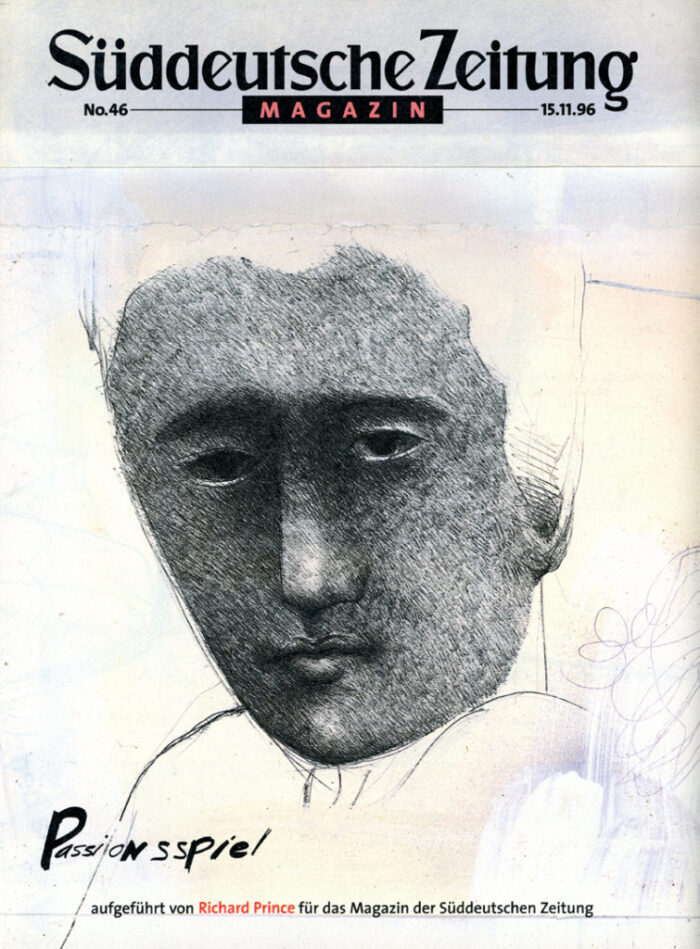
Süddeutsche Zeitung magazine, Richard Prince, Passion Game, 37 Pages by the Artist, Magazine, November 15, 1996. Size: 9 x 12 Inches
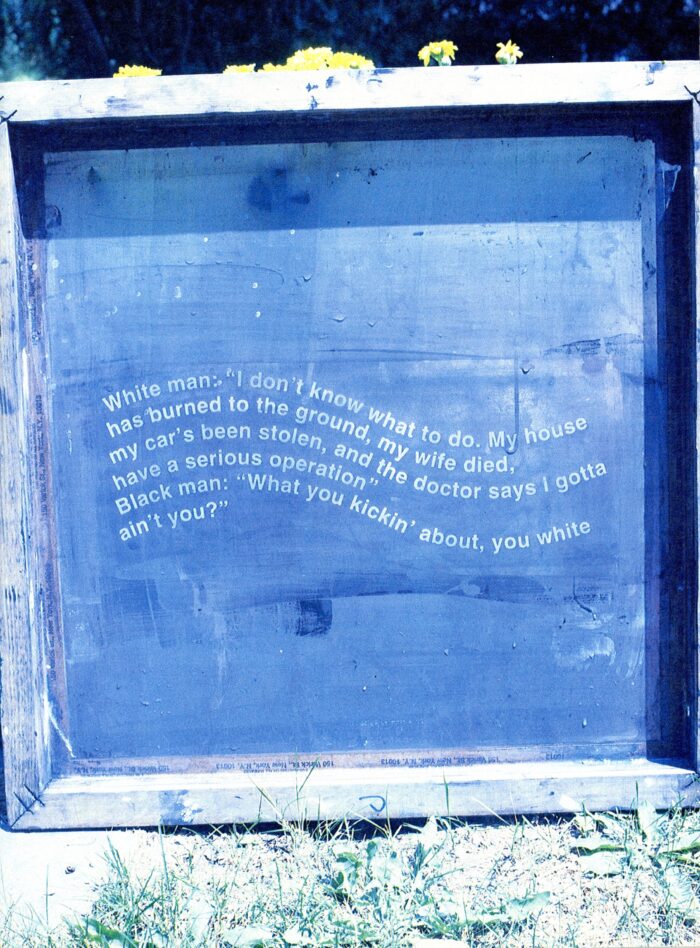
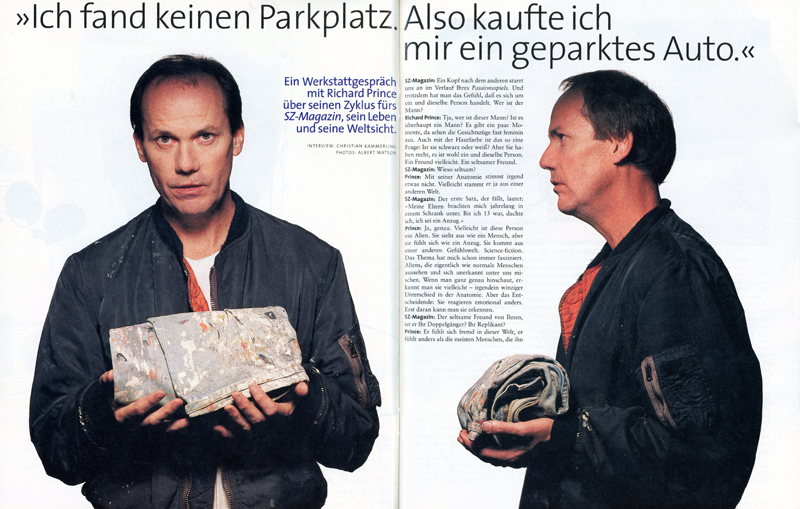
Pages from Richard Prince’s picture spread. Passion Play.
Richard Prince’s collaboration with SZ coincided with an exhibition at the Haus der Kunst in Munich at a point of personal and professional reflection. His “Passion Play” drawings were originally made in the early 1970s when he was in therapy in the early, and they were intended to convey feelings that words could not express. They were resurrected as the basis for new work in his Munich exhibition, which also (like his SZ picture story) included more familiar works like his paintings featuring written jokes as subject matter.
See more Richard Prince ephemera


