For artists, the final decades of the 20th century were a time of heightened self-awareness, a period when many people began to explore their own lives and find content in issues of personal identity. Accompanying this were demands for political change that soon established the foundations for a new, more multicultural art world with an increased sensitivity to ethnic, gender and sexual diversity.
Much of this story is reflected in the art ephemera from these years. Because this history is just as important as the story of individual artists and galleries, Gallery 98 makes it accessible through search prompts organized by themes.
Below are three major categories – African Diaspora, LGBTQ, Woman Interest — with a selection of examples from each of the themes.
Woman Interest
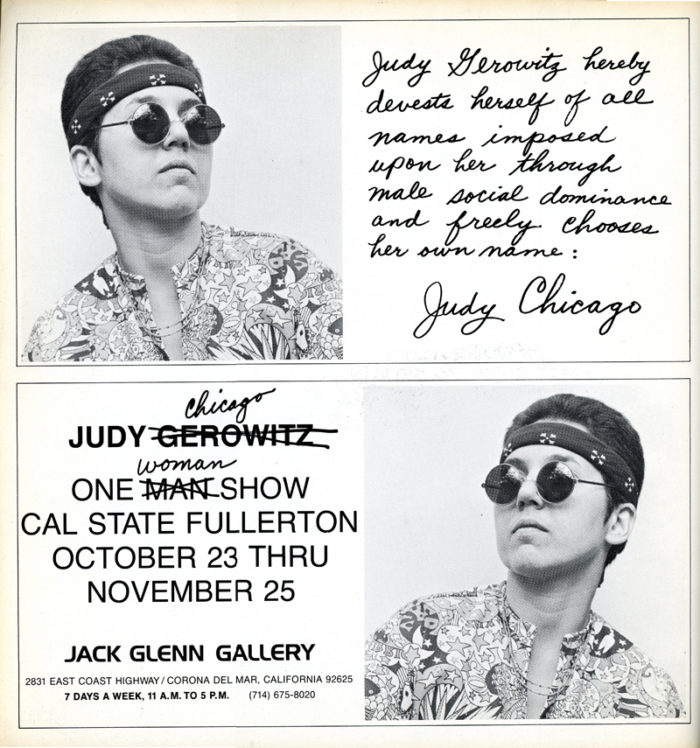
Judy Chicago, One Woman Show, Jack Glenn Gallery (California), Artforum Advertisement, 1970
This Artforum advertisement announces that Judy Gerowitz is divesting herself of her paternal name and will now be known as Judy Chicago.
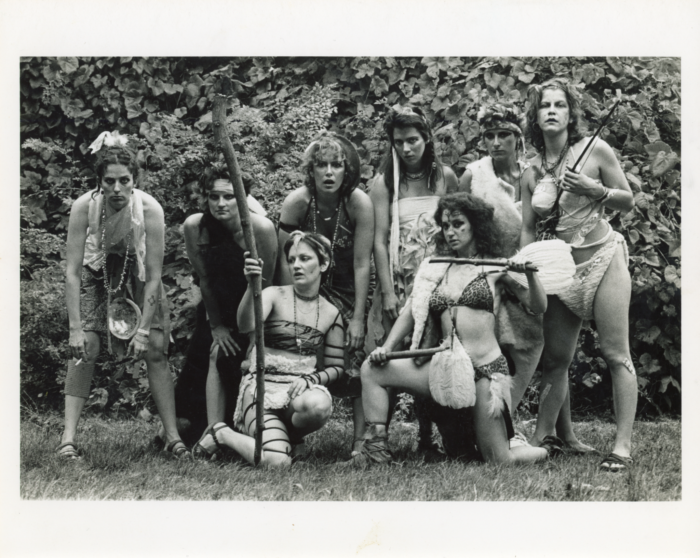
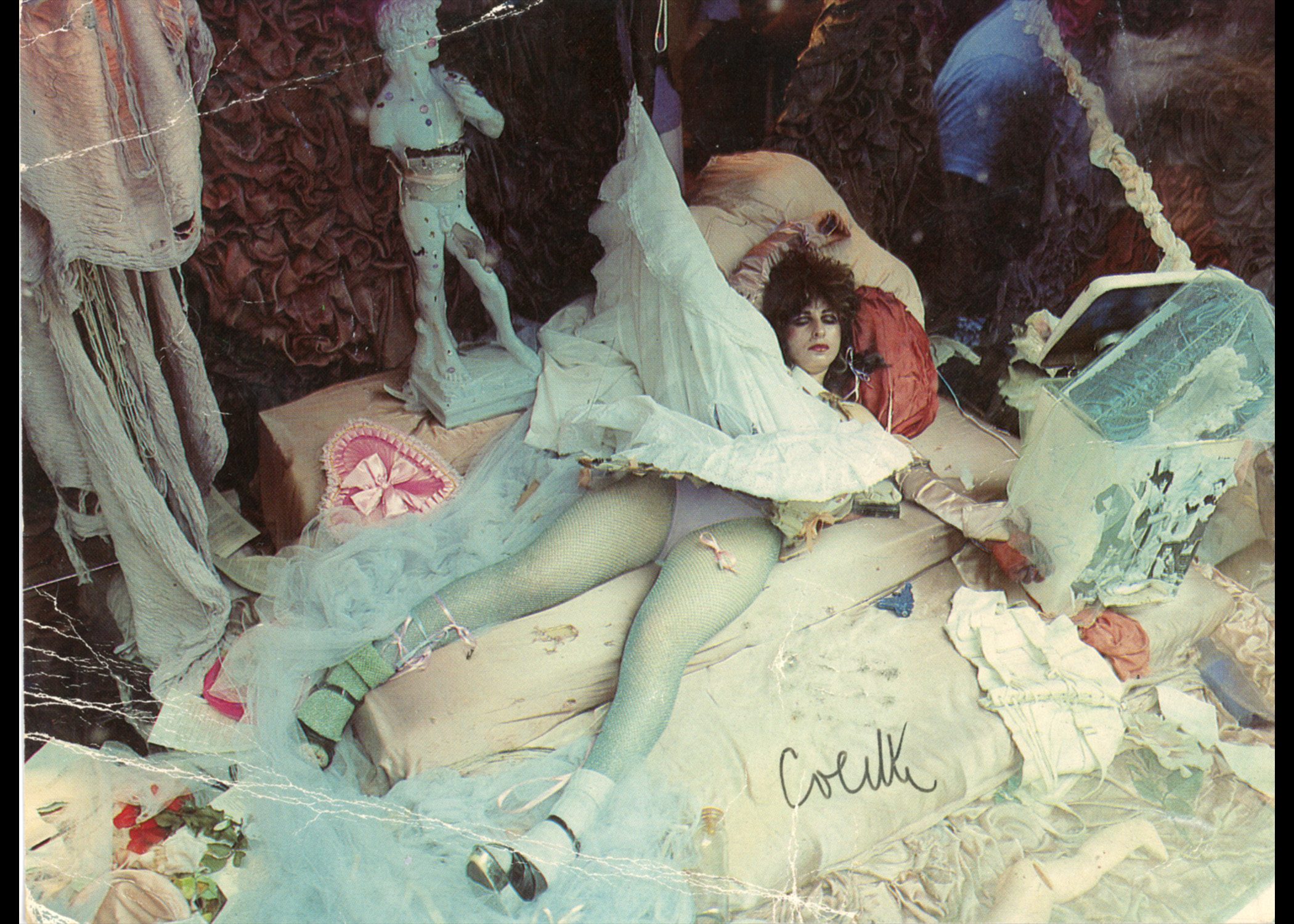
Kiki Smith & Ellen Cooper, Cave Girls, Two Promotional Photographs by Teri Slotkin, and 10 Pages of Preparatory Notes, 1981-1984. Photo Size: 8 x 10 inches — For Sale
From the collection of notes prepared by Kiki Smith and Ellen Cooper: “Cave girls are not in the history books, and yet they must have been here long before the word history. We need to know what they knew…Cave Girls won’t be Slave Girls; Cave Girls won’t be concubines; Cave Girls don’t take crap.”
Read more in our previous newsletter about Cave Girls.
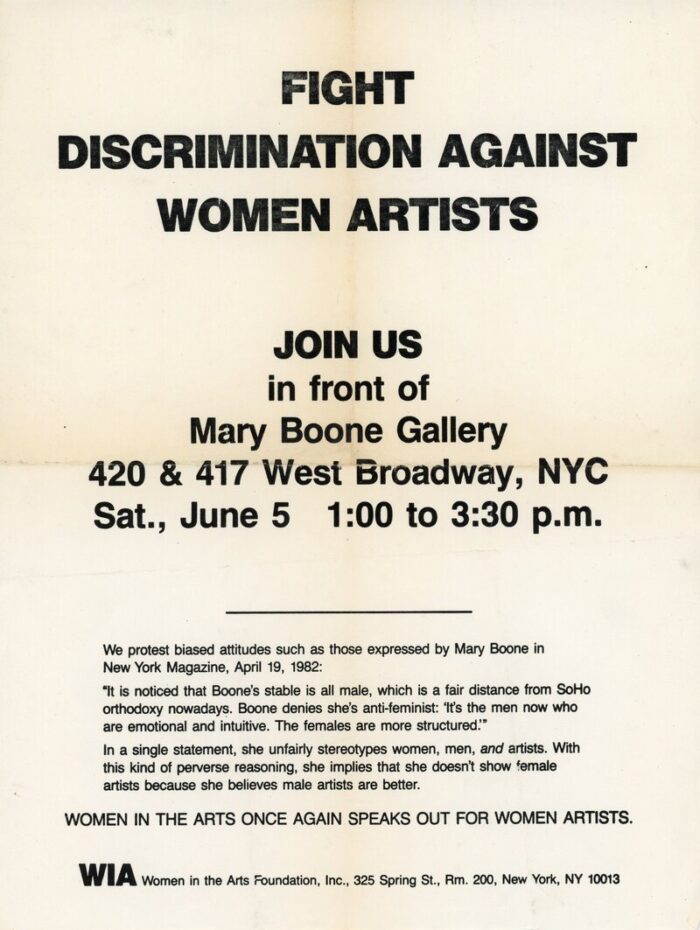
Fight Discrimination Against Women Artists, Protest In Front of Mary Boone Gallery, Women in the Arts Foundation, Flyer, 1982. Size: 11.5 x 8 inches
From the flyer: “It is noticed that Boone’s stable is all male…Boone denies she’s anti-feminist: “It’s the men now who are emotional and intuitive. The females are more structured.” In a single statement she unfairly stereotypes women, men, and artists…”
See more Women Interest ephemera
African Diaspora
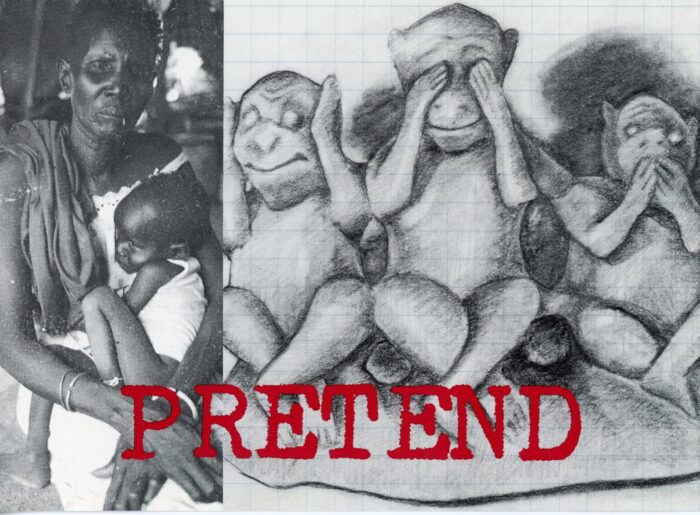
Adrian Piper, Pretend, John Weber Gallery, Card, 1990. Size: 7 x 5 inches — For Sale
The exhibition announcement is for a series of works by Piper that explore how we consciously and unconsciously allow inequality to persist. Here a mother with a hungry child is juxtaposed to the three wise monkeys who personifying “see no evil, hear no evil, speak no evil.”
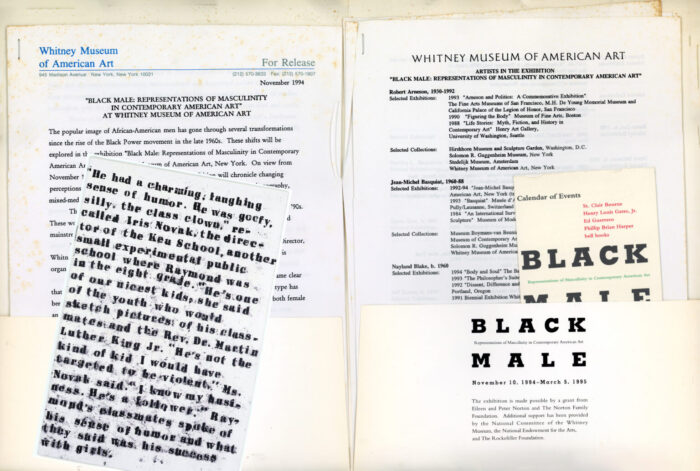
Press Packet with Five Items, Black Male: Representations of Masculinity in Contemporary Art, Group Exhibition with Glenn Ligon, Renee Cox, Robert Mapplethorpe, Adrian Piper, Whitney Museum, 1994. Folder Size: 9 x 12 inches — For Sale
Curated by Thelma Golden (now the director of the Studio Museum of Harlem) this important, innovative exhibition addressed issues of both race and sexuality. The press packet includes the full object list for the exhibition, as well as, a 22-page gallery guide with a cover by Glenn Ligon.
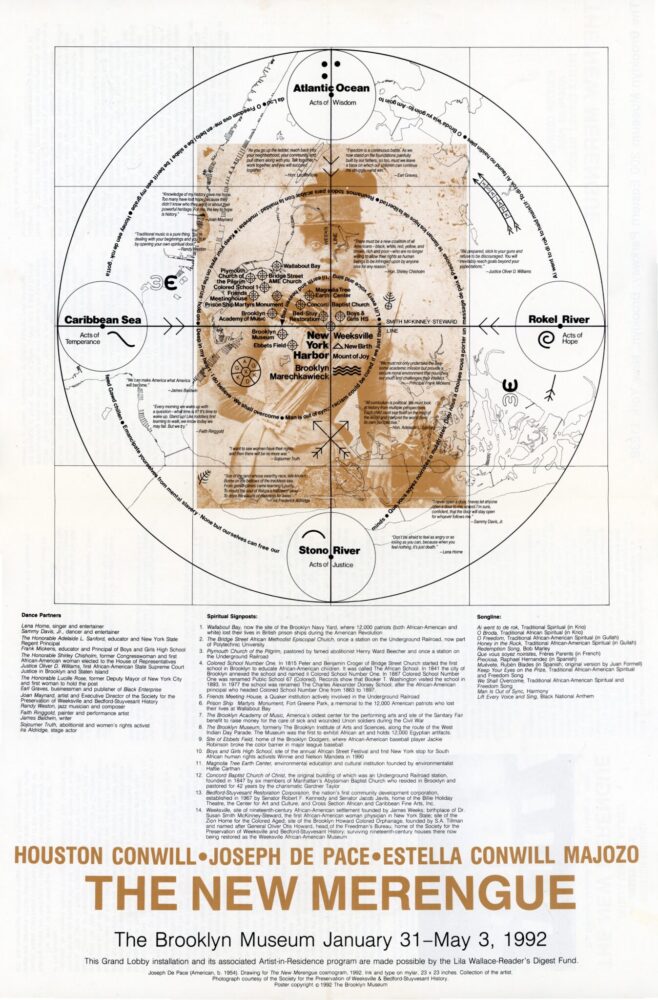
The New Merengue, Installation by Houston Conwill, Joseph de Pace, Estella Conwill Majozo, The Brooklyn Museum, Folded Poster with Description and Artist’s Statement on Back, 1992. Size: 21 x 14 inches (unfolded) — For Sale
The New Merengue (named after the national dance of the Dominican Republic) was “a site-specific installation in which the artists chart a metaphoric journey taken over centuries by Brooklyn’s Caribbean and African-American population.” This work is similar to Cosmogram, the floor that Houston Conwill (1947–2016) created for the Schomburg Center based on Langston Hughes’ poem The Negro Speaks of Rivers.
See more African Diaspora ephemera
LGBTQ
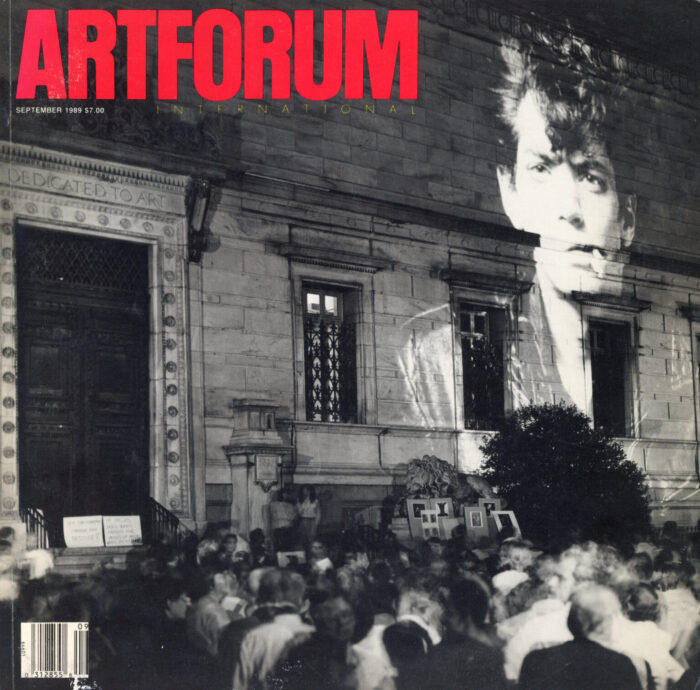
Demonstration over the cancellation of Robert Mapplethorpe: The Perfect Moment in Washington, DC, Artforum, September, 1989. Size: 10.5 x 10.5 inches — For Sale
In 1989 Senator Jesse Helms objected to the NEA’s support of art exploring sexuality (especially gay sexuality). When the Corcoran Gallery of Art in Washington D.C. cancelled the exhibition Robert Mapplethorpe: The Perfect Moment, large protests led to the resignation of the Corcoran’s leadership, and to the photograph used on this Artforum cover.
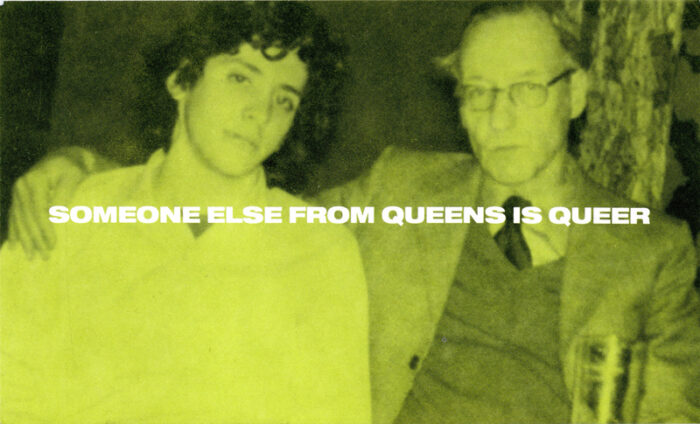
Someone Else From Queens is Queer, a performance by Richard Elovich, directed by Itamar Kubovy, Card, Performance Space 122, 1991. Size: 7.25 x 4.5 Inches — For Sale
In the 1970s Richard Elovich, a young performance artist and writer, worked with William Burroughs and Allen Ginsberg. From the late 1980s onward, he devoted himself to the battle against AIDS. Someone Else From Queens Is Queer was a solo theater performance about death and political indifference.
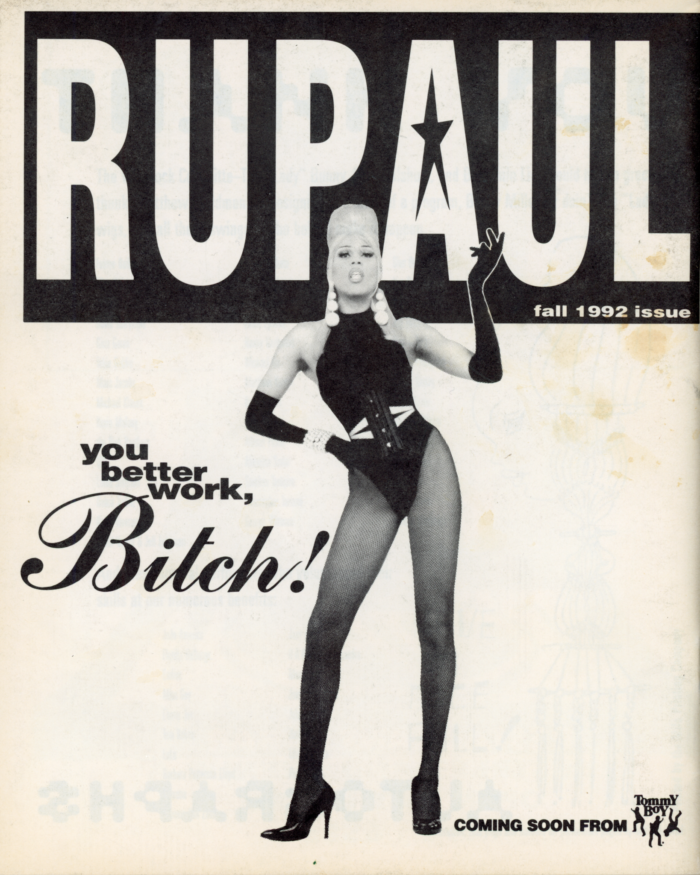
Wigstock, Tompkins Square Park, RuPaul on the Back Cover of 72 Page Program/Catalogue, 1992. Size: 8.5 x 7 inches — For Sale
From 1984 to 2005, Wigstock (Woodstock with a drag twist), was an annual event in New York’s Tompkins Square Park. The festival was led by Lady Bunny, and each year there was a new poster and program. This advertisement for a music album by RuPaul was the back cover of the 1992 catalogue.
See more Wigstock ephemera