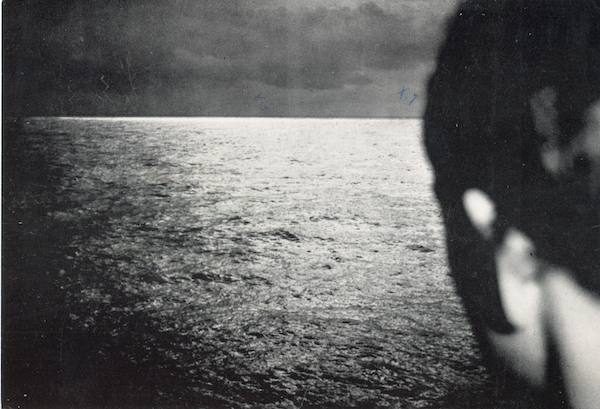
James Collins, Odyssey (Self-Portrait), Arnolfini (England), Card with Notations on back, 1978. Card Size: 4.5 x 6 inches — Available
The concept of the male gaze was introduced by the British feminist film theorist Laura Mulvey in her 1975 essay, “Visual Pleasure and Narrative Cinema.” It was defined as the act of depicting women in the visual arts and in literature from a masculine heterosexual perspective in ways that present them as sexual objects for the pleasure of the male viewer.
In the mid-1970s, British artist James Collins explored the concept of the male gaze in a series of exhibitions featuring large-format photos of himself staring at women. This was a moment when the art world was focused on conceptual photography, performance, self-portraiture and the exploration of identity and real-life. Gallery 98’s large collection of cards for exhibitions by Collins shows how perfectly his work fit the times. Over a two-year period he seemed to have shows nearly every month in top galleries throughout the U.S. and Europe.
Collins was a former art critic who knew how to broaden the appeal of his work by obscuring its content through the use of intellectualizing art jargon. Viewers, however, did not have to dig deep to see that the work was motivated as much by the artist’s sexuality as by his desire to philosophize about life. Collins himself talked about how he first spotted his models on the street, and how his art worked as a form of seduction. His later works — paintings of women with an explicit focus on their sexual parts — clearly shows that at its core Collins’ art is the perfect example of the male gaze as it was defined by Mulvey.
Collins’ popularity faded, but the use of the concept of the “male gaze” has kept expanding. Gays began referring to the “male gayze” while women explored the “female gaze.” As the term moved away from its masculine heterosexual roots, the ideas implied by the phrase changed dramatically. Today “gaze” refers not just to sexual voyeurism, but more generally to how men, women, gays, blacks, and other subgroups perceive things differently, and that this is apparent in all of their creations.
See more work by James Collins on Gallery 98
Photography Exhibitions, 1975-77
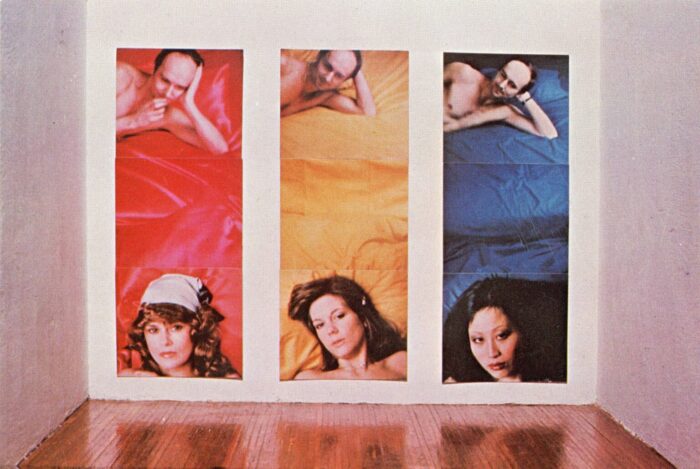
James Collins, Night Moves (Whose Afraid of Red, Yellow and Blue), Documenta 6 (Germany), Card with Handwritten Notations by the artist, 1977. Card Size: 4 x 6 inches — Available
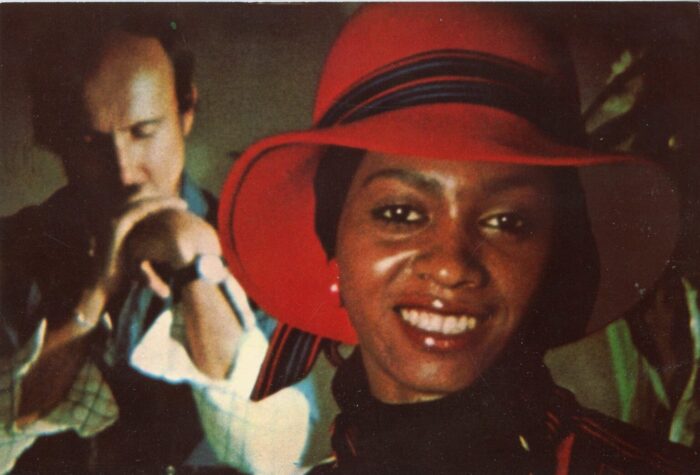
James Collins, Galerie Folker Skulima (Berlin), Card, 1976. Card Size: 4 x 6 inches — Available

James Collins, Francoise Lambert (Italy), Card with Handwritten Notations by the artist, 1975. Card Size: 4.25 x 6.25 inches — Available
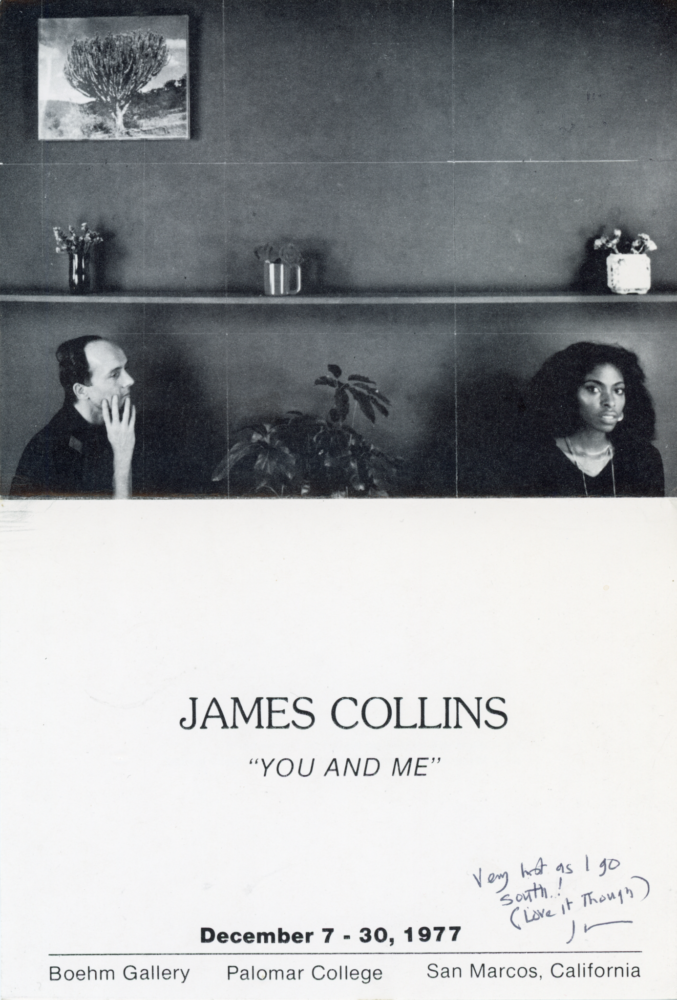
James Collins, You and Me, Boehm Gallery-Palomar College, Folded Card with Handwritten Notations by the aritst, 1977. Card Size: 10 x 7 inches — Available
Painting Exhibitions, 1982-83
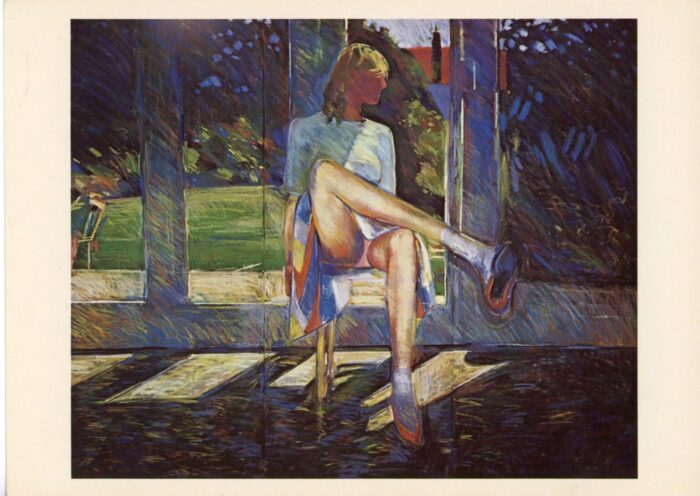
James Collins, Remembrance of Times Past (In an English Country Garden), Hans Meyer Gallery (Germany), Card, 1982. Card Size: 4.5 x 6 inches — Available
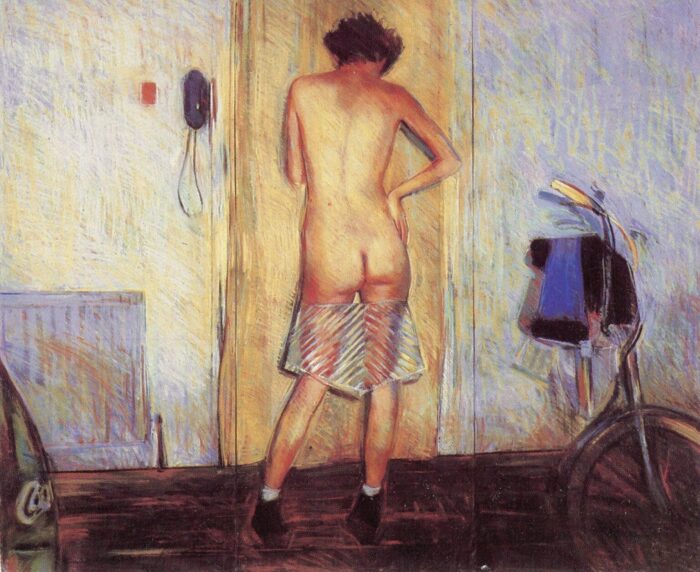
James Collins, Remembrances of Times Past (Big Bottle, Beautiful Bottom, Blue Bike), Galleri 16 (Stockholm), Card for the Exhibition “Prurient Interests,” 1983. Card Size: 4 x 5 inches — Available
The Male Gayze – The Female Gaze
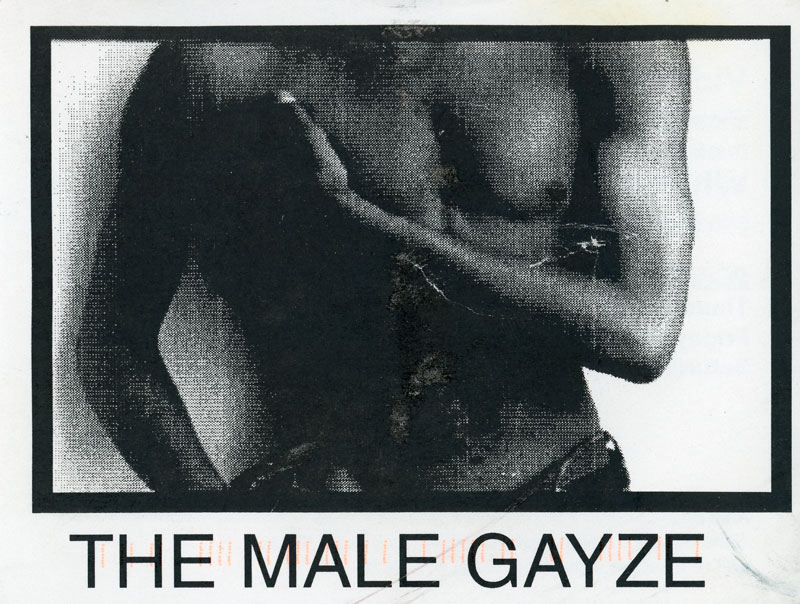
Jack Waters, The Male Gayze, Video Screening at the Whitney Museum of American Art in conjunction with the Exhibition “Black Male: Representations of Masculinity in Contemporary Art,” Card, 1995. Card Size: 4.25 x 5.5 inches — Available
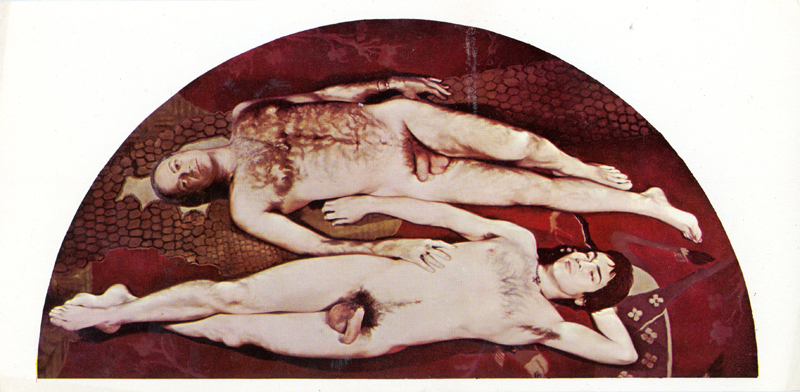
Marion Pinto, Paintings: Man as a Sex Object, J. Frederic Lohman Gallery, Card, 1975. Card Size: 4.5 x 9 inches.
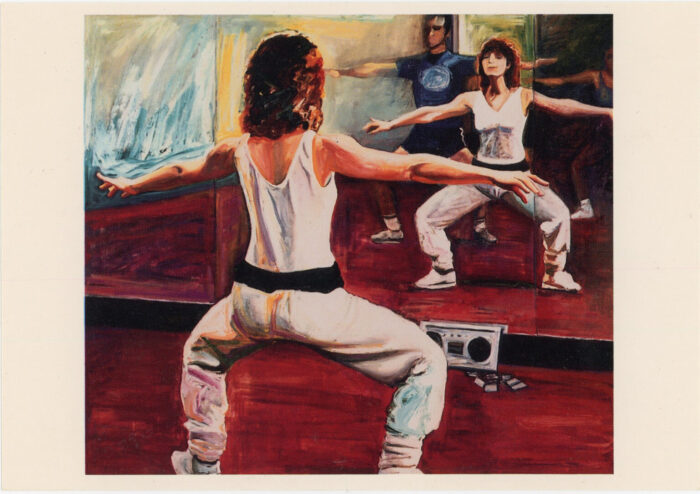
Joan Semmel, Mirrored Cross (1986), Gruenebaum Gallery, Card for the Exhibition “A Selection,” 1987. Card Size: 4 x 5.75 inches — Available


