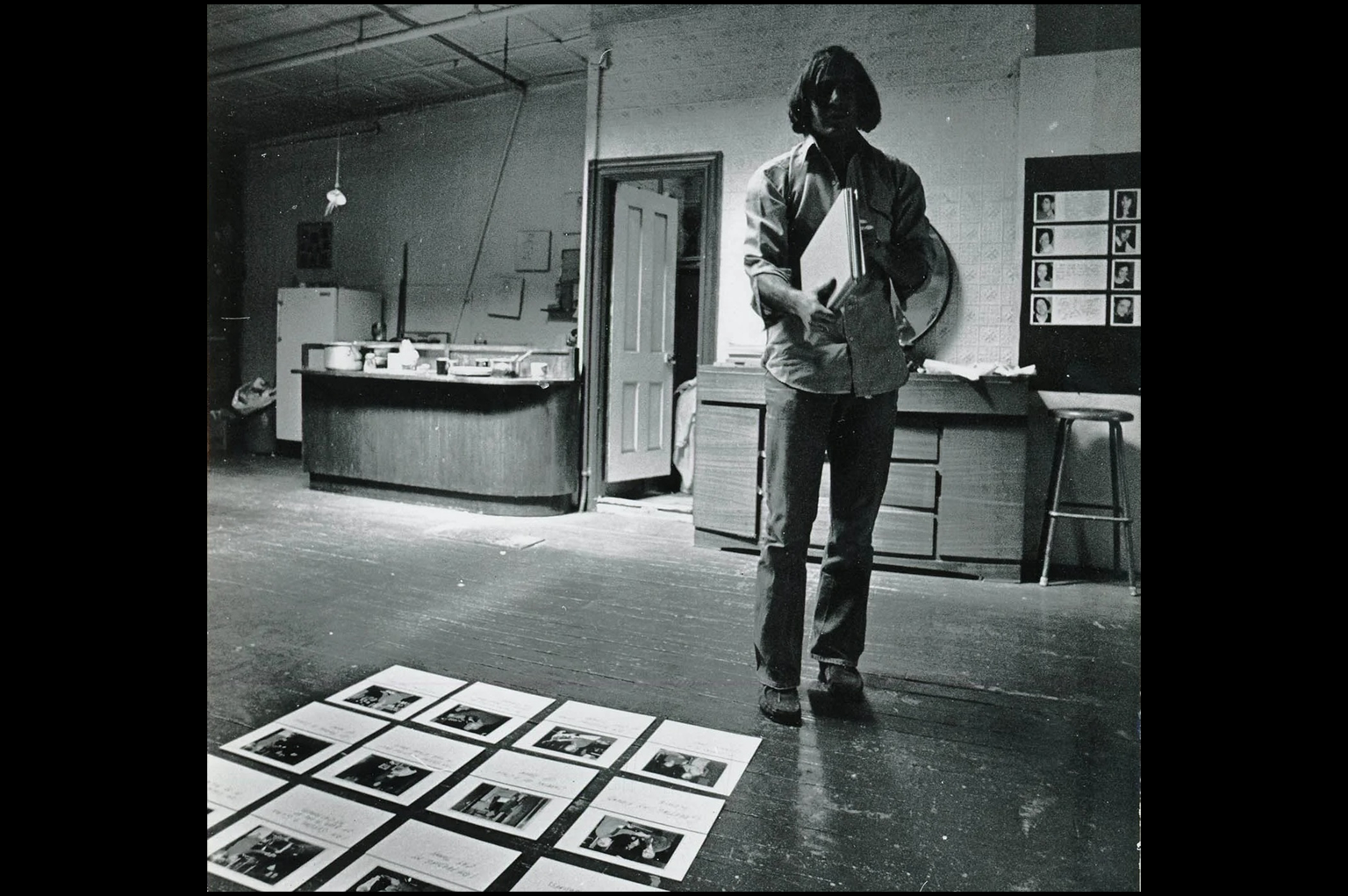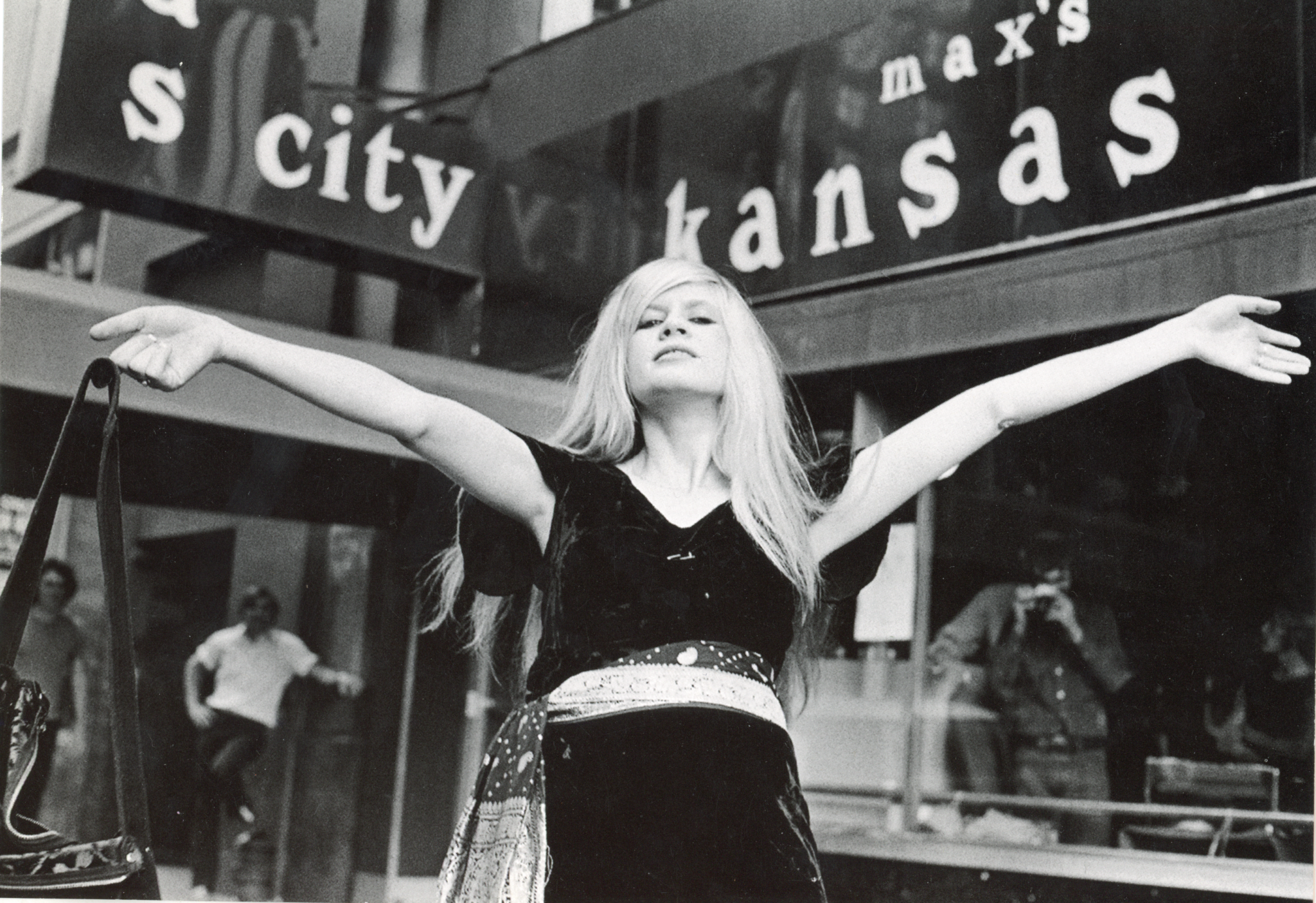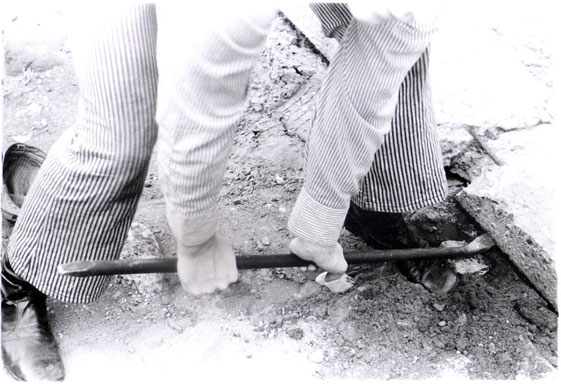
Stefan Eins, publicity photograph for his exhibition Krō-Bär an(d) Pùl-ē, 3 Mercer Street Store, 1974. — Available. For Eins, wonder and science were related. In this exhibition, he spotlighted the crowbar and pulley, two ancient inventions that make it easier to move heavy loads.
The beauty of having an online art gallery with close to 9,000 ephemera items is that we can create stories for our newsletter on just about any art topic that seems important and interesting. This week our focus is on the ways in which art interconnects with science and technology — a subject that has been much talked about since the mid-nineteenth century. As science continues to advance, this discussion has become more and more important, and most recently it has re-emerged in connection with the rise of AI.
Beginning with the invention of photography in 1839, new technological inventions have been drastically altering what we classify as art. Galleries and museums still give primacy to painting and other traditional media, but viewers now regularly encounter photographs, films and video in art exhibitions. More recently, computers and digital technology have radically altered the art-making process, and this has affected both the look and content of art.
This short newsletter is not an opportunity to fully explore the complex subject of art and technology. What we have done here, is select just a few items from our inventory that show some of the ways in which these fields have intermixed over the last fifty years. To see more, please visit Gallery 98’s special theme section Science and Technology.
Harold Edgerton’s Stroboscope Freezes Time
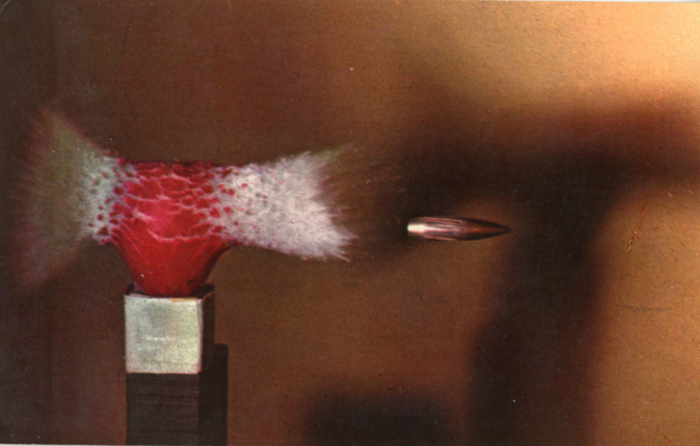
Harold Edgerton, a radish shattered by a 30 caliber bullet. 900 meters per second. Microflash unit (EG&G) 1/3 microsecond exposure (1964), Edgerton & MIT, Postcard, 1984. Size: 5.5 x 3.5 inches — Available
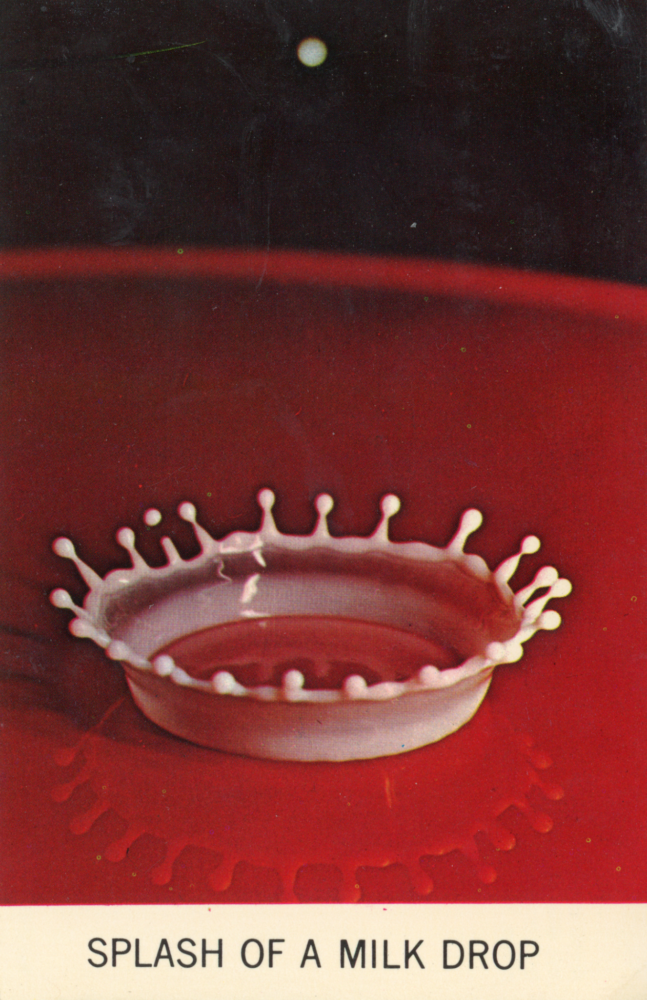
Harold Edgerton, Splash of a Milk Drop (1957), Promotional Postcard for “Moments of Vision” Book Published by MIT, 1984. Size: 5.5 x 3.5 inches — Available
Harold Edgerton (1903 – 1990) was a professor of electrical engineering at M.I.T. who invented the stroboscope, a high-powered repeating flash that created split-second motion photographs. Although Edgerton’s photos were scientific in origin, these wonderous images have attracted the attention of art lovers, and are now regularly found in fine arts collections.
See more Harold Edgerton ephemera
Billy Kluver, Experiments in Art and Technology (E.A.T.)
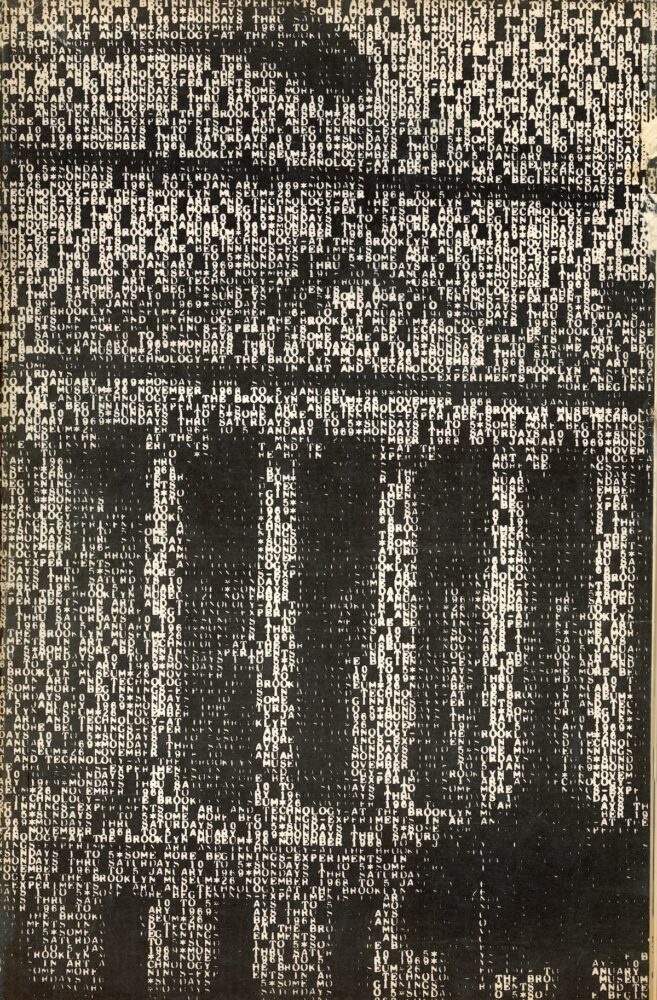
E.A.T. (Experiments in Art and Technology), Some More Beginnings, Designed by Billy Klüver, Julie Martin, Robert Rauschenberg, 122-Page Catalogue, in Collaboration with the Brooklyn Musuem and the Museum of Modern Art, 1968. Size: 16.5 x 11 inches — Available
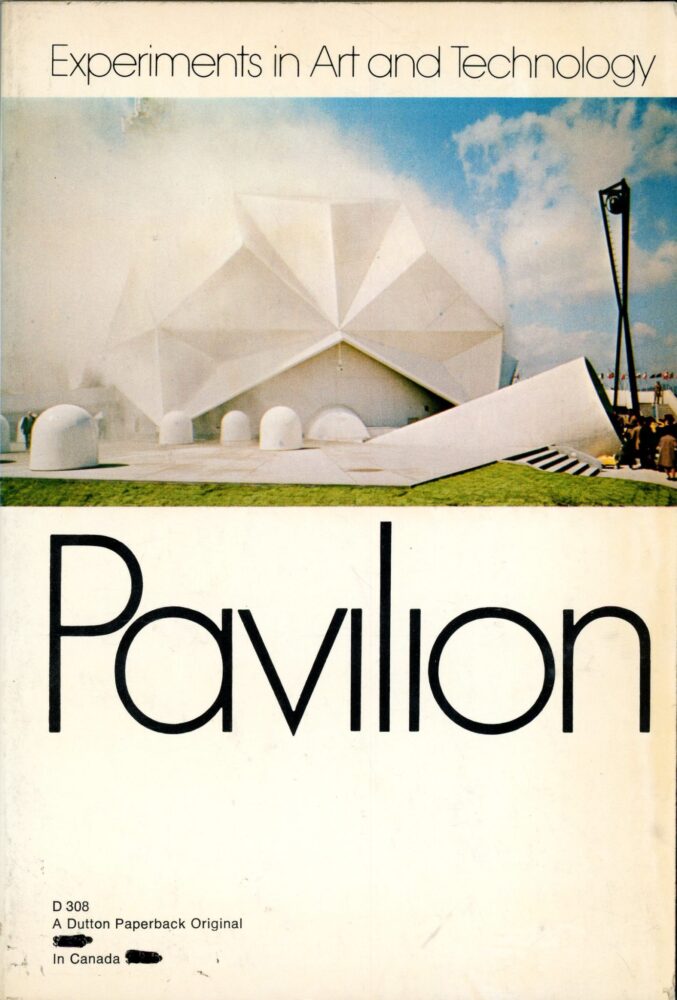
Experiments in Art and Technology Inc, Pavilion, Edited by Billy Kulver, Julie Martin, and Barbara Rose, 346-Page Book, E.P. Dutton & Co., 1972. Size: 8.5 x 5.5 inches — Available
Billy Kluver (1927 – 2004) was an engineer at Bell Laboratories whose interest in art led him to create Experiments in Art and Technology (E.A.T.), an organization that fostered the collaboration between artists and scientists. E.A.T.’s catalogue Some More Beginnings (1968), includes over one hundred artists who worked with technology. Kluver was the organizer for the Pepsi-Cola Pavilion at Expo ’70 in Osaka, Japan that featured a building enshrouded by a fog created by artist Fujiko Nakaya; as well as, an interior with moving sculptures by Robert Breer, and sound by David Tudor.
See more E.A.T. ephemera
Nam June Paik, Pioneer of Video Art
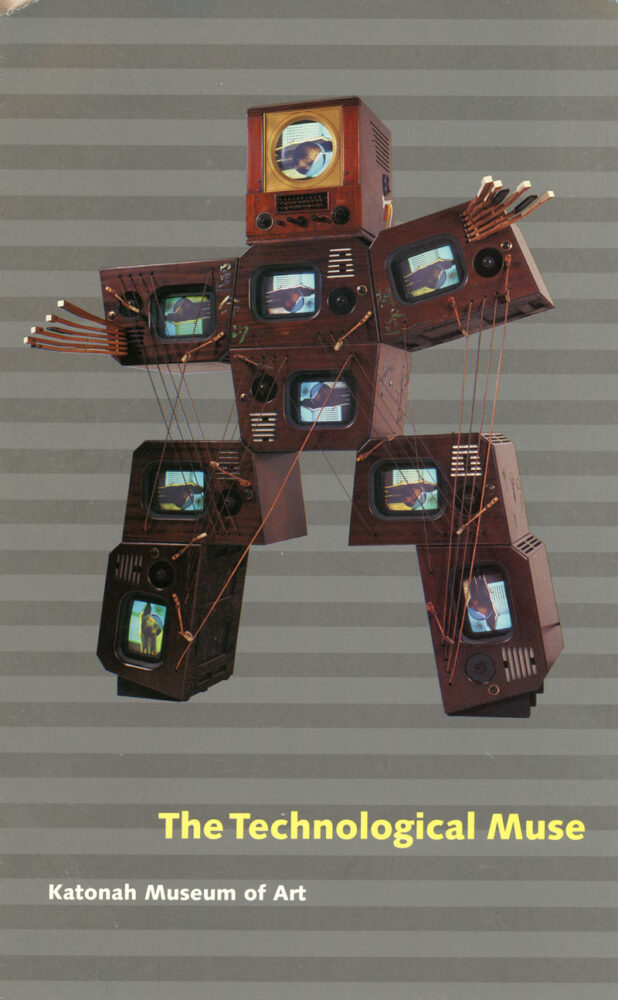
Nam June Paik, John Cage (image), Folded Card for the exhibition The Technological Muse, Katonah Museum of Art, 1991. Size: 9.25 x 5.75 inches — Available
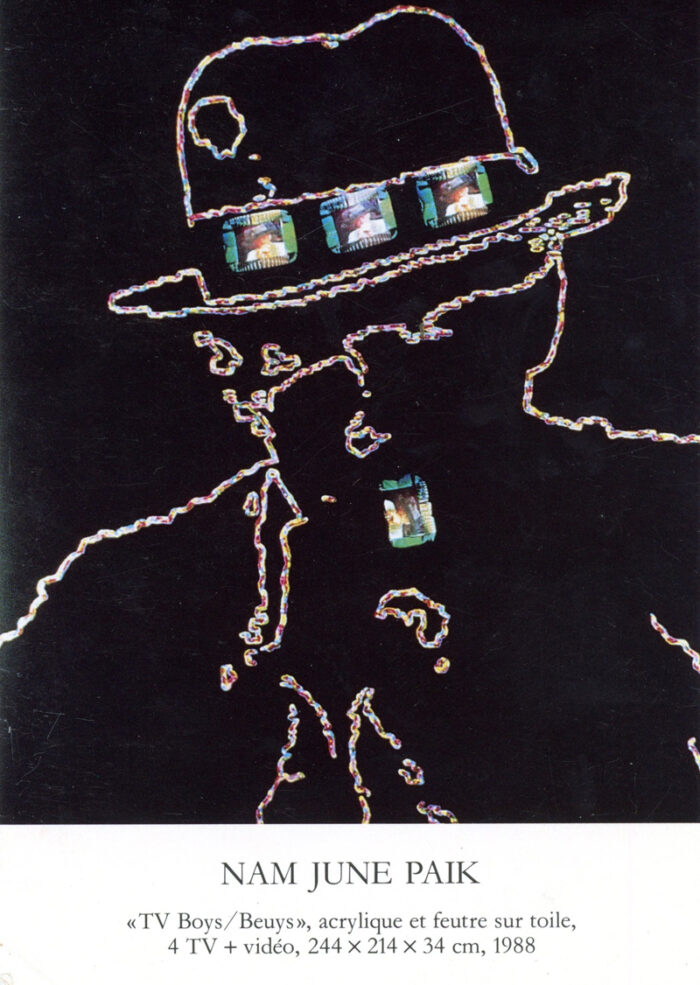
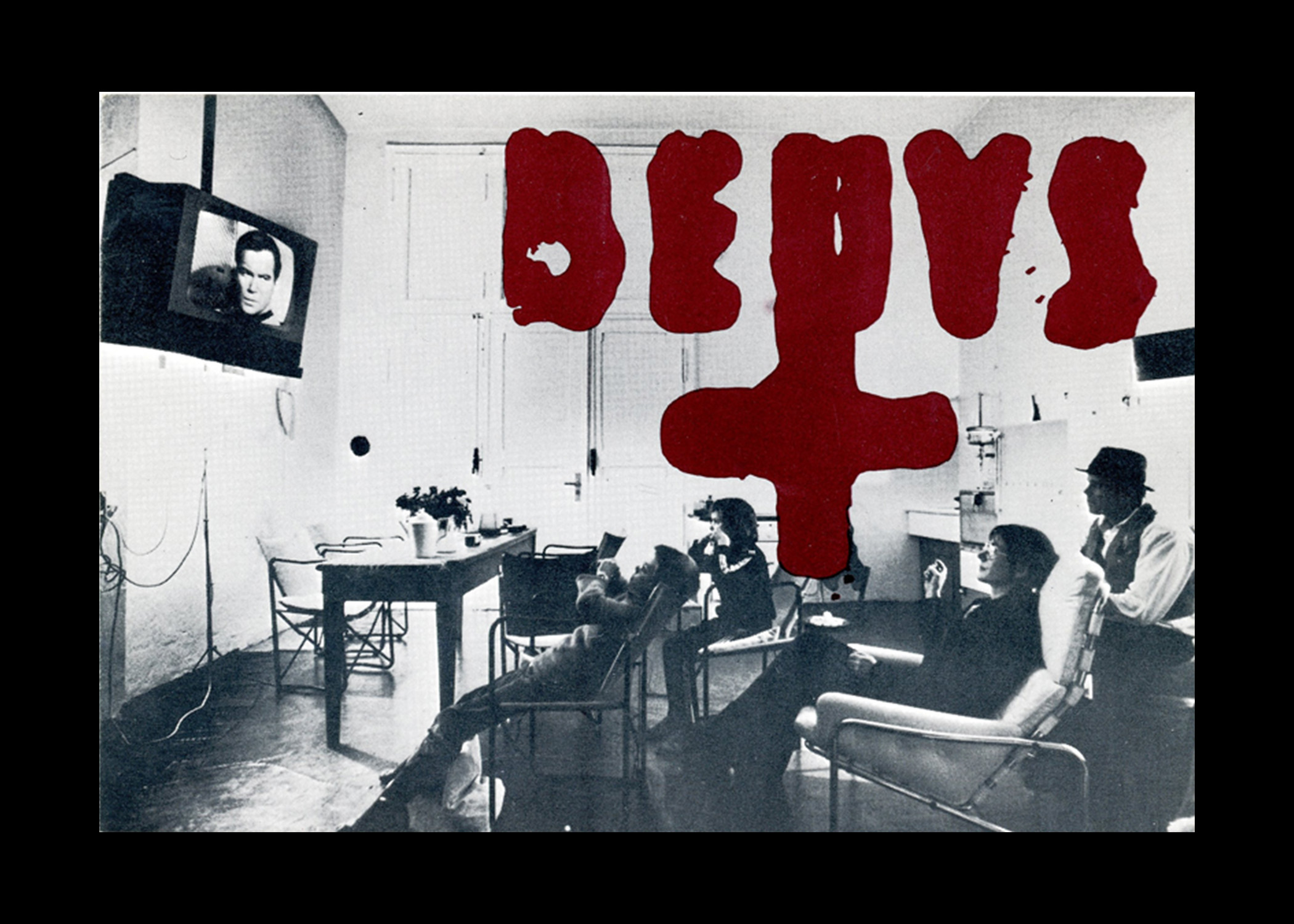
Nam June Paik, TV Boys/Beuys, Card for the exhibition Nam June Paik Paintings, Galerie Eric Franck, 1988. Size: 7.25 x 4.25 inches — Available
The Fluxus artist Nam June Paik (1932-2006) is widely regarded as the father of video art. He was one of the first artists to alter and expand video technology in creative ways that abstracted images and created new visual effects. He also experimented with different ways of placing and combining TV monitors, often with humorous results.
See more Nam June Paik ephemera
Artists Experiment with QWIP (The Original Fax)
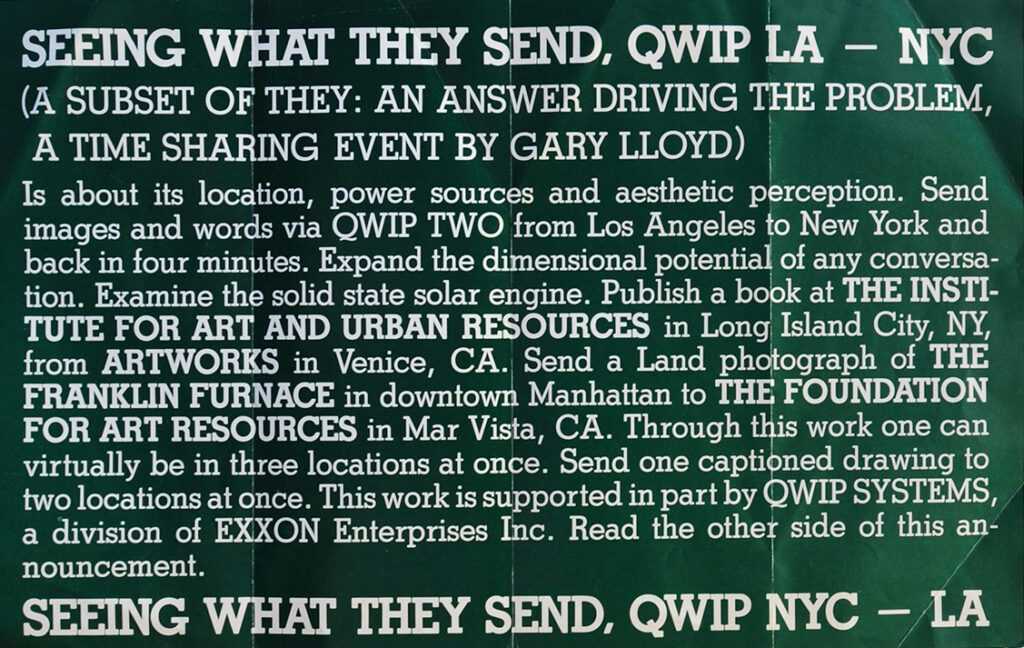
Seeing What They Send, QWIP LA – NYC, Poster, Franklin Furnace (NYC), P.S 1 (NYC), Artworks in Venice (CA) & The Foundation for Art Resources (CA), 1979. Size: 11 x 18 inches — Available
The Qwip was an early facsimile transmission machine that was later developed into the FAX. To launch the new invention, Exxon recruited artists in New York and California, and arranged live sessions where they could exchange ad exhibit Qwips.
Nancy Burson, Computer Generated Composite Photographs
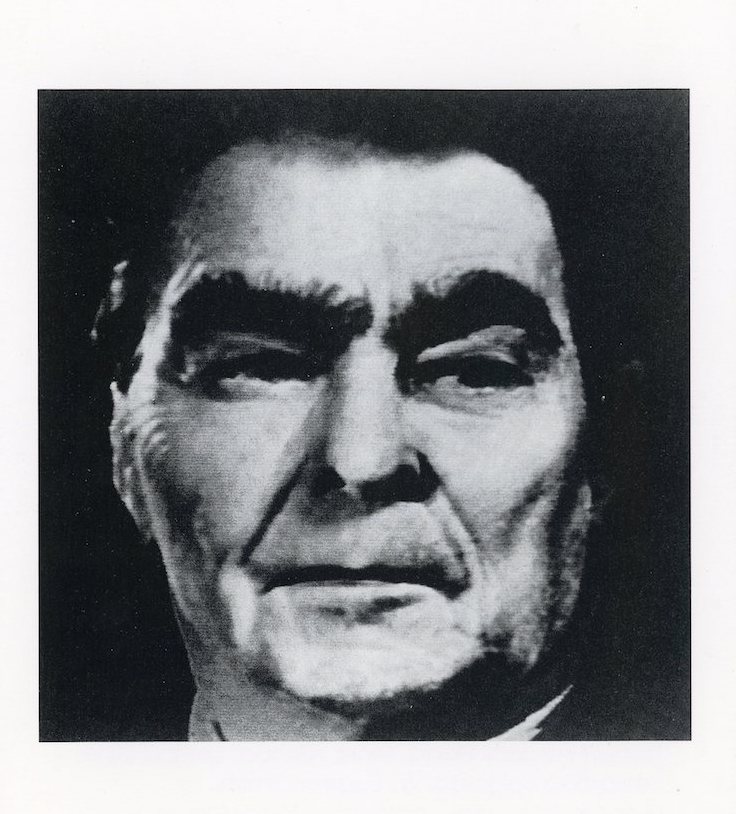
Nancy Burson, WARHEAD (1982), folded card for the group exhibition “War and Peace,” Alinder Gallery, 1991. Size: 5 x 7 inches — Available
In the early 1980s, photographer Nancy Burson began working with computer scientists Richard Carling and David Kramlich to create composite portraits. WARHEAD is a “portrait weighted to the number of nuclear warheads deployable by each country: Reagan, 55%, Brezhnev, 45%, Thatcher, less than 1%, Mitterand, less than 1%, Deng, less than 1%.”
See more Nancy Burson ephemera
Roger de Montebello, 3D Integram Photographs
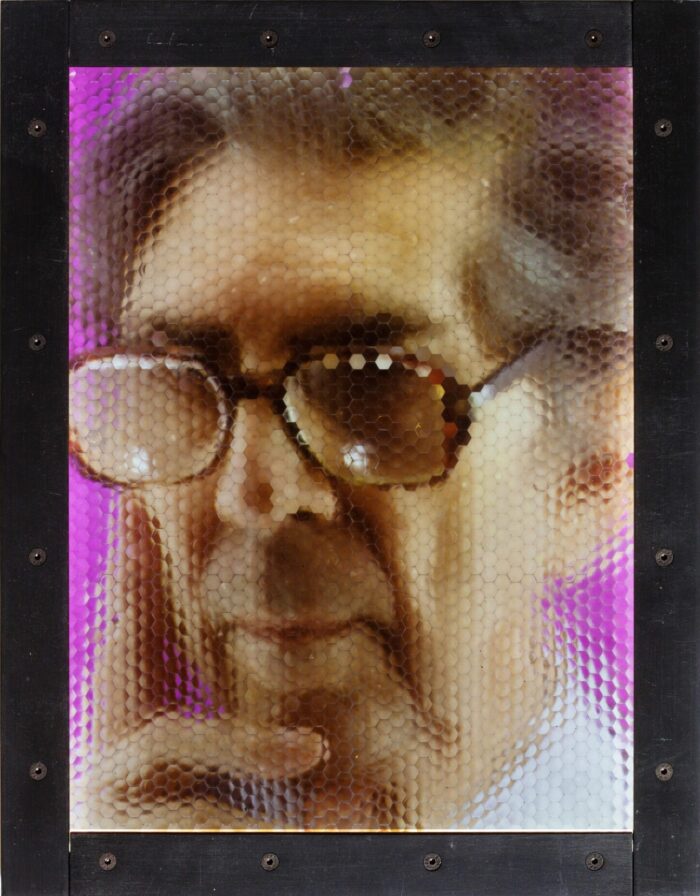
Roger Lannes de Montebello and M. Henry Jones, Portrait of de Montebello, includes new technology developed by M. Henry Jones, 1985-2005. Size: 11.5 x 11.5 inches
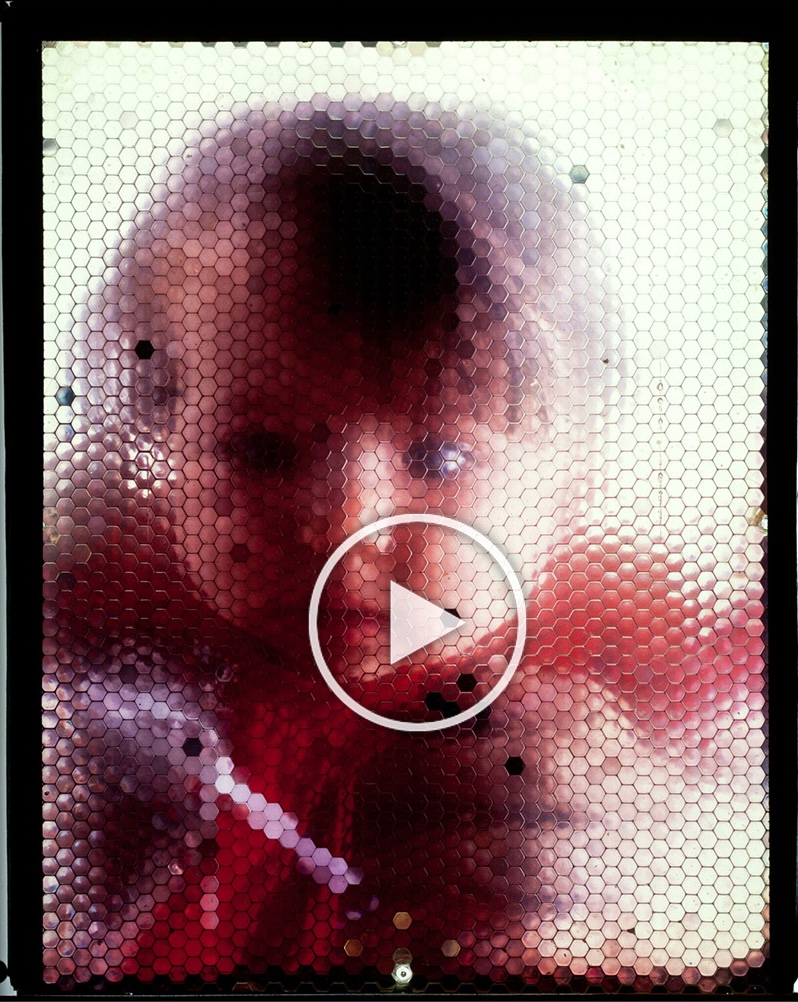
Working in the pre-digital era, Roger de Montebello (1908 – 1986) devoted forty years striving to create 3D photographs. Gallery 98 has examples of his 3D Integram photographs, as well as, a large collection of drawings and notebooks linked to the design and fabrication of his ChrystalChrome camera. Following de Montebello’s death, his assistant M. Henry Jones was able to advance his methods by using computers. Click on the video above for a short introduction to the work of de Montebello.