In its capacity as one of the most prominent online galleries specializing in art ephemera, it is not surprising that Gallery 98 is sometimes approached by people ready to part with their valued collections. This is especially true because our main area of concentration — the art world of the 1970s and 80s — coincides with an older demographic now trying to clean house, and looking for new homes for their treasures.
This week’s newsletter features some of the items that we have acquired over the last month. Of special interest are acquisitions from the writer and journalist Jeff Goldberg. Not only did Goldberg attend the groundbreaking premiere of Robert Wilson and Philip Glass’s Einstein on the Beach, he was also the force behind the short-lived but memorable downtown magazine Traveler’s Digest.
The American Premiere of Einstein on the Beach, 1976
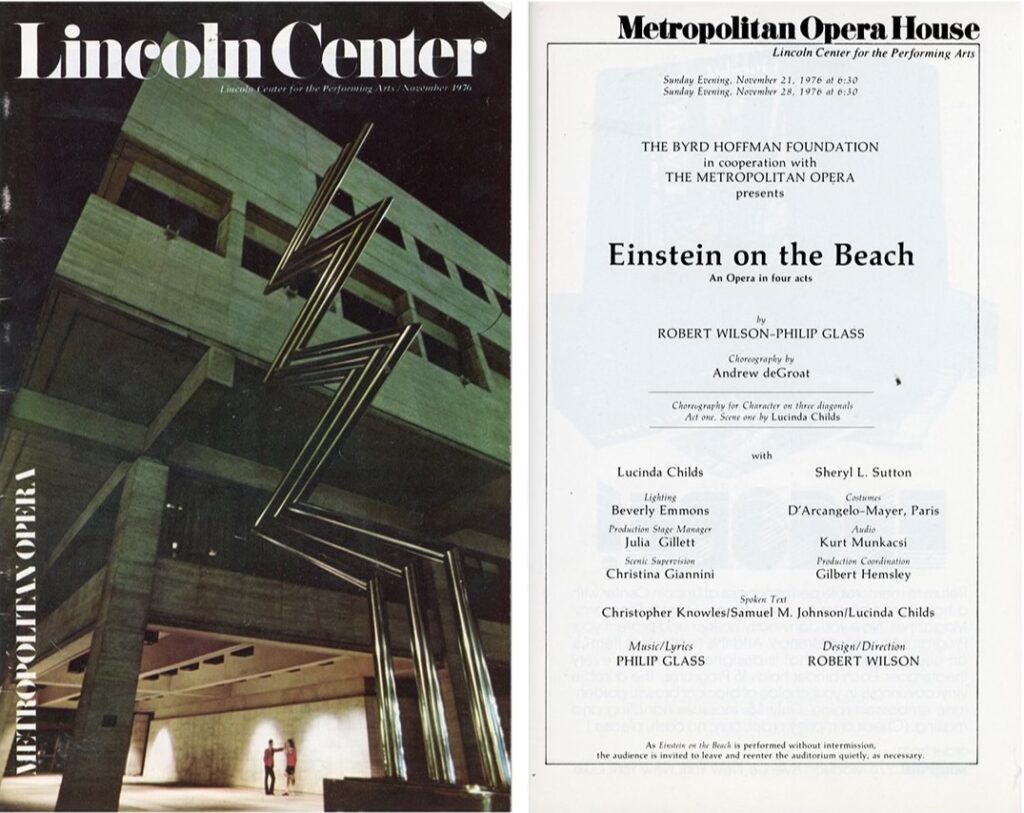
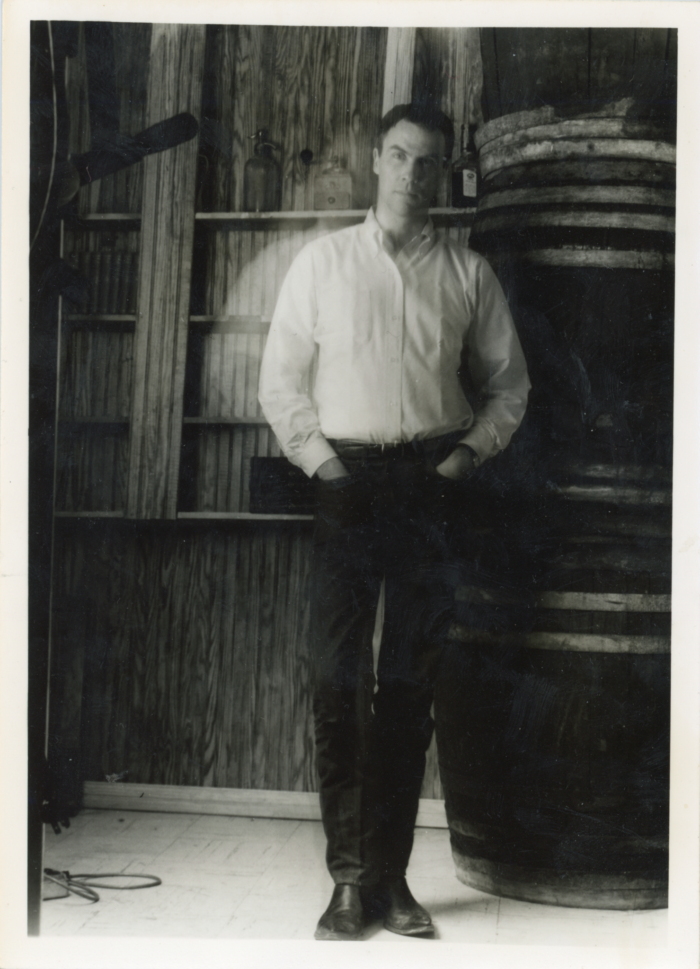
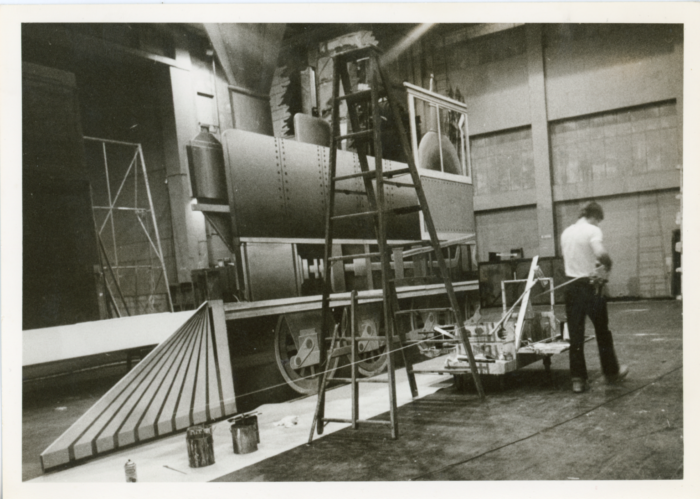
Philip Glass and Robert Wilson, Einstein on the Beach, Lincoln Center, Stagebill with 5 Publicity Photographs, 1976. Stagebill size: 9 x 6 inches. Photograph sizes: 7 x 5 inches and 8.5 x 6.5 inches — Available
On account of its non-narrative plot, spare stage design by Robert Wilson, and a score of minimalist music by Philip Glass, Einstein on the Beach was a radical departure from earlier operas, and is now considered one of the breakthrough events of the 1970s. This collection acquired from writer Jeff Goldberg, features the Stagebill, and five publicity photographs given to journalists. Another listing on Gallery 98 features Goldberg’s press-pass, transcripts of his interviews with Philip Glass and Robert Wilson, along with his article about the performance.
Collectible Art Magazines, 1980s
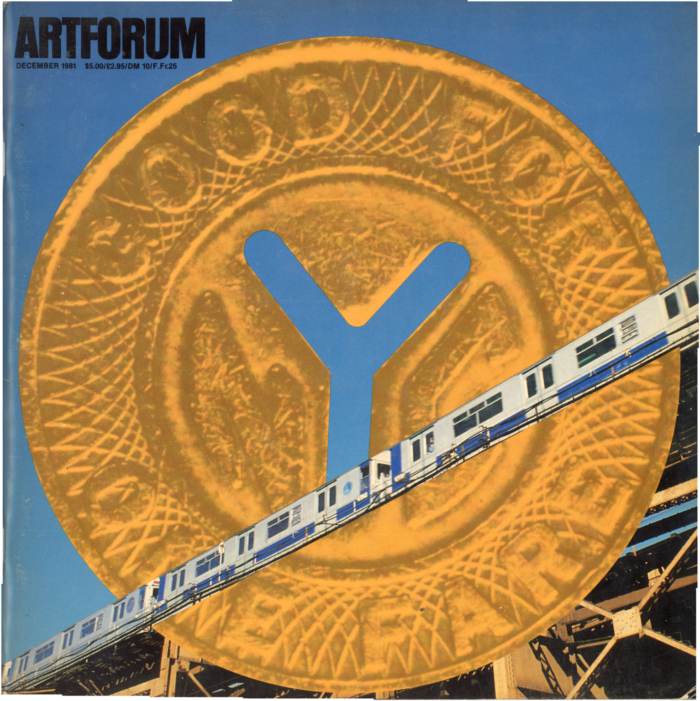
Rene Ricard’s “Radiant Child” article with Jean-Michel Basquiat, Keith Haring, Artforum (Full Magazine), December 1981. Size: 11 x 9 inches — Available
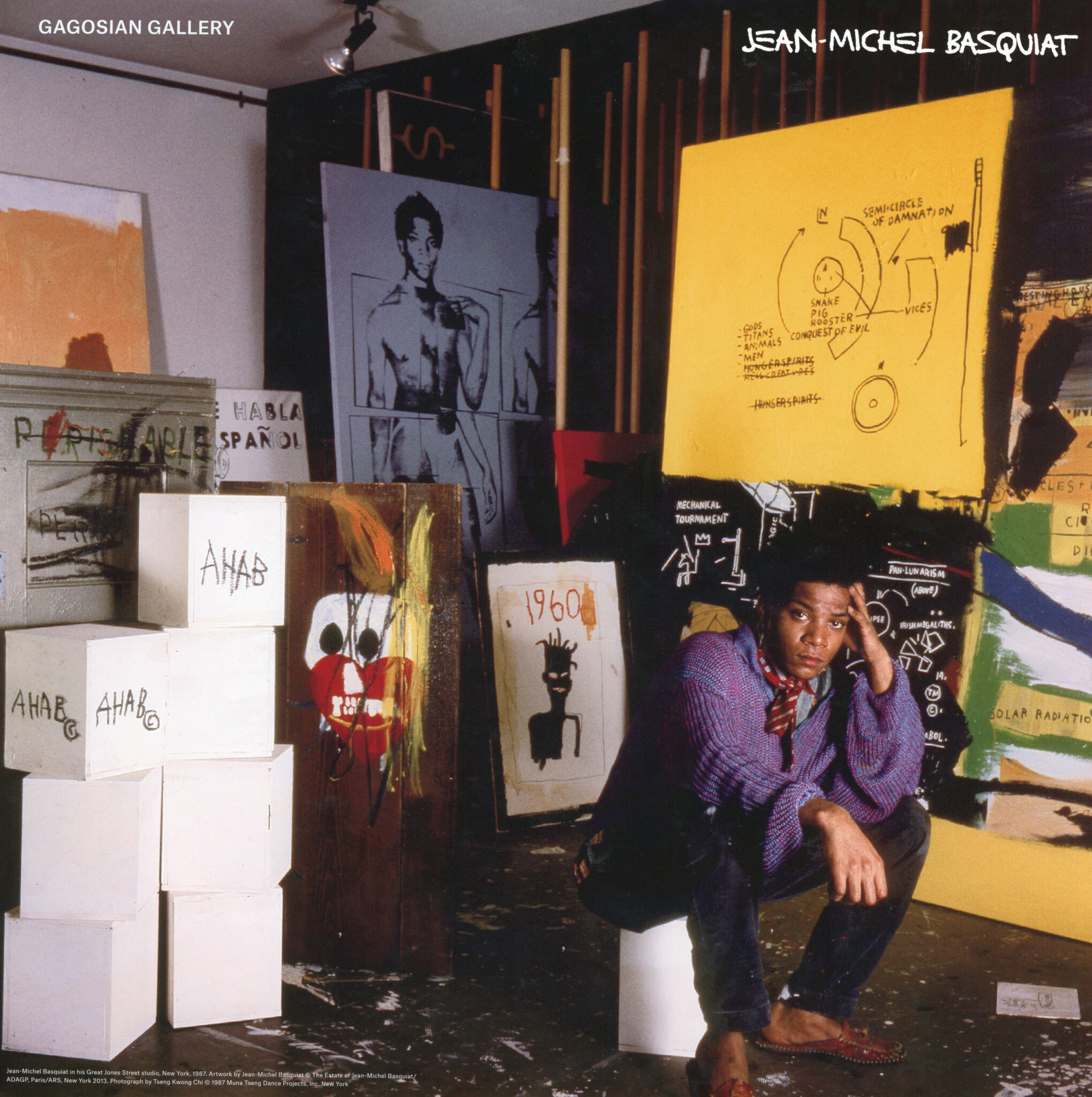
In the 1980s under the editorship of Ingrid Sischy, Artforum expanded its coverage to include the edgier art that was just beginning to emerge in downtown New York. Rene Ricards’s article “Radiant Child” is now recognized as being of seminal importance. Not only did it introduce Jean-Michel Basquiat and Keith Haring to the mainstream, it also started making the case for street art and its connection to neo-expressionism.
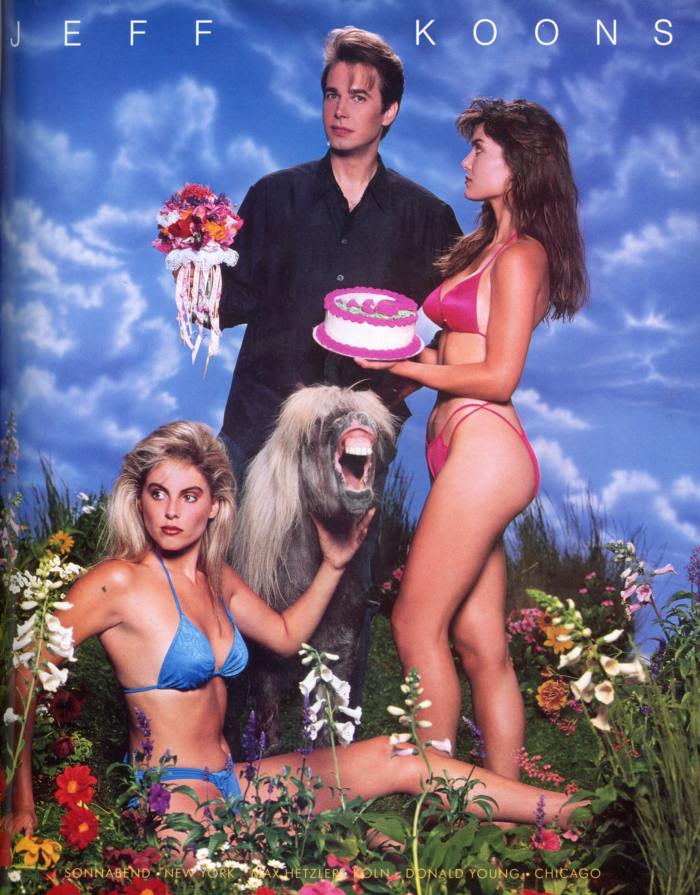
Jeff Koons, Self-Promotional Advertisement, Art in America (Full Magazine), November 1988. Size: 11 x 9 inches — Available
Jeff Koons’ advertisements for his exhibition “Banality” deliberately challenged distinctions between fine art and popular culture. Appropriating the motifs and the look of commercial advertising, the advertisements were designed to brand Koons as an art star. There were four different ads, each placed in a leading art publication: Art in America (the one we are offering here), Artforum, Arts Magazine and Flash Art. Koons considered the ads works of art, and later used them as the basis for his lithograph series “Art Magazine Ads.”
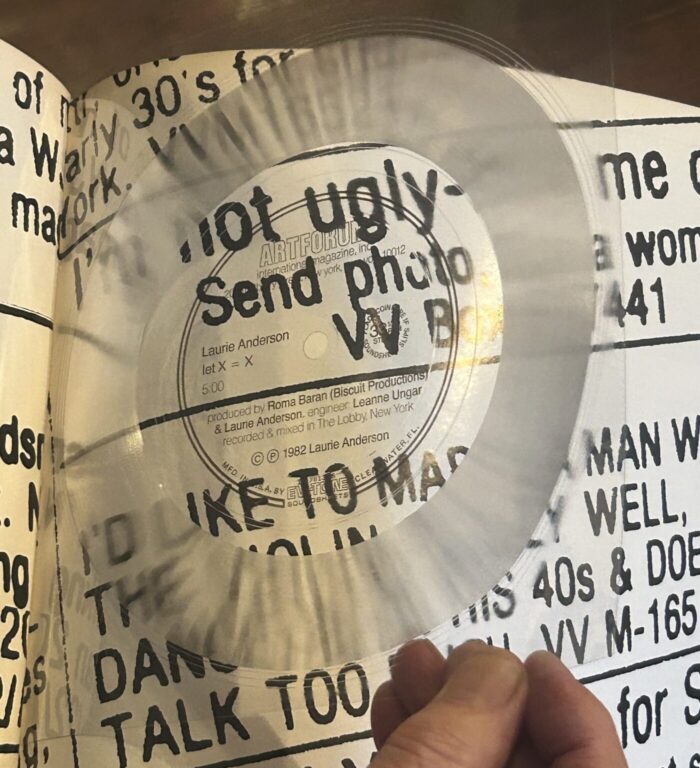
Artforum, Special Issue with Laurie Anderson flexi disk, also with Andy Warhol Centerfold, (Full Magazine), February 1982. Size: 10.5 x 10.5 inches — Available
Performance artist Laurie Anderson and Artforum editor Ingrid Sischy both aspired to bridge the separation between high art and popular culture. Sischy was also striving to incorporate actual works of art in Artforum. For the magazine’s February 1982 issue she included “Let X = X,” a flexi disc by Anderson, along with a page where readers could cut out and then paste together an Anderson-designed record sleeve. This issue also included a pullout centerfold with Andy Warhol’s dollar-sign paintings.
Artists Living on the Bowery, a Fold-Out Photomontage Map created for Bowery Artist Tribute Vol. 1, 2008
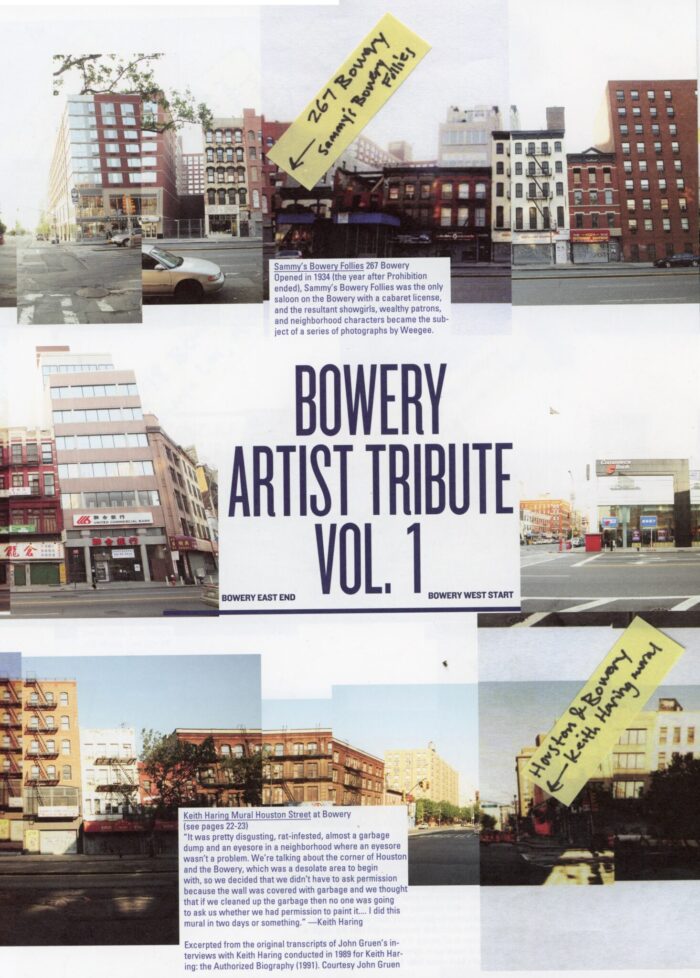
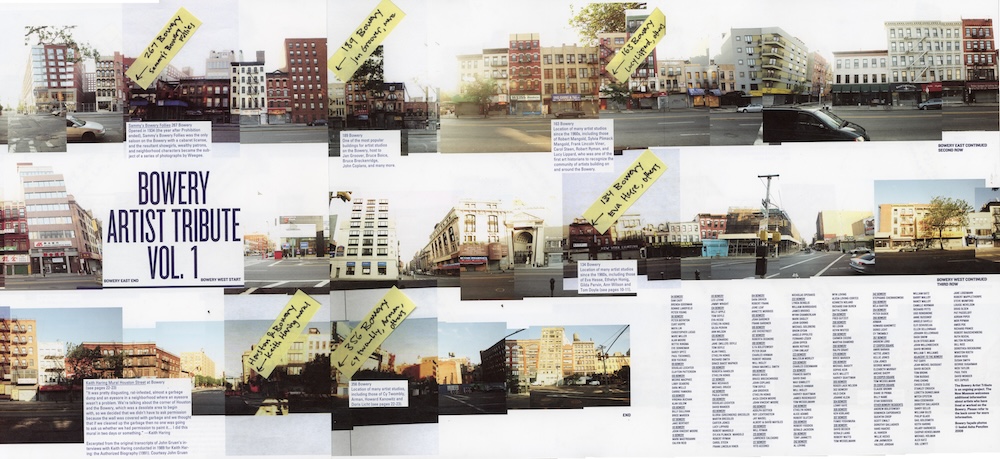
Bowery Artist Tribute Vol. 1, The New Museum, Double-Sided Multi-Panel Bowery Map Insert in 22-Page Catalogue, 2008. Size: 13 x 37.5 inches (Unfolded) 13 x 9.5 inches (Folded) — Available
New Museum Director Lisa Phillips created Bowery Artist Tribute to counter accusations that the museum was ignoring local artists while taking up residence in its new Bowery building in 2007. Ethan Swan, who created this photo-montage map featuring all the artist buildings on the Bowery, clearly got his inspiration from Ed Ruscha’s “Every Building on the Sunset Strip.” The map comes as an insert in the first issue of the magazine, Bowery Artist Tribute, which also includes articles on Vito Acconci, Lynda Benglis and other Bowery artists.
Traveler’s Digest: a Magazine that Captures the Downtown Zeitgeist of the Late 1970s
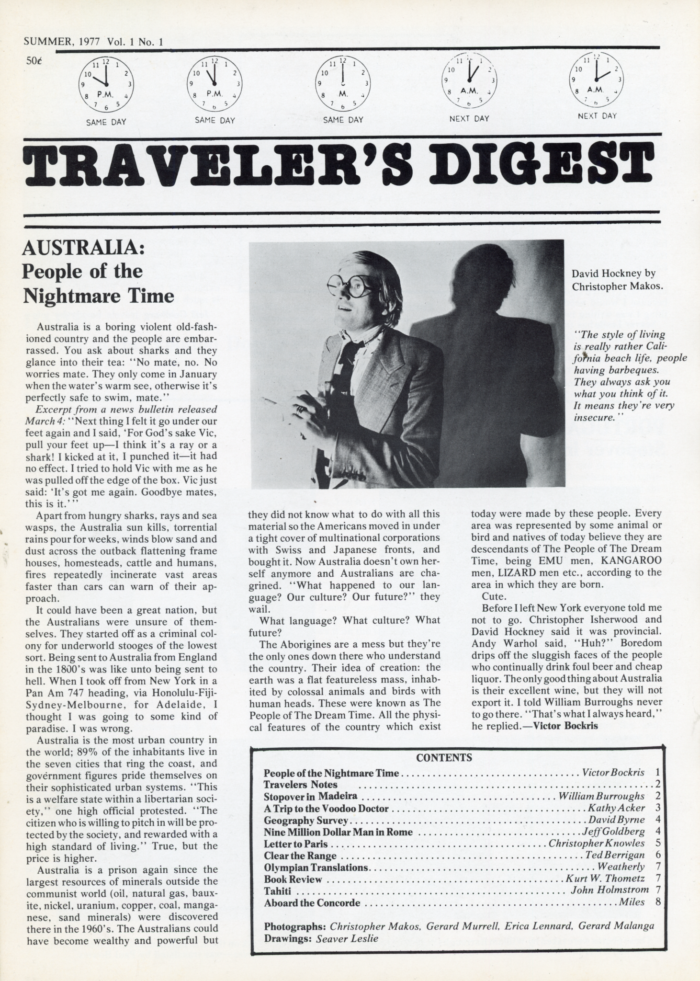
Traveler’s Digest, Vol 1 No. 1, Victor Bockris, Jeff Goldberg, Christopher Makos, 8-Page Magazine, 1977. Size: 11 x 8.5 inches — Available
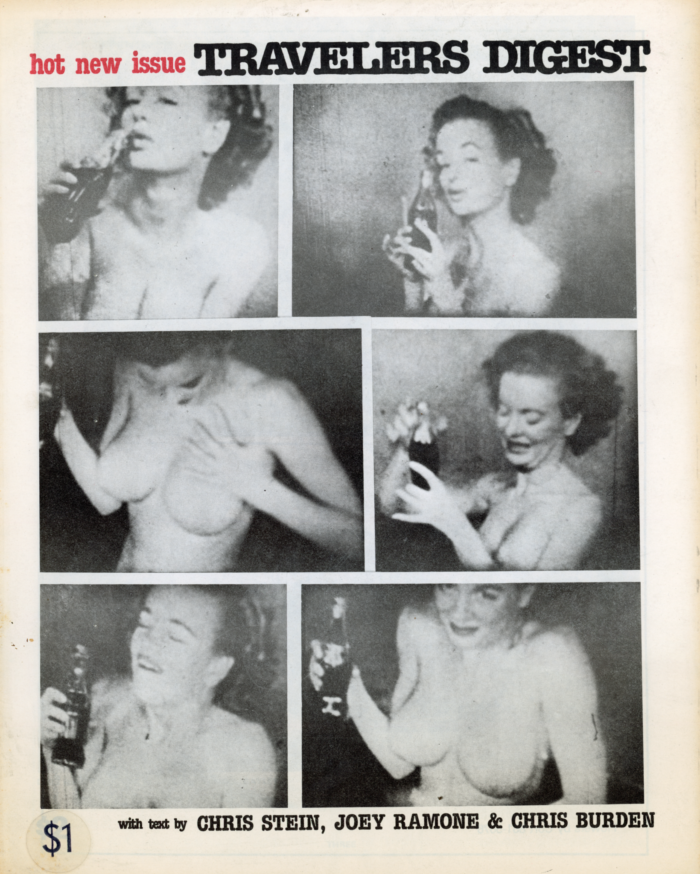
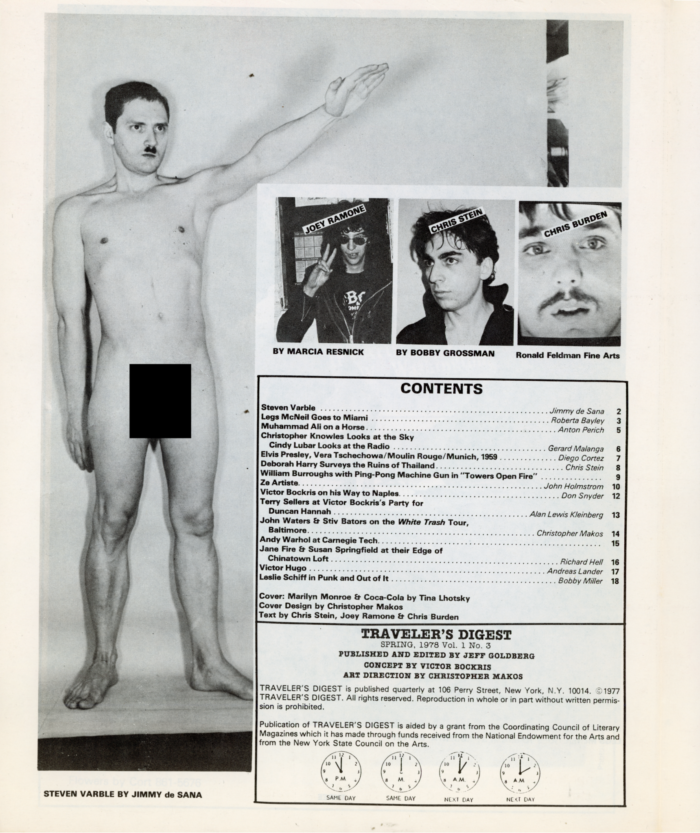
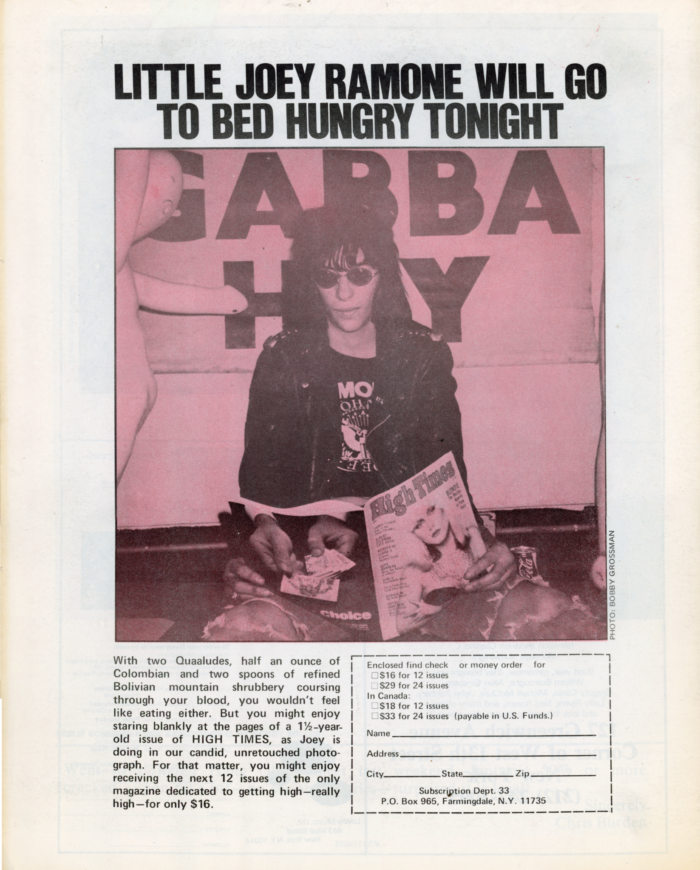
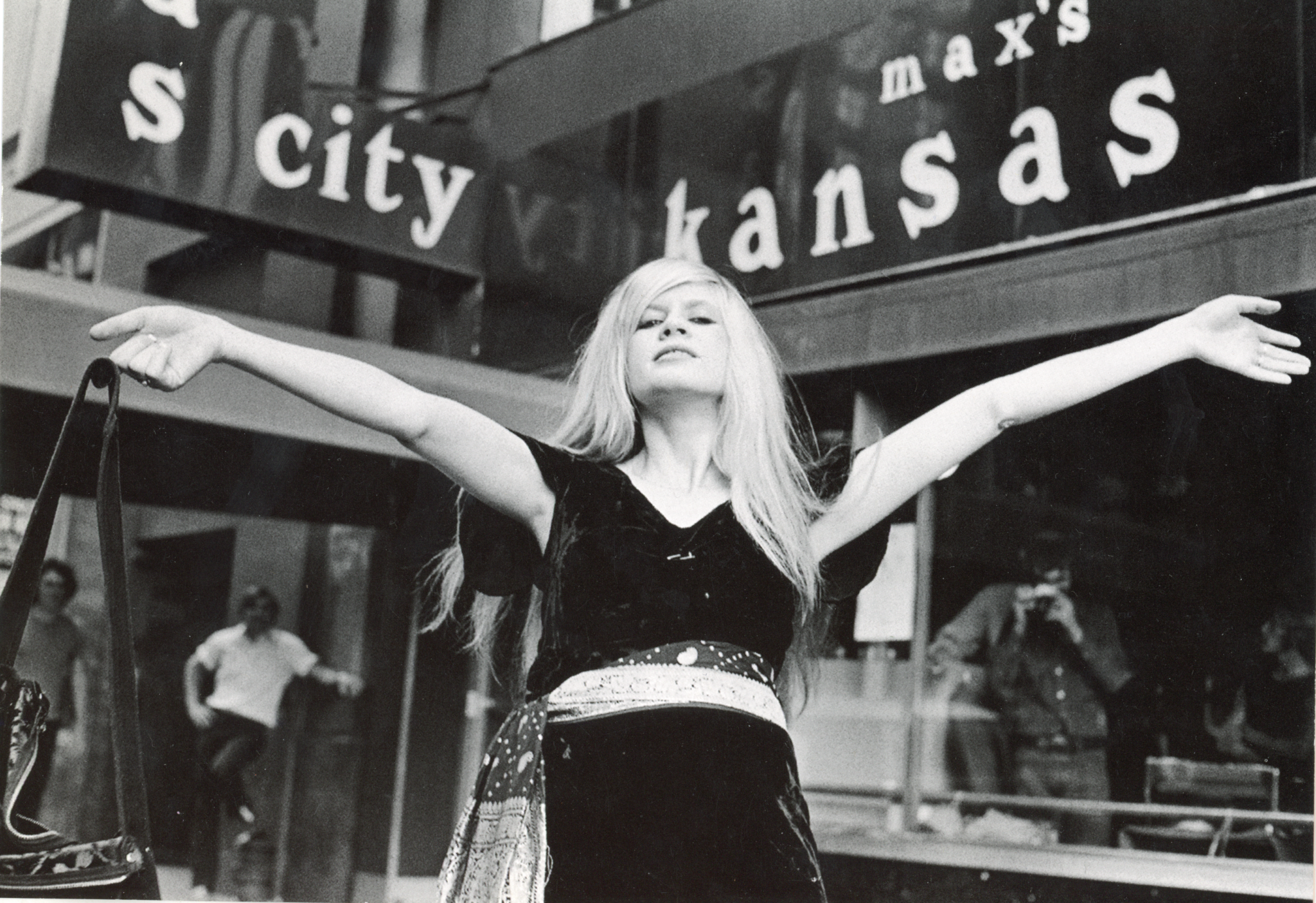
Traveler’s Digest, Vol 1 No. 3, Cover by Tina L’Hotsky, Victor Bockris, Jeff Goldberg, Christopher Makos, 19-Page Magazine, 1978. Size: 14 x 11 inches — Available
Downtown culture was changing radically in the late 1970s when poetry publisher Jeff Goldberg teamed up with the writer/scenester Victor Brockis, and Warhol-affiliated photographer Christopher Makos, to start Travel’s Digest. It was originally conceived as a satirical travel magazine but its enduring appeal lies in the strong roster of its contributors. The first issue featured William Burroughs, Kathy Acker and David Byrne. By its third and final issue, the magazine had gone fully punk, with a cover by Mudd Club queen Tina L’Hotsky, along with contributions by Joey Ramone, John Holmstrom, Marcia Resnick, Chris Stein, and Jimmy de Sana.