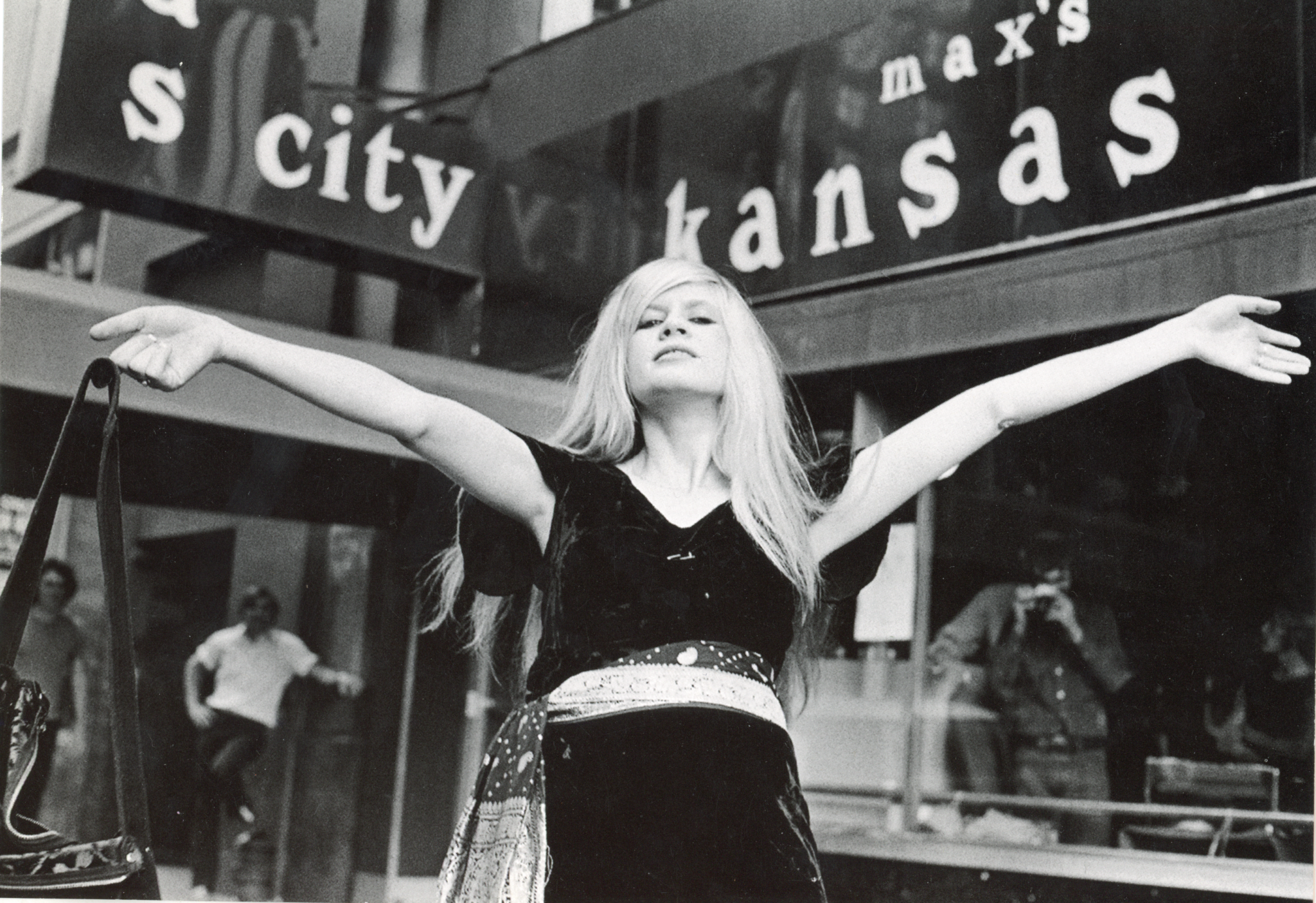
Caught in-between, and overshadowed by two of the most dynamic decades of the late 20th century, it is easy to undervalue the art world of the 1970s. The 1960s saw broad changes in American culture, as well as, the emergence of multiple new art styles. The 1980s also gave birth to new art movements along with the rise of artist celebrities, and record-breaking art prices. This Gallery 98 newsletter looks at some of the successful artists of the 1970s, using them as a lens to better understand what, in retrospect, was an important transitional era.
Lee Krasner
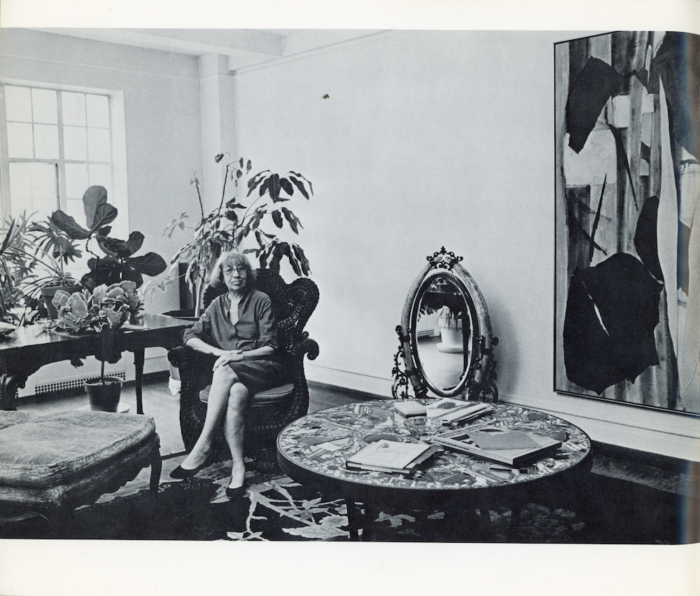
Lee Krasner, Large Paintings, Text by Marcia Tucker, Frontispiece photo by Iris Schneider, 44-Page Catalogue, Whitney Museum, 1972. Size: 9 x 7.75 inches — Available
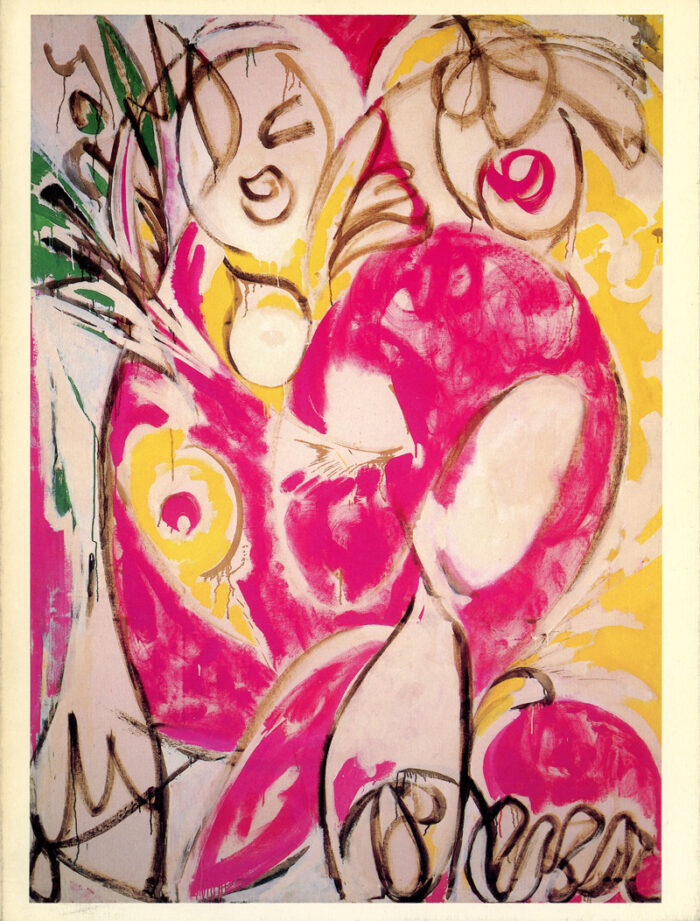
Lee Krasner, Paintings from the Late Fifties, Robert Miller Gallery, Catalogue, 1982. Size: 10 x 7.75 inches — Available
Some of the artists who enjoyed success in the 1970s are linked to earlier eras. Lee Krasner had been active since the 1930s, but it was only in the 1970s that she began to receive the sort of recognition that was long overdue. In part, this late acclaim reflected the rise of feminism in the 1970s, as well as, the increasing realization that even the most talented women artists had been, and continued to be, overlooked by the male-dominated art world.
See more works by Lee Krasner
Joseph Beuys
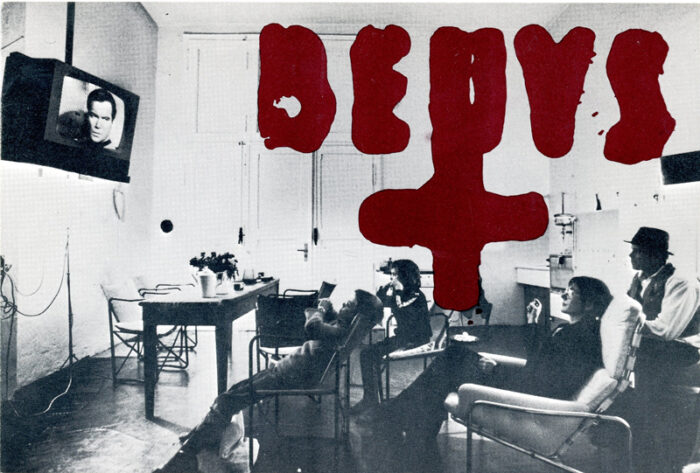
Joseph Beuys, Collected Editions II: New Additions to the Largest Collection of Beuys’ Multiple Objects, Prints, Posters, Books and Catalogues, Card, John Gibson Gallery, 1974. Size: 6 x 4 inches — Available
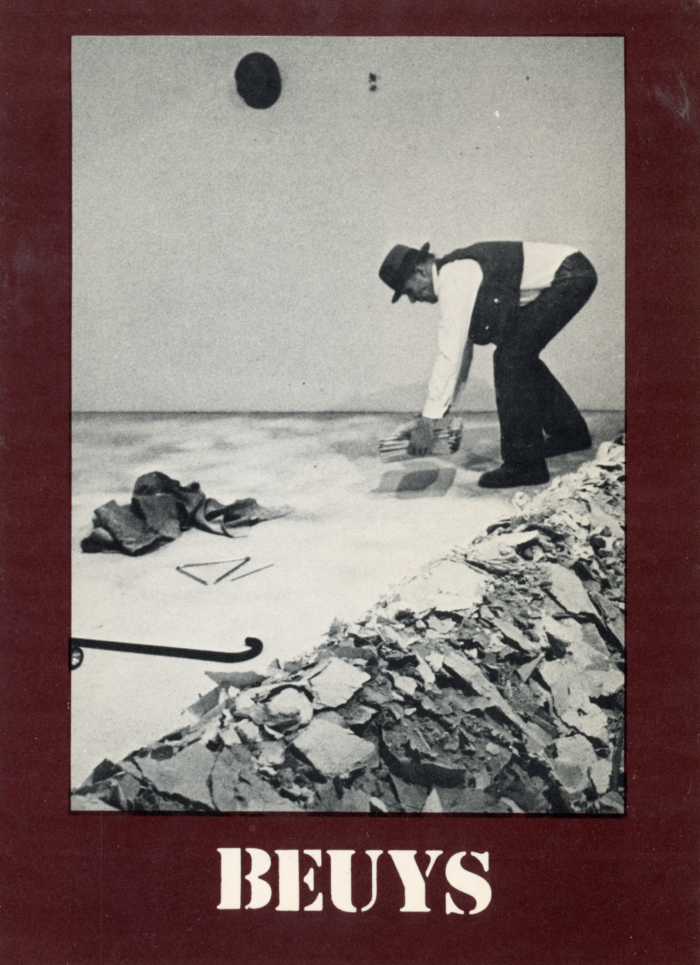
Joseph Beuys, News from the Coyote, an exhibition of artifacts and photos connected to his 1974 performance at Rene Block Gallery, Photo by Eeva-Inekeri, Ronald Feldman Fine Arts, Card, 1979. Size: 6 x 4.5 inches — Available
Although Joseph Beuys was a widely acclaimed artist in Europe, he remained little known in the States, in part because he refused to come to America on account of the Vietnam War. “I Like America & America Likes Me,” his first exhibition in New York, was held in 1974 at the René Block Gallery in Soho. Not only did it greatly enhance Beuys’ reputation, it also helped spark new interest in performance, conceptual art, and the connection of art to politics.
See more works by Joseph Beuys
Colette
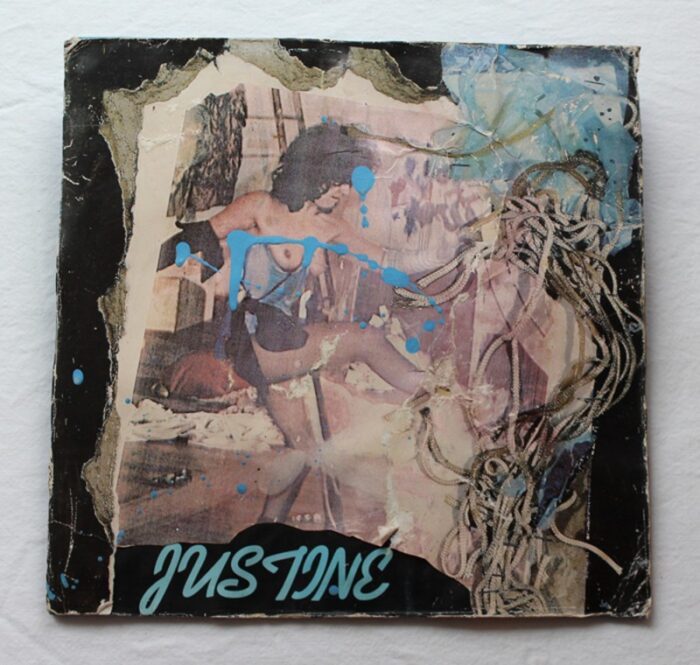
Colette, Justine & The Victorian Punks, from the series Records from the Story of My Life, Mixed Media, 1978. Size: 12.25 x 12.25 inches — Available
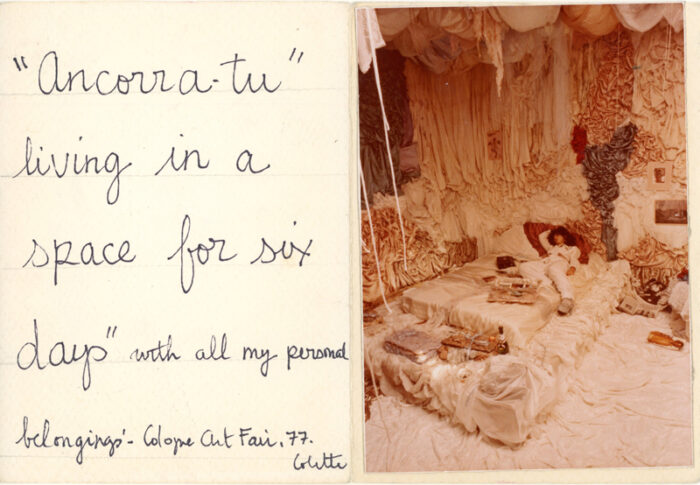
Colette, Ancorra-tu: Living in a Space for Six Days with All My Personal Belongings, from the series Postcards from the Story of My Life, Signed, 1977. Size: 10 x 7 inches — Available
Colette brought a softer more feminine aesthetic to the art world with installations made out of flowing parachute cloth, and related performances that introduced iconic motifs like sleeping in a gallery. Continually changing her name and adopting different personas, Colette’s performances were staged in nightclubs, boutique windows, and she sometimes did works in the street. Her reputation went international when she lived for six days in a booth at the Cologne Art Fair in 1977.
See more works by Colette
Chuck Close
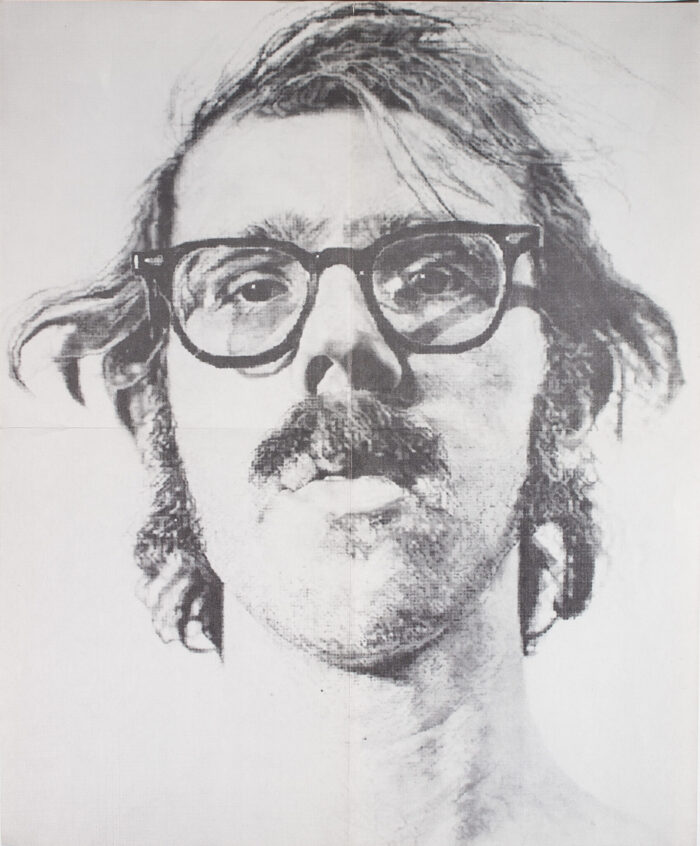
Chuck Close, Self-Portrait, Bykert Gallery, Poster, 1973. Size: 23 x 19 inches — Available
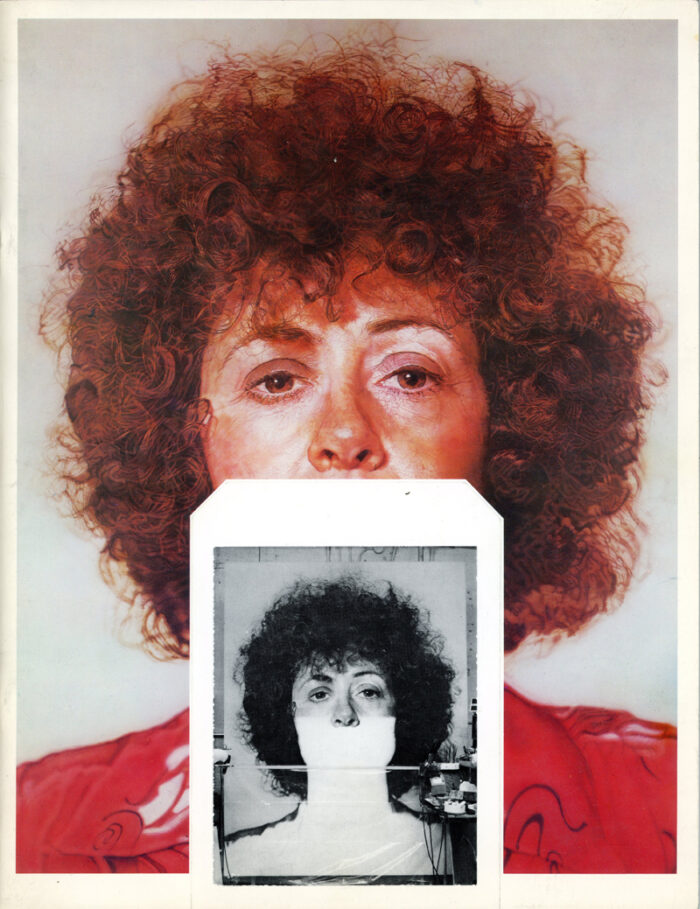
Chuck Close, 24 Page Exhibition Catalogue, The Pace Gallery, 1977. Size: 11 x 8 inches — Available
Chuck Close quickly rose to the front ranks of the art world when he exhibited his larger-than-life, photo-based portraits at the Bykert Gallery in 1970. Viewers marveled at the monumental scale and detailed realism of the paintings. The works were also notable because of their conceptual underpinnings. Close deliberately emphasized his working method by the controlled way he applied paint with an airbrush, and left his penciled grid visible.
See more works by Chuck Close
Joan Jonas
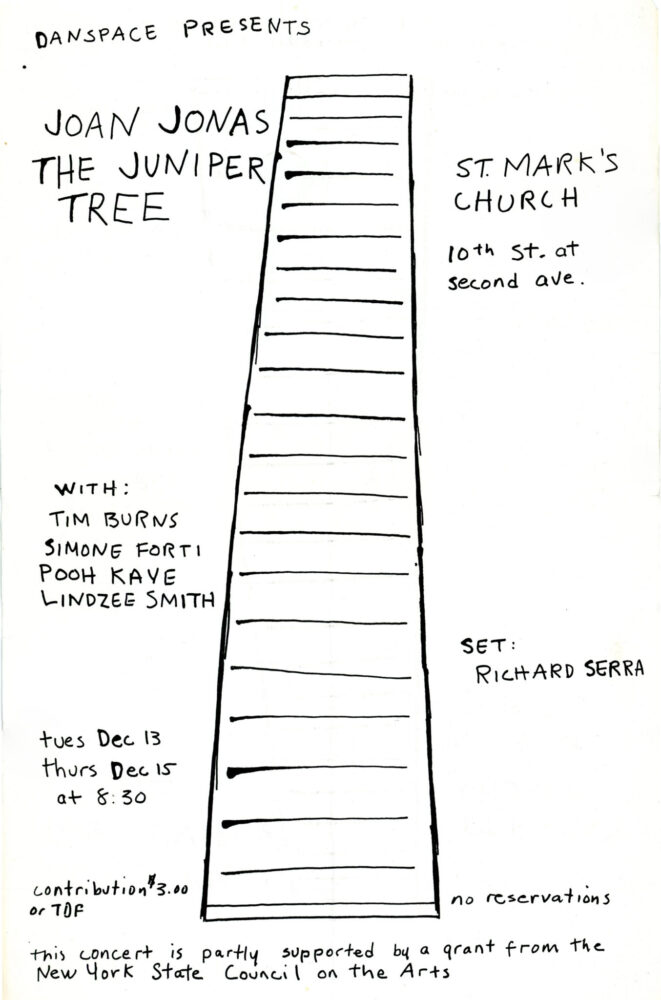
Joan Jonas, The Juniper Tree, Set by Richard Serra, St. Marks Church, Poster, 1977. Size: 17 x 11 inches
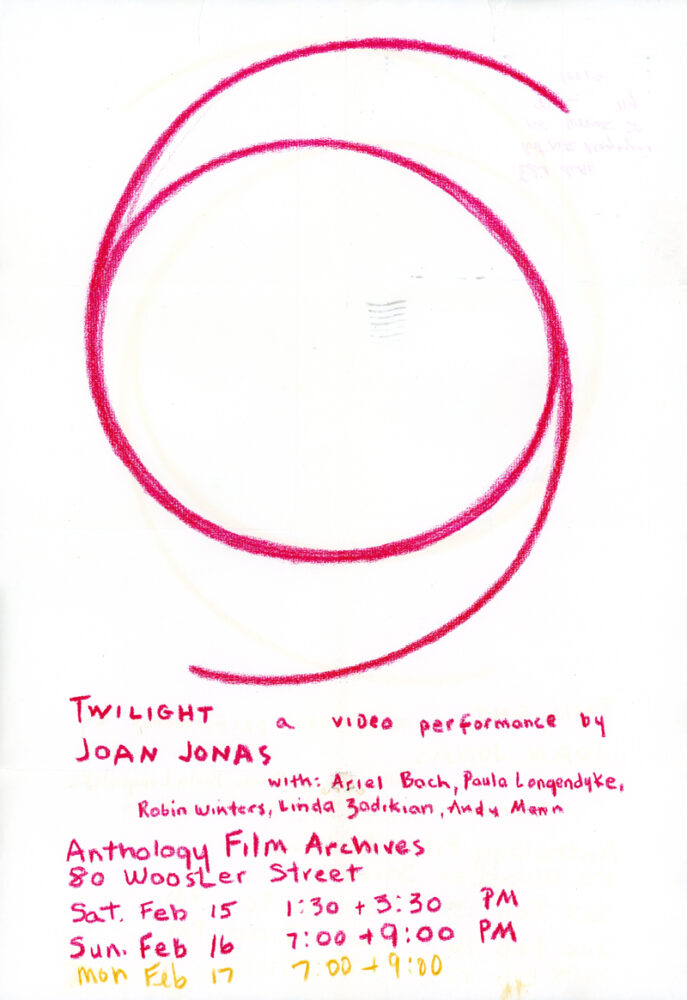
Joan Jonas, Twilight, Folded Mailing, Anthology Film Archives, 1975. Size: 19.75 x 14 inches — Available
Joan Jonas achieved fame for performances that explored myths and female identity. Her work attracted attention for its elaborate costuming, and for the inclusion of paintings and sculpture into the settings. Of special importance was Jonas’ decision to begin using video in 1970. This newly available technology allowed her to explore a host of possibilities involving space, time and narrative.