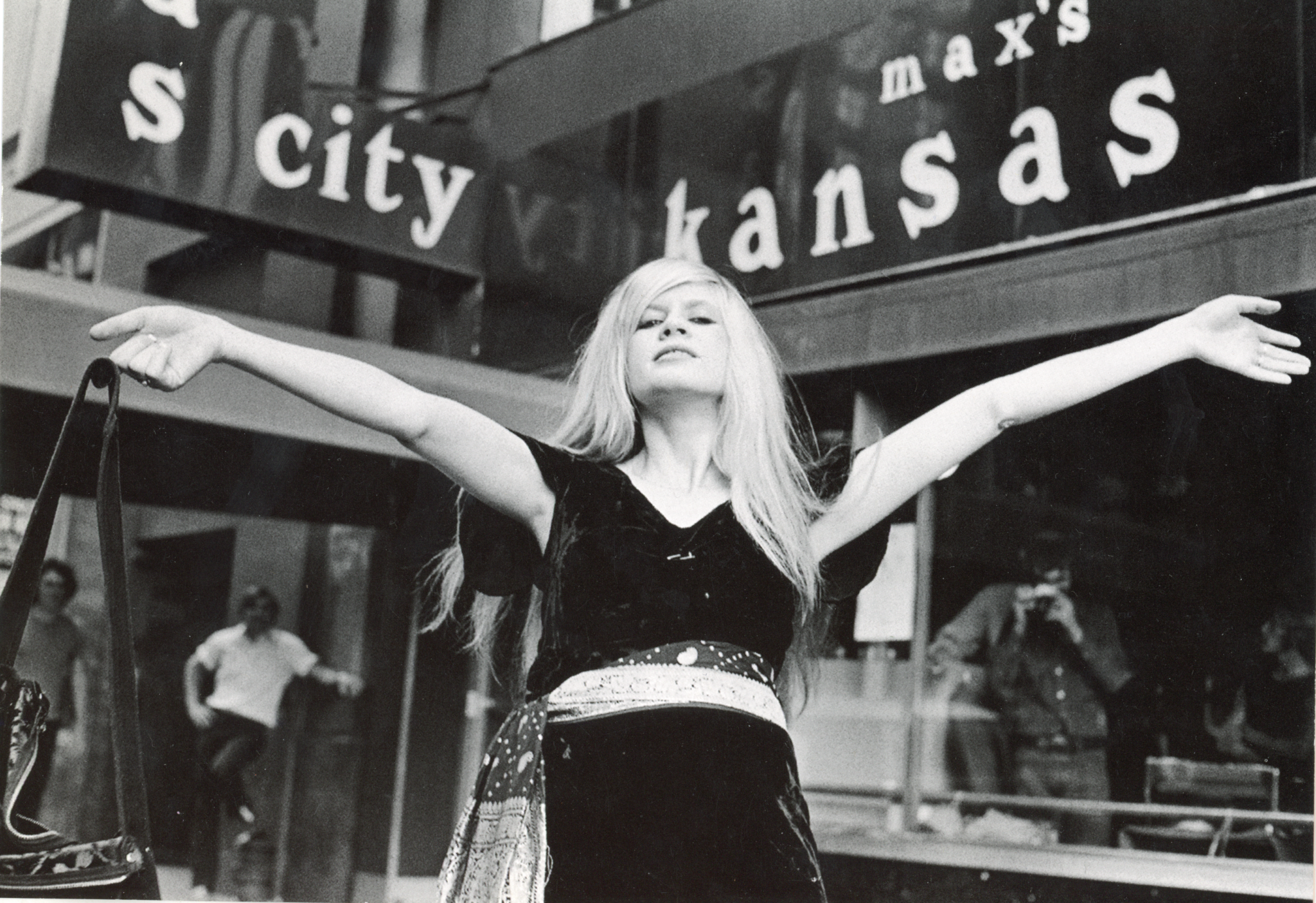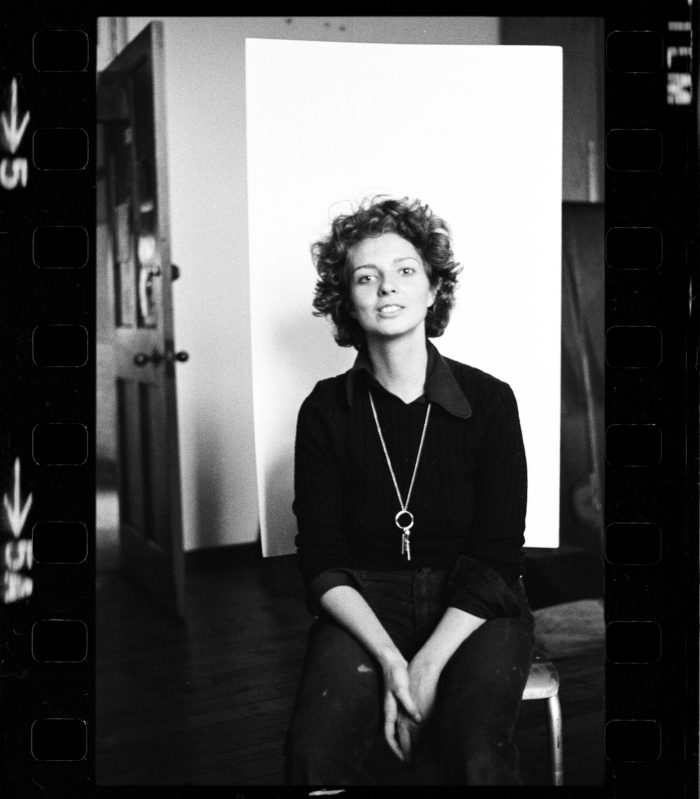
Michael Oblowitz (Photographer), Marlene Dumas at Michaelis School of Fine Art, University of Cape Town (South Africa), 1973.

Paul Andriesse (Photographer), Marlene Dumas finishing a portrait of a museum guard, NGBK (Berlin), March 1996.
Marlene Dumas was born in Cape Town, South Africa in 1953, moved at the age of twenty-three to the Netherlands, where she still lives and works today. While her art is singular, she can be broadly grouped with the Neo-Expressionist art movement that emerged in Europe and the US in the 1980s. Dumas has been remarkably successful. Earlier this year in a Christie’s auction, her 1997 painting Miss January became the most expensive work by a living female artist when it sold for $13.6 million.
Dumas primarily paints people and explores her multi-faceted subject from every imaginable angle. Her art is about the human condition, and it is about appearances and feelings. She examines every phase of life from pregnancy to death, and she represents every race. She shows people both clothed and naked; sexuality is a frequent theme; and nothing is taboo.
Over the last 45-years, Dumas has exhibited continually in all the world’s top galleries and museums. A valuable byproduct of this exhibition history is a large cache of gallery cards, brochures, posters and other promotional materials. Gallery 98 has been fortunate to have obtained a comprehensive collection of this ephemera while working with Dumas’ first gallerist and longtime friend, Paul Andriesse.
Marlene Dumas: Fifty Years of Art Ephemera
Marlene Dumas, The Jewish Nose Doesn’t Exist/The Black Man Is Tired (1990), card, Art Basel 30, 1999
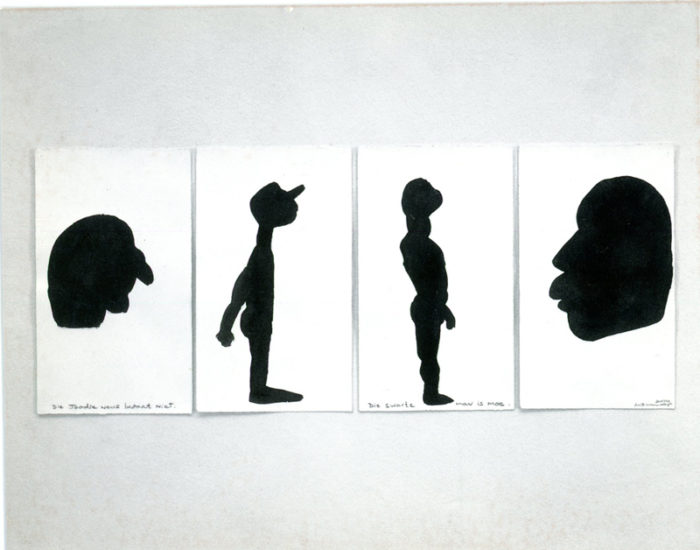
Marlene Dumas, The Jewish Nose Doesn’t Exist/The Black Man Is Tired (1990), card for group exhibition, Paul Andriesse Gallery at Art Basel 30 (Switzerland), 1999. Size: 5 x 4 Inches — Available
YH: Would you say that you are interested in human physiognomy?
MD: Yes, and with the full realization that people have in the past and continue today to abuse this interest—as, for example, the Nazi idealization of a certain physical type of human being, or the standards of physical perfection that modern advertising tries to impose on us. I start with physiognomy, but in the creative process other aspects and issues come into play and become part of the work.
–Gaven Jantjes, Conversations with Marlene Dumas, 1998
Marlene Dumas, Age Indefinite (2003) in the exhibition A Big Dream in a Harsh Reality, folded card, AMC Art Collection (NL), 2004
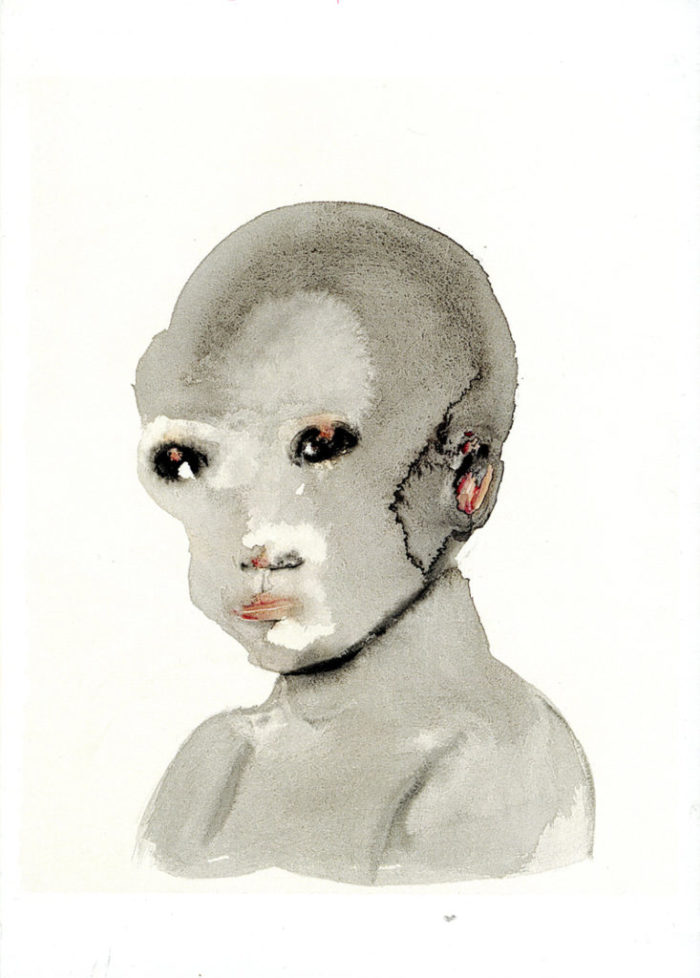
Marlene Dumas, Age Indefinite (2003), folded card for the exhibition A Big Dream in a Harsh Reality, AMC Brummelkamp Gallery, Amsterdam (NL), 2004. Size: 6 x 8.25 Inches — Available
Dumas works from photographs but freely abstracts her images while she spontaneously reacts to possibilities suggested by her painting process and materials. Her works are emotionally laden; they show beauty but also have a dark side. People seem troubled, haunted, and even threatening, like ghosts and demons.
“Dangerous Women Defeated Men,” a set of playing cards by Marlene Dumas with “Jokers” by Andries Botha, 1998
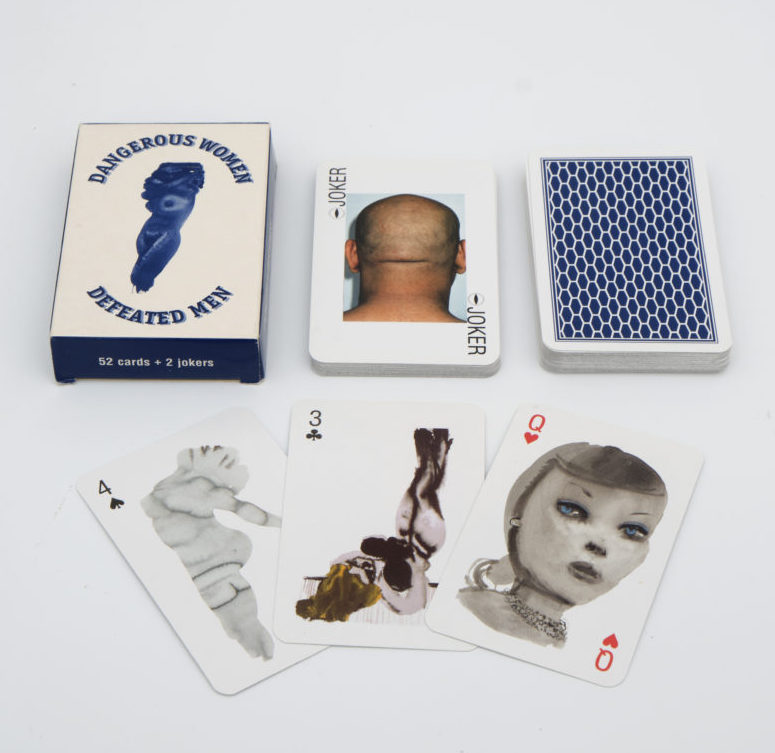
Marlene Dumas, Dangerous Women Defeated Men, Set of Playing Cards, a multiple of 300, produced by Berliner Spielkarten, Darmstadt,1998. Size: 2.5 x 4 inches
52 playing cards with artwork by Marlene Dumas with 2 jokers by Andries Botha.
This set of playing cards, a limited edition of 300, was a collaboration between Dumas and South African artist Andries Botha who designed the jokers. Dumas’ drawings are inspired by pin-ups; Botha contributed photographs of men with shaved heads.
Marlene Dumas and Anton Corbijn, Stripping Girls, card, Theatermuseum (NL), 2000
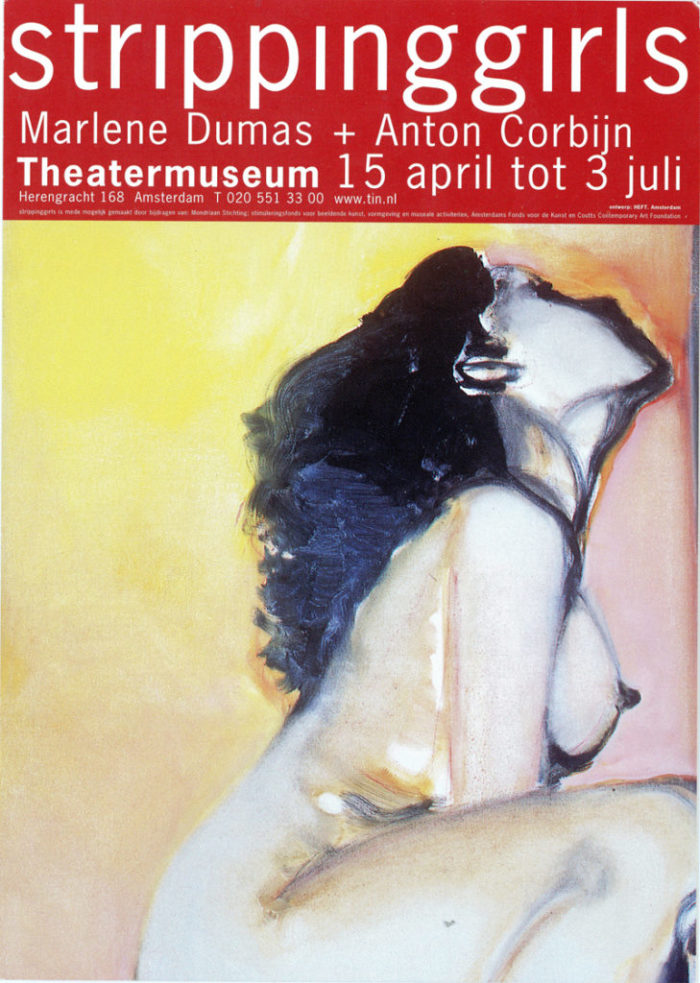
Marlene Dumas and Anton Corbijn, Stripping Girls, card, Theatermuseum, Amsterdam (NL), 2000. Size: 6 x 8.25 Inches — Available
This joint exhibition with photographer Anton Corbijn brought both a male and female perspective to the art of striptease. In Dumas’ words, “While in life teasing is experienced as a bad deal flirtation, leaving you angry and frustrated, as an art form it has given us the striptease. You enter the theatre of seduction. You pay for this pleasure to quiver with anticipation. You stick to the rules. Strippers might stretch rules, you don’t. You have to know your place.” Dumas’ paintings were based on her own photographs.
Marlene Dumas, For Whom the Bell Tolls, card, Zeno X Gallery (Belgium), 2008
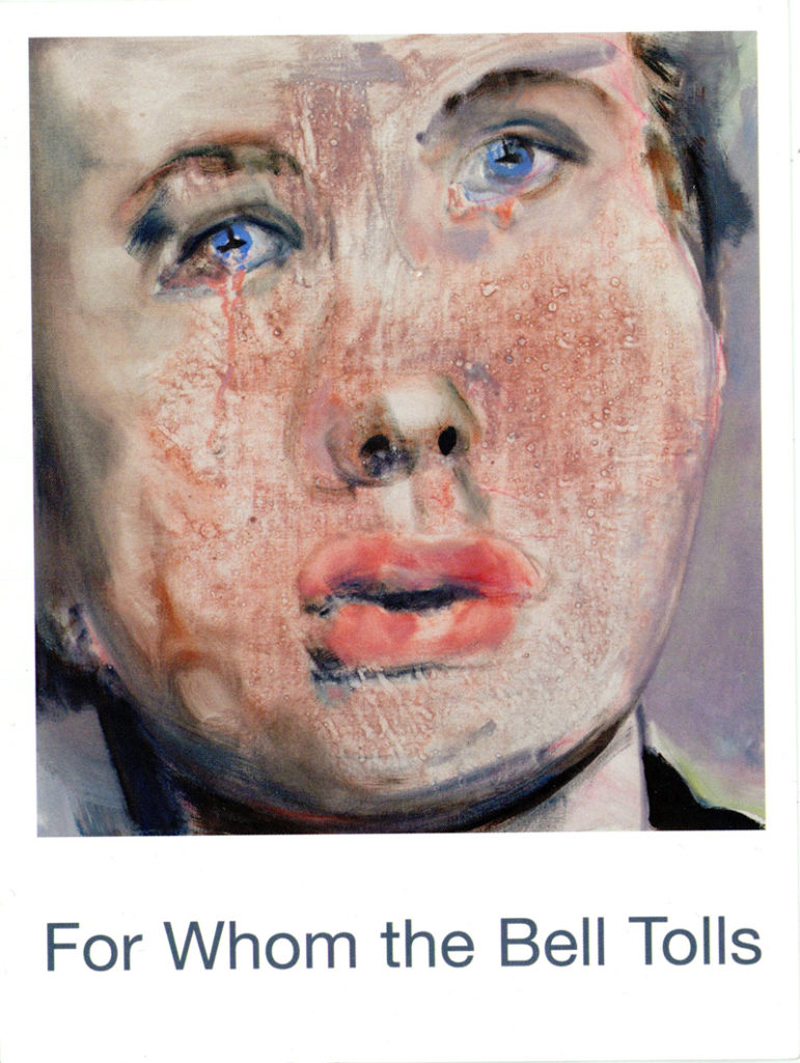
Marlene Dumas, “Maria (Ingrid Bergman),” card for the exhibition “For Whom The Bell Tolls,” Zeno X Gallery, Antwerp, BEL, 2008. Size: 4 x 5.5 inches — Available
Dumas’ exhibition For Whom the Bell Tolls featured paintings of actresses most of whom had died young or suffered from long term illnesses like Bergman.
The 1997 documentary Miss Interpreted (Marlene Dumas) can be viewed for free on Youtube

Promotional postcard for Miss Interpreted (Marlene Dumas), Film by Rudolf Evenhuis and Joost Verhey, MM Produkties,1997. Size: 5.75 x 8.25 Inches — Available
To learn more about Marlene Dumas, view for free the 1997 documentary Miss Interpreted (Marlene Dumas) on YouTube. Narrated by Dumas, with footage shot in South Africa and Amsterdam, the film has sequences of the the artist at work, interviews with close associates, and captures both a complex artist and her multi-layered work.